Customizing Pre-Sleep Routines Based on Individual Chronotypes for Optimal Rest Quality
You sleep best when your routine matches your natural chronotype, whether you’re a morning lark, night owl, or somewhere in between. Gradually adjust bedtime in 15-minute shifts and keep wake times consistent to align with your internal clock. Use dim, warm lighting and reduce screen exposure an hour before bed, relying on night modes if needed. Wind down with mindfulness or light stretches, and consider a small, balanced snack if you’re prone to late hunger. Morning types thrive with earlier, calming routines, while night owls benefit from habit stacking and sleep tracking to ease into earlier cycles. For in-between types, a moderate wind-down time with seated breathing or meditation supports smooth passages. Adjusting your routine this way improves sleep quality without forcing unsustainable changes or relying on sleep aids. Small, personalized steps lead to lasting results - and there’s more to discover about fine-tuning each element for your unique rhythm.
Notable Insights
- Align bedtime with your natural chronotype to improve sleep quality and reduce sleep onset latency.
- Gradually shift sleep schedules by 15-minute increments to avoid resistance, especially in night owls.
- Establish consistent wind-down routines at the same time daily to reinforce circadian rhythm alignment.
- Use dim, warm lighting and reduce blue light exposure 30 minutes before bed to support melatonin release.
- Incorporate relaxation practices like meditation, breathing exercises, or light stretching tailored to your chronotype.
How Your Chronotype Shapes Your Ideal Sleep Schedule
Have you ever wondered why you feel alert late at night while others are already winding down? Your chronotype genetics likely play a key role. These inherited patterns influence whether you’re naturally a night owl or early riser. Understanding your chronotype helps achieve better sleep cycle alignment, which boosts rest quality. If you’re genetically inclined to stay up late, forcing an early bedtime may backfire, increasing frustration or sleep aid use. Instead, gradually shift your schedule to match your body’s rhythm. Use consistent wake times and light exposure to stabilize your cycle. When needed, consider melatonin or sleep aids, but only after aligning routines with your chronotype. Trial adjustments slowly and monitor improvements over weeks. Most sleep aids come with usage guidelines-review them carefully. The goal isn’t perfect timing but sustainable alignment with your internal clock.
Wind Down Like a Morning Person: The Right Way
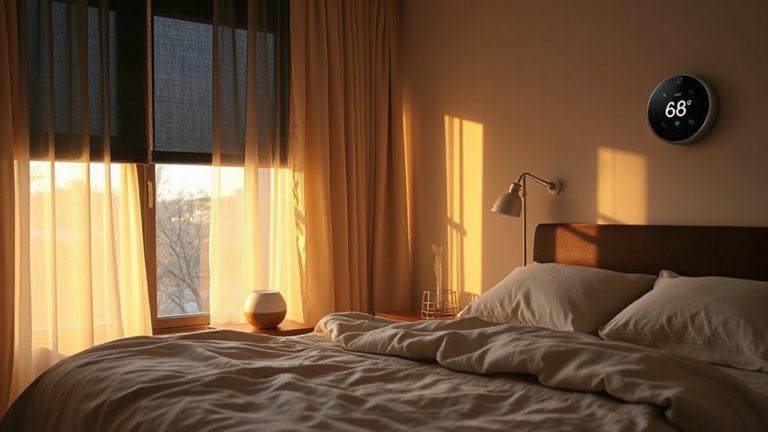
Why do some people seem to ease into sleep effortlessly while others toss and turn? If you’re a morning person, your body likely responds well to consistent, quiet wind-down routines. Start your pre-sleep routine earlier, since your natural rhythm favors earlier bedtimes. Use relaxation techniques like deep breathing or progressive muscle relaxation to signal your body it’s time to rest. Mindfulness practices, such as gentle meditation or body scans, help reduce mental chatter without heavy effort. Keep the environment dim and cool, limiting screen exposure at least 30 minutes before bed. These habits support your chronotype’s natural shift toward sleep, improving rest quality over time. Avoid sleep aids unless advised by a professional, as consistent routines often reduce the need. Trial small changes first-adjust lighting, timing, or technique-and track results over a week to see what works best for your sleep pattern. Incorporating best sleep-friendly lighting can further enhance your wind-down environment by reducing blue light exposure and promoting melatonin production.
Night Owls: Time Your Routine for Better Sleep
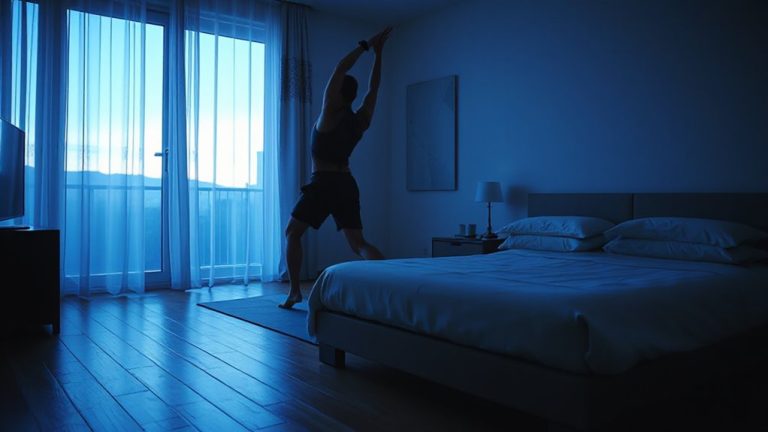
If you stay alert late into the night, shifting your routine slightly can still lead to better sleep without fighting your natural rhythm. Start by using sleep tracking to learn your patterns-apps or wearable devices can show when you fall asleep and wake most naturally. Once you see your typical window, begin pushing it earlier by 15-minute increments. Use habit stacking to anchor wind-down habits: after brushing your teeth, try light stretching or journaling, linking each new behavior to an existing one. Avoid bright screens, but if you must use devices, enable night mode. This method builds consistency gradually. Sleep tracking helps spot disruptions, while habit stacking makes routines stick. Over time, small adjustments improve sleep quality. If issues persist, consider consulting a sleep specialist to rule out disorders before turning to aids. A supportive sleep environment, including the right best pillows for toddlers, can further enhance rest quality for children following customized routines.
For In-Between Sleepers: A Balanced Evening Routine
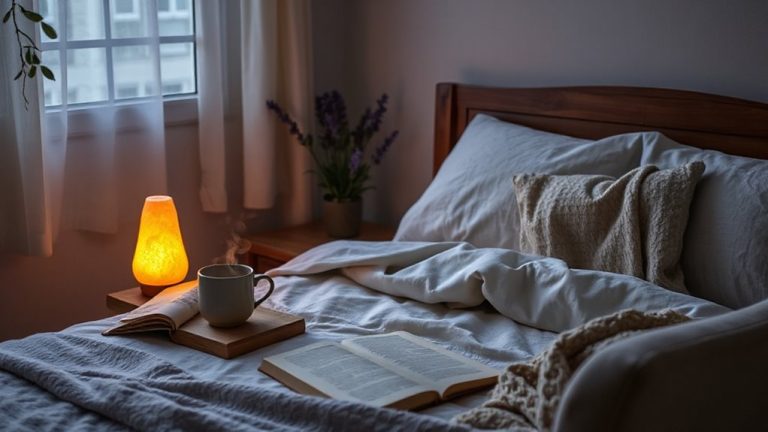
While you may not lean strongly toward early nights or late nights, finding a consistent middle ground can still make a meaningful difference in how well you sleep. Aim to wind down around the same time each evening, pairing balanced lighting with a gradual reduction in stimulation. Dim overhead lights and opt for warm-toned lamps to signal your body it’s time to relax. Incorporate evening meditation for 10 to 15 minutes-this can help quiet mental chatter and ease physical tension. Choose seated breathing exercises or guided audio tracks, depending on what helps you stay focused. Stick to a routine that’s simple enough to maintain, even on busy nights. If you struggle despite adjustments, consider tracking sleep patterns for two weeks before consulting a specialist. Consistency and small, evidence-backed tweaks often support better rest more than dramatic changes. Adding an anti-snore pillow can further enhance sleep quality by promoting proper spinal alignment and reducing airway obstruction.
Sync Screen Time With Your Body Clock
When you use screens late into the evening, the blue light they emit can interfere with your body’s natural shift into sleep mode, especially if you’re sensitive to light changes or already struggling with rest. Blue light suppresses melatonin, the hormone that signals it’s time to sleep, making it harder to feel drowsy. To reduce this effect, lower your screen brightness in the hour before bed or use built-in night settings that filter blue light. These features shift display tones toward warmer colors, which are less disruptive. Try testing different brightness levels to find what feels easiest on your eyes without delaying sleep. If you use devices nightly, consider apps or settings with automatic adjustments based on sunset. While not a fix for deeper sleep disorders, managing screen brightness and timing supports healthier rest patterns across all chronotypes.
Pick Bedtime Snacks That Fit Your Chronotype’s Schedule
Why do some people snack before bed without trouble, while others can’t sleep after even a small bite? It often comes down to food timing and your chronotype. If you’re a night owl, a light snack two hours before bed might help stabilize blood sugar, supporting smoother sleep onset. Early birds, though, may do better with dinner as their final meal, avoiding late intake that could disrupt rest. Snack composition matters-opt for balanced mixes like banana with almond butter or yogurt with berries, which support melatonin without spiking insulin. Heavy, spicy, or high-sugar foods can hinder sleep, especially for intermediate or morning types. Match your eating window to your natural rhythm, and keep portions small. There’s no universal fix, but tuning snacks to your body clock can improve rest quality over time. Trial adjustments for two weeks to see what supports your sleep pattern best.
On a final note
You know your body best, so use your chronotype to guide your choices. A consistent routine helps whether you’re an early riser, night owl, or somewhere in between. Adjust screen time and snacks to match your natural rhythm. Try small changes first, see what improves your rest, and stick with what works. If sleep problems continue, consider talking to a professional or exploring trusted sleep aids with clear information and support options.