Advancements in Personalized Circadian Rhythm Interventions Using Wearable Technology
You can now track your circadian rhythm in real time using wearables that monitor core temperature, HRV, and movement, helping you spot natural wind-down times and sleep disruptions. Devices with long battery life and accurate sensors offer insights into sleep quality, while smart alarms wake you during light sleep for a smoother start. Sync with smart lights to reinforce circadian cues, get adaptive feedback based on your chronotype, and use trial periods or warranties to test what fits-there’s more to discover about customizing your cycle.
Notable Insights
- Wearables enable real-time circadian monitoring using continuous core temperature, HRV, and movement tracking to identify natural sleep-wake patterns.
- Smart light integration adjusts morning blue-enriched and evening warm lighting to align melatonin release with individual circadian rhythms.
- Smart alarms analyze sleep cycles to wake users during light sleep phases, improving morning alertness and reducing sleep inertia.
- HRV tracking maps daily energy fluctuations, helping users schedule tasks during peak mental and physical performance windows.
- Adaptive algorithms personalize circadian interventions by learning chronotypes, guiding sleep, light, and activity adjustments over time.
Track Your Circadian Rhythm in Real Time
How do you know when your body is truly ready for sleep? With real time monitoring, you can see shifts in core temperature, heart rate variability, and movement patterns that signal sleep readiness. Devices using biofeedback integration collect this data continuously, giving you a clear picture of your circadian rhythm over days or weeks. You’ll notice trends-like when your body winds down naturally or when stress disrupts your pattern. This information helps you set consistent bedtimes and decide if sleep aids might be useful. Look for wearables with accurate sensors, long battery life, and user-friendly apps. Most offer free trials and at least a one-year warranty. They don’t promise instant fixes, but they give you evidence to guide choices about sleep hygiene or professional support. Real time monitoring isn’t perfect, but it’s a practical step toward understanding your body’s natural clock. Top models also provide detailed sleep staging and wearable device recommendations to enhance your circadian tracking experience.
Adjust Light to Match Your Body’s Clock
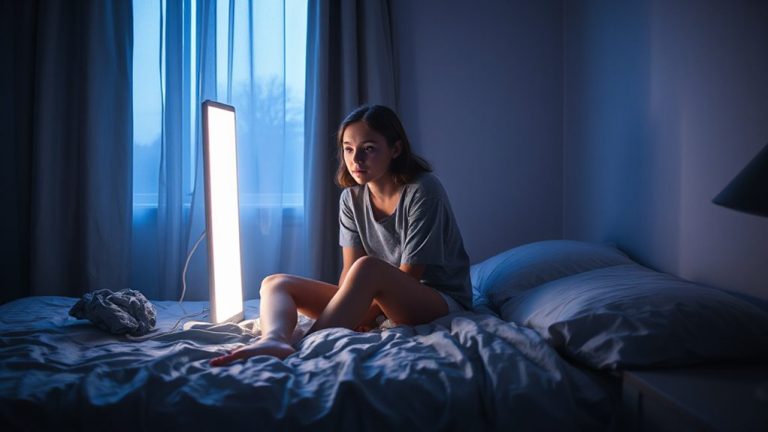
Your body’s internal clock responds strongly to light, just like it does to temperature and heart rate patterns you might track with wearables. Adjusting light exposure helps align your rhythm with natural day-night cycles. Morning bright light signals your brain to wake up and reduces melatonin timing delays, which can improve alertness. Evening dim light supports earlier melatonin release, aiding sleep onset. Wearables now sync with smart bulbs or apps to guide ideal lighting-bright blue-enriched light in the morning, warm tones at night. These systems adapt based on your tracked data, offering personalization without guesswork. Consistent light exposure patterns may reduce symptoms of circadian-related sleep disorders. While results vary, many users report better sleep quality within weeks. Some devices offer free trials or warranties, letting you test effectiveness. It’s a practical step toward long-term rhythm regulation, especially when combined with other tracked biometrics. High-quality sleep environments, including supportive bedding, can enhance circadian alignment, making Best Made Mattresses a valuable consideration for optimal rest.
Wake up at the Right Time With Smart Alarms
While traditional alarms jolt you awake at a fixed time, smart alarms use your sleep patterns to find the best moment to wake you during a light sleep phase. They track your wake cycles using movement and heart rate, helping improve sleep quality by timing alerts when you’re most likely to rise easily. You’ll feel more refreshed because the alarm avoids deep sleep interruption. Most wearable devices offer this feature through built-in sensors and apps, syncing data across platforms. You can set a 30-minute window for the alarm to go off, giving flexibility within your schedule. Some models let you adjust sensitivity or review sleep trends over time. Devices typically include free trials and long warranties, so testing them carries little risk. Though results vary, many users report better mornings and consistent energy. For those struggling with grogginess, a smart alarm could support healthier wake cycles. Among the top choices for Apple Watch users is trying one of the best sleep apps for Apple Watch.
Use HRV to Find Your Energy Peaks
Ever wonder when your body hits its daily energy peak? Your wearable can help pinpoint it using HRV-heart rate variability-to reveal patterns tied to your circadian rhythm. When your HRV coherence is high, your nervous system is balanced, often signaling a surge in mental clarity and physical energy. By tracking HRV coherence over days, you build an energy mapping unique to your physiology. This map shows when you’re most alert or likely to fade, helping you plan tasks, decide when to nap, or assess sleep quality. It won’t diagnose sleep disorders, but unusual HRV trends might prompt a talk with your doctor. Some devices offer trial periods and warranties, letting you test accuracy. Use this data alongside sleep habits and lifestyle to make informed choices about rest or tools like sleep aids. It’s practical insight-not a fix, but a guide.
Get Personalized Tips That Learn Your Routine
How do you know when your body needs rest-or when it’s primed for action? Modern wearables track your sleep patterns and daily behaviors to offer personalized tips that adapt as you do. By analyzing your data over time, these devices support better habit formation, quietly guiding choices about bedtime, wake time, and daily routines. You’ll get alerts suggesting earlier bedtimes if fatigue builds, or reminders to move if inactivity rises. The system learns your rhythm, adjusting insights so they stay relevant. Unlike one-size-fits-all advice, this feedback fits your real life. Most devices include trial periods and app-based guidance to test effectiveness, with warranties covering hardware issues. If sleep disorders persist, the data can help inform discussions with health providers. Performance improves with consistent use, giving clearer signals on ideal rest and activity windows.
Help Night Owls and Shift Workers Reset Their Clock
You’ve seen how personalized tips adapt to your routine and help shape better habits over time. Now, if you’re a night owl or work shifts, syncing your circadian clock can feel tough-especially with your genetic predisposition pulling you toward late nights. Wearables track your natural patterns and suggest gradual shifts in sleep and light exposure to ease the change. A key factor is melatonin timing: releasing it earlier can signal your body to prepare for sleep when you need it. These devices don’t override biology, but they guide adjustments based on your unique signals. You’ll likely see recommendations like dimming lights at 8 p.m. or using low-dose melatonin 2 hours before target bedtime. Some apps even sync with smart bulbs or glasses that deliver timed light therapy. Results vary, so short trials help test what works. Most tools offer a 30-day refund, letting you decide without risk.
On a final note
You can now track your circadian rhythm in real time using wearables that monitor light exposure, heart rate variability (HRV), and sleep patterns. These devices adjust lighting cues and smart alarms to match your body’s natural clock, helping you wake refreshed. Personalized feedback learns your routine, offering practical tips to improve sleep timing and energy. For night owls or shift workers, consistent use may support gradual, sustainable adjustments. Most offer app integration, 30-day trials, and limited warranties, letting you test effectiveness before committing.