Melatonin Production Regulation by Environmental Cues: Implications for Shift Workers’ Health
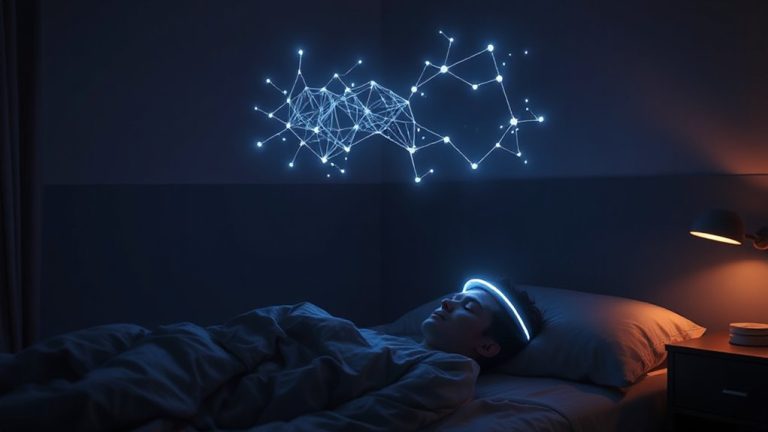
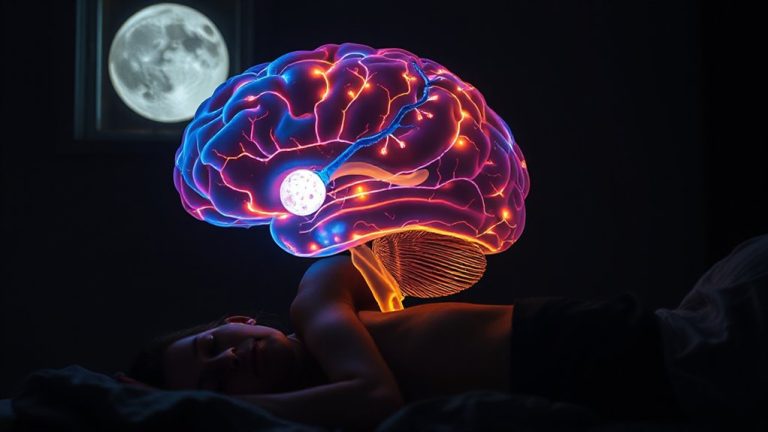
Your body uses light cues to control melatonin, but night shifts expose you to blue-rich artificial light that suppresses it, disrupting sleep and health. Dimming lights and switching to warm tones below 3000K during shifts helps protect melatonin. Blackout curtains, cool room temperatures, and white noise improve daytime sleep quality. Timing meals and movement with your schedule supports natural hormone rhythms. Smart lighting systems offer scheduled, adjustable illumination that aligns with circadian needs-making consistent rest easier to achieve when days and nights are reversed. Further adjustments can fine-tune your body’s response over time.
Notable Insights
- Blue-rich light from screens and artificial sources suppresses melatonin, disrupting circadian rhythms in shift workers.
- Nighttime melatonin production is highly sensitive to environmental light cues, especially blue wavelengths.
- Circadian misalignment from light exposure at night impairs sleep, hormone regulation, and immune function.
- Using amber lighting or blue filters during night shifts helps preserve melatonin and support circadian health.
- Optimizing light, noise, and temperature in sleeping environments improves daytime sleep quality for shift workers.
Why Night Light Blocks Melatonin in Shift Workers
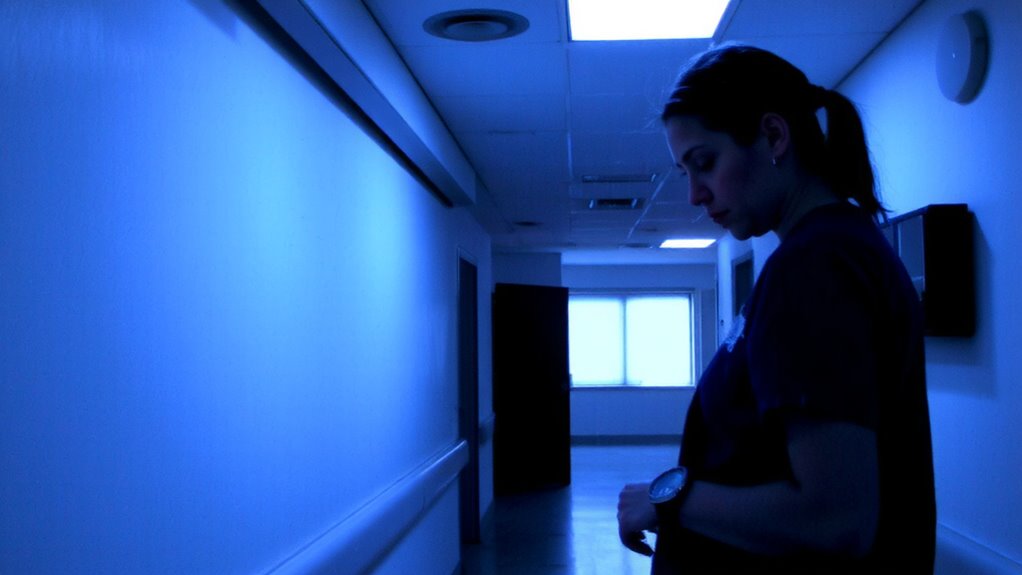
While you’re working overnight, the light around you-especially blue-rich light from screens or bright overhead fixtures-can act like a signal to your brain that it’s still daytime, and this directly interferes with melatonin production. Blue light, in particular, suppresses melatonin more than other wavelengths, tricking your system into staying alert when it should be winding down. This mismatch contributes to circadian misalignment, where your internal clock falls out of sync with actual sleep times. Over time, this disruption can affect sleep quality and quantity. Using blue light filters on devices or wearing amber-tinted glasses may help reduce exposure. Dimming overhead lights during breaks also supports better melatonin release. These practical steps can ease the strain on your natural rhythm without drastic changes. Though not a complete fix, they’re simple adjustments that, over time, may improve nighttime alertness and daytime sleep. A best travel sleep accessory can further support circadian regulation by enhancing sleep quality during daytime rest periods.
How Disrupted Circadian Rhythms Harm Sleep and Health
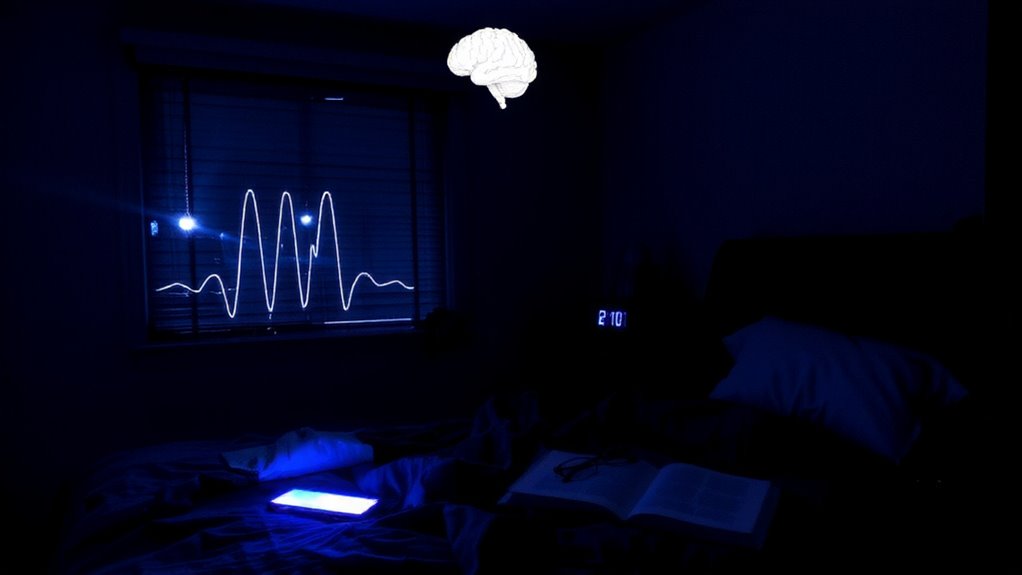
Because your body relies on a steady internal clock to regulate sleep, digestion, and hormone release, disrupting that rhythm through irregular work hours can lead to poor sleep quality and long-term health concerns. Your sleep architecture becomes fragmented, reducing deep sleep and REM cycles, which leaves you feeling unrested. This disruption also contributes to hormonal imbalance, affecting everything from cortisol to insulin levels. Over time, these changes may make it harder to fall asleep, stay asleep, or feel alert during waking hours. You might notice mood shifts, lowered immunity, or digestive issues. While some turn to sleep aids, it’s important to assess how they impact natural melatonin production. Non-prescription options vary in effectiveness and may include ingredients that affect your system differently over time. Consider aids with clear labeling, short-term use guidelines, and transparency about how they support sleep onset or maintenance. Using effective noise masking solutions can help improve sleep quality by minimizing disruptive sounds during daytime rest.
The Long-Term Risks of Low Melatonin for Shift Workers

If you’re a shift worker, your body’s natural melatonin production may be running low night after night, and that can add up to serious long-term risks. Chronic suppression of melatonin is tied to increased cardiovascular risks and persistent hormonal imbalances, which may disrupt metabolism, mood, and immune function. Over time, these changes can contribute to sleep disorders and reduced overall resilience. Consider how your night routine affects your internal clock-choices matter more than you think.
| Risk Factor | Linked Effect | Potential Outcome |
|---|---|---|
| Low melatonin | Poor sleep quality | Daytime fatigue, insomnia |
| Circadian disruption | Hormonal imbalances | Altered cortisol, insulin issues |
| Nighttime light | Reduced melatonin release | Weakened immune response |
| Shift work chronicity | Increased oxidative stress | Higher cancer risk |
| Sleep loss | Elevated blood pressure | Cardiovascular risks over time |
Use Smart Lighting to Protect Melatonin at Night
How can you keep your melatonin levels steady when your nights are spent under artificial light? You can use smart lighting to reduce exposure to blue light, which suppresses melatonin and tricks your brain into thinking it’s daytime. During night shifts, dim lights and switch to warmer tones after your body’s natural alertness peaks, usually in the early part of the shift. Many smart bulbs let you schedule color temperature changes, so they shift from cooler (around 5000K) to warmer (under 3000K) over time. Look for models with easy app control, motion sensors, or voice compatibility. Some come with trial periods, letting you test brightness and hue settings without risk. Using these features helps support your circadian rhythm without relying on sleep aids. Proper lighting won’t fix all sleep issues, but it’s a practical step toward healthier melatonin production. A thoughtful lighting upgrade can also double as a best sleep gift for fellow shift workers seeking better rest.
Design a Daytime Sleep Sanctuary for Night Shifters
While the sun’s up, your body’s fighting to stay alert, so turning your bedroom into a true daytime sleep sanctuary means blocking out light, sound, and distractions that interfere with quality rest. Start with blackout curtains-these block nearly all sunlight, helping your brain shift into rest mode even at noon. Look for ones with thermal lining and side flaps to seal out every ray. Pair them with white noise machines to mask traffic, voices, or appliances; choose models with adjustable frequency settings and timer functions so sound doesn’t run all day. Position the machine near your bed but not too close to avoid overexposure. Use trial periods when buying to test effectiveness-many brands offer 30-day returns. Combine these tools with cool room temperatures and minimal electronics. You’re not eliminating natural cues; you’re reshaping them to support consistent, restorative rest.
Sync Mealtimes and Movement to Boost Melatonin Naturally
Though your schedule runs against the sun, you can still help your body produce melatonin at the right times by aligning meals and movement with your shifted rhythm. Strategic meal timing and physical activity influence your internal clock just like light does. Eating large meals late in your wake period may delay melatonin, so aim to finish food intake 2–3 hours before sleep. Light exercise during your “day” boosts circadian signals, but avoid intense physical activity close to bedtime.
| Cue | Action |
|---|---|
| Meal Timing | Eat main meals during your awake phase, avoid heavy meals before sleep |
| Physical Activity | Engage in moderate movement early in your shift |
| Pre-Sleep Window | Stop eating 2–3 hours before bed |
| Daily Reset | Take a brisk walk at the start of your wake period |
On a final note
You can protect your sleep and health by managing light exposure and daily routines. Use dim, warm lighting at night and bright light during daytime hours to support natural melatonin release. Create a dark, quiet bedroom to improve sleep quality. Align meals and exercise with your awake time to strengthen circadian rhythms. These strategies help maintain melatonin levels, reduce sleep disruption, and lower long-term health risks linked to shift work.