Managing Jet Lag With Chronobiology Principles: Strategies for Business Travelers
You can reduce jet lag by adjusting your sleep schedule 15–20 minutes nightly before travel to match destination time. Use morning sunlight or a 10,000-lux light therapy box for 30 minutes to reset your circadian rhythm. Take 0.5–3 mg melatonin at bedtime upon arrival. Align meals and caffeine use with local time, avoiding caffeine after early afternoon. Stay awake until 10 a.m. local time, using natural light to stay alert-small adjustments add up in meaningful ways.
Notable Insights
- Adjust your sleep schedule by 15–20 minutes nightly before travel to align with the destination’s time zone.
- Take 0.5 to 3 mg of melatonin at bedtime to help reset your internal clock after arrival.
- Seek bright outdoor light within an hour of local sunrise to rapidly synchronize your circadian rhythm.
- Align meal times with the destination schedule, starting during the flight, to reinforce circadian cues.
- Adopt local time immediately upon arrival, staying awake until 10 a.m. and avoiding long naps.
How Jet Lag Disrupts Your Body Clock

Your body runs on a natural schedule called the circadian rhythm, which syncs sleep, hormone release, and body temperature to the day-night cycle. When you travel across time zones, your circadian rhythms fall out of alignment with local light cues, throwing off your internal clock. This mismatch causes jet lag, making you feel groggy, unfocused, or wide awake at odd hours. One key issue is delayed or mistimed melatonin production-the sleep-promoting hormone your body normally releases in darkness. Light exposure at the wrong time can suppress melatonin when you need it or delay its rise. Adjusting your exposure to light, choosing sleep-friendly environments, and considering short-term melatonin supplements-typically 0.5 to 3 mg taken at bedtime in the new time zone-can support realignment. These strategies work gradually, with most people adapting within a few days. For targeted support, selecting the best melatonin supplements for jet lag can enhance the effectiveness of your adjustment routine.
Shift Your Sleep Schedule Before You Fly
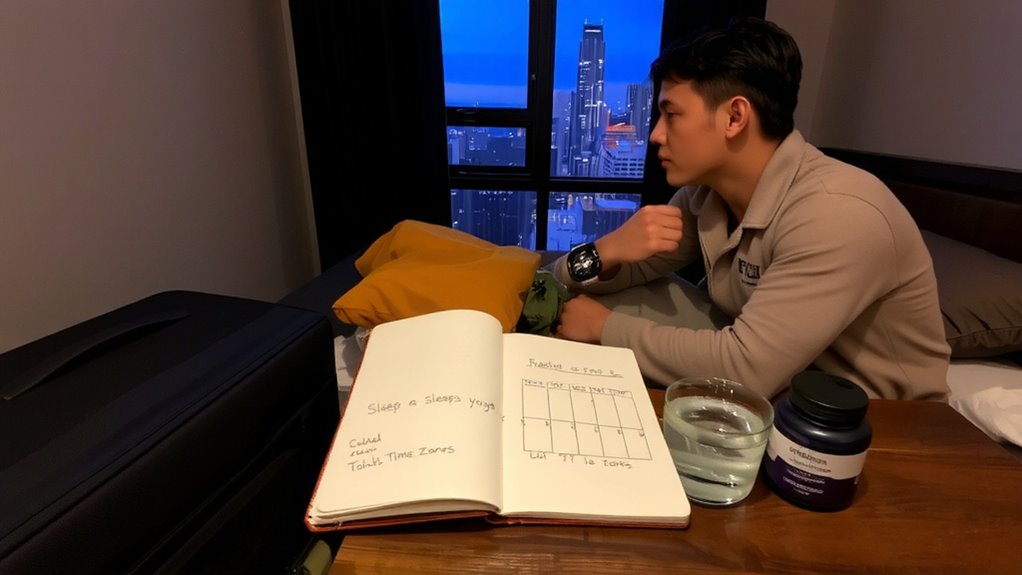
Adjusting your body clock doesn’t have to wait until you land. Start a few days before your trip with a gradual adjustment to match your destination’s time zone. This simple shift improves sleep hygiene and helps your body adapt more smoothly. Even small changes-like going to bed 15 to 20 minutes earlier or later each night-can make a meaningful difference.
| Feeling | Without Adjustment | With Gradual Adjustment |
|---|---|---|
| Energy | Low upon arrival | Steady from day one |
| Focus | Scattered, slow | Sharper, responsive |
Think of it as training your body gently. Combine this with consistent sleep hygiene-cool room, limited screens, regular wake-up time-and you’re setting up for better rest. You don’t need sleep aids if you prepare ahead. The goal isn’t perfection-it’s progress through manageable steps that support natural rhythms.
Use Morning Light to Beat Jet Lag

Why does sunlight feel so powerful when you’re trying to reset after a long flight? It’s because morning light exposure strongly influences your internal clock. When you arrive at your destination, getting outside within an hour of sunrise helps signal to your body that it’s time to start the day. This natural cue speeds up circadian alignment, especially after eastward travel. Even on cloudy days, outdoor light is much brighter than indoor lighting and works more effectively. If morning sun isn’t available, consider using a light therapy box with at least 10,000 lux for about 30 minutes. Position it 16–24 inches from your face, angled slightly downward. Use it consistently for a few days. This method supports gradual adjustment without relying on sleep aids, helping you stay alert during the day and sleep better at night. For optimal results, choose a device designed as a best sleep therapy light that meets clinical brightness and safety standards.
Time Meals and Caffeine to Reset Fast
Morning light sets the pace for your body’s internal clock, but what you eat-and when you drink coffee-can lock in that new rhythm. You can speed up jet lag recovery by aligning meal timing with your destination’s schedule, even on the flight. Start eating as if you’re already there-this cues your digestive and metabolic systems to adjust. Pair that with smart caffeine scheduling: have coffee during early daylight hours at your destination, but avoid it by early afternoon. Caffeine too late can delay your circadian shift. Don’t skip meals when you’re not hungry; scheduled eating helps reset your internal clock faster. The combo of meal timing and caffeine scheduling works best when matched with morning light exposure. It’s not a quick fix, but a consistent method grounded in chronobiology. With practice, it reduces fatigue and sharpens focus.
Sleep Smarter During Your Flight
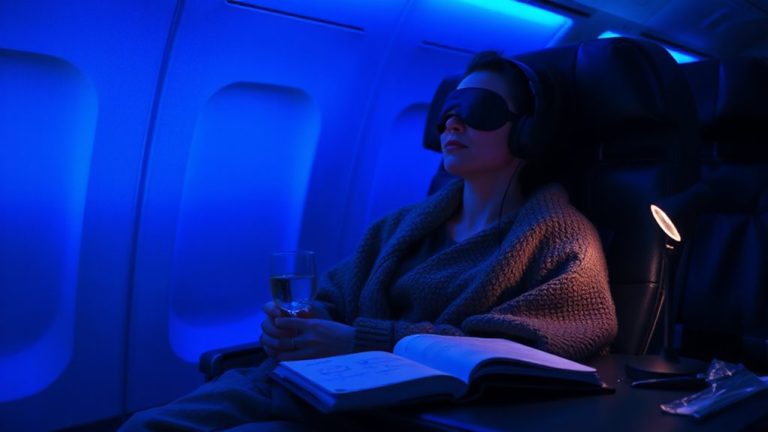
If you’re crossing multiple time zones, planning your in-flight sleep can make a real difference in how quickly you adjust. Time your rest based on your destination’s schedule to align with natural circadian rhythms. Use an eye mask and noise-canceling headphones to improve sleep quality, especially when cabin pressure effects disrupt comfort. In flight hydration is essential-dry cabin air can worsen fatigue, so drink water regularly and avoid alcohol, which interferes with sleep depth. While melatonin or sleep aids may help, consider their side effects, like grogginess or dependency, particularly on short-notice trips. Choose lightweight blankets and supportive neck pillows designed for ergonomic alignment. Some travelers find calming routines, like reading or deep breathing, more effective than medication. Prioritize sleep environments that minimize disruptions, and pick seats with more recline or legroom if possible. Test options on shorter flights to find what works best before long-haul trips. A well-chosen travel sleep accessories kit can significantly enhance comfort and support restorative rest during extended flights.
Sync to Local Time Immediately
Once you land, shifting to your destination’s time zone right away helps your body adjust faster, even if you’re still feeling groggy from the flight. This immediate adjustment kickstarts your internal clock, supporting rapid adaptation to local light-dark cycles. Eat meals, sleep, and schedule activities according to local time-no exceptions. If you arrive early morning, stay awake until at least 10 a.m., even if tired. Exposure to natural light during the day boosts alertness and reinforces the shift. Avoid napping unless absolutely necessary, and keep it under 30 minutes. Syncing quickly reduces nighttime awakenings and sleep disorders like transient insomnia. Though tough at first, this method shortens jet lag by days. Performance improves faster, helping you stay focused during meetings. The key is consistency: your body responds best when cues like light and meal timing align. With rapid adaptation, you’ll function better in less time.
On a final note
You’ll adjust faster by aligning sleep, light, and meals with your destination’s time zone early. Reset your clock gradually before travel, catch morning light, and time caffeine to stay alert without disrupting sleep. Onboard, rest when it’s nighttime at your destination. Avoid long naps once there. Most travelers adapt within days, but consistent cues-like sunlight and meal timing-help. If sleep issues persist, consider short-term aids under guidance.