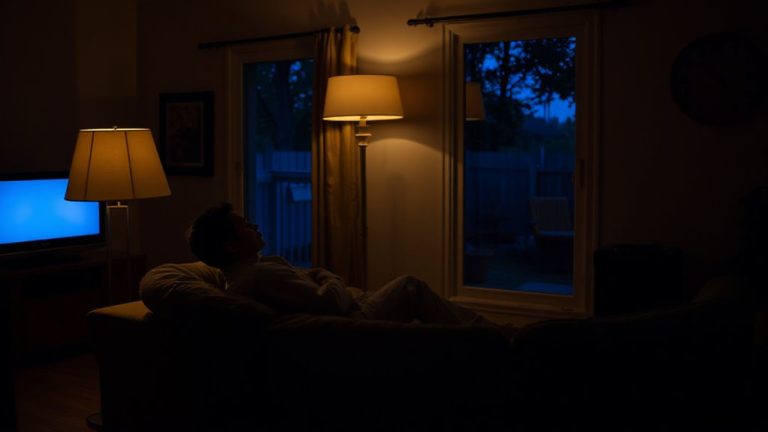
Jet Lag Solutions: Adjusting to Time Zones Faster for Healthier Travel Experiences
You can reduce jet lag by shifting your bedtime 15–30 minutes earlier or later each night for several days before your trip, depending on your destination. Use morning light for eastward travel and evening light for westward travel to reset your internal clock. Stay hydrated during the flight, avoid alcohol, and match your meals and activities to local time as soon as you arrive. Strategic adjustments like these align your body faster-especially if you act before landing.
Notable Insights
- Gradually shift your sleep schedule 15–30 minutes per night toward destination time starting 3–4 days before travel.
- Use morning light exposure when traveling east and evening light when traveling west to reset your circadian rhythm.
- Stay hydrated by drinking 8 ounces of water hourly during the flight and avoid alcohol and caffeine.
- Set your watch to the destination time zone immediately and align meals and sleep attempts accordingly.
- Avoid napping upon arrival and spend time outdoors in natural light to accelerate adjustment.
Why Jet Lag Happens (And Who’s Most at Risk)
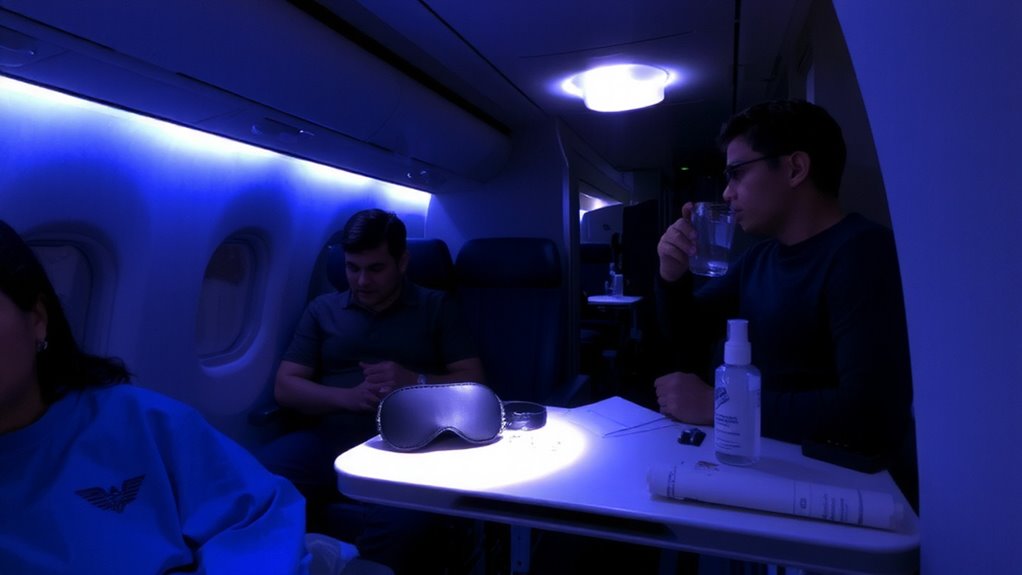
Right across time zones and deep into your body’s rhythm, jet lag hits when your internal clock gets thrown off by fast travel. This circadian disruption means your sleep, hunger, and alertness no longer match the local time. You feel groggy, unfocused, or unusually tired-classic signs of travel fatigue. Eastward flights tend to worsen it because you lose hours, making it harder to fall asleep earlier. Shift workers, older adults, and people with existing sleep disorders face higher risks. If you rely on sleep aids, check how they interact with your body’s stressed rhythm. Some over-the-counter options may ease symptoms short-term, but they don’t fix the root timing issue. Light exposure and strategic napping can help reset your clock. Consider how your habits and health shape your response. Understanding your risk helps you choose better strategies for rest, recovery, and safe, effective adjustment.
Adjust Your Bedtime Gradually Before Your Trip
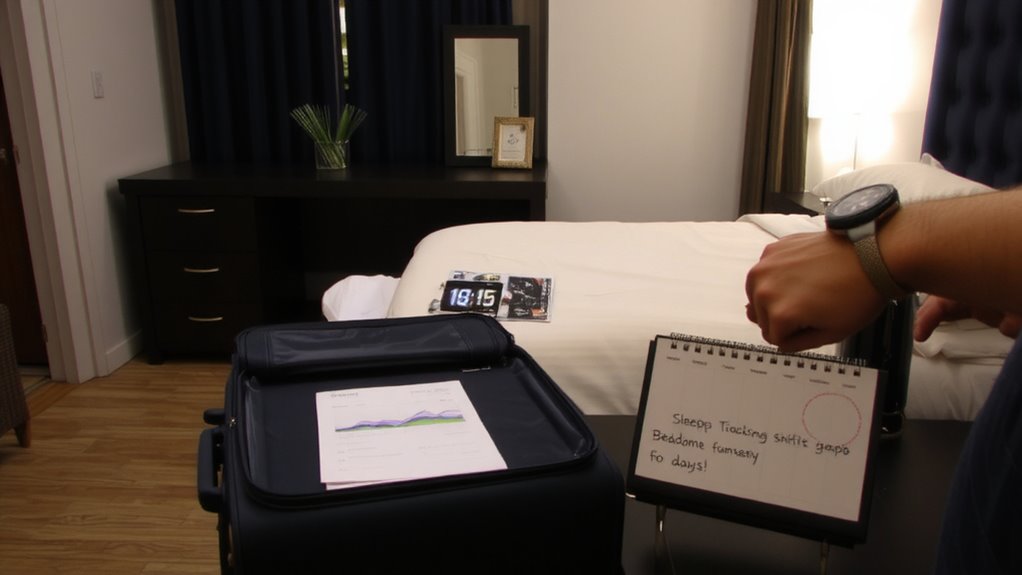
You’ve probably felt how fast travel scrambles your sleep and throws your body out of sync, especially when flying east or if you already deal with sleep issues. To ease the shift, start adjusting your sleep schedule a few days before your trip. Shifting your bedtime routine earlier or later in small steps helps your body adapt. Even minor changes of 15–30 minutes per night make a difference. Stick to your new sleep schedule consistently so your internal clock starts syncing ahead of time. Using supportive travel sleep accessories can further enhance rest quality during adjustment and flight.
| Days Before Trip | Time Adjustment |
|---|---|
| 3–4 days | 15–30 min shift |
| 2–3 days | Another 15–30 min |
| 1 day | Match destination bedtime |
This gradual reset supports better sleep performance and reduces jet lag without relying on sleep aids.
Harness Light to Reset Your Circadian Rhythm Faster
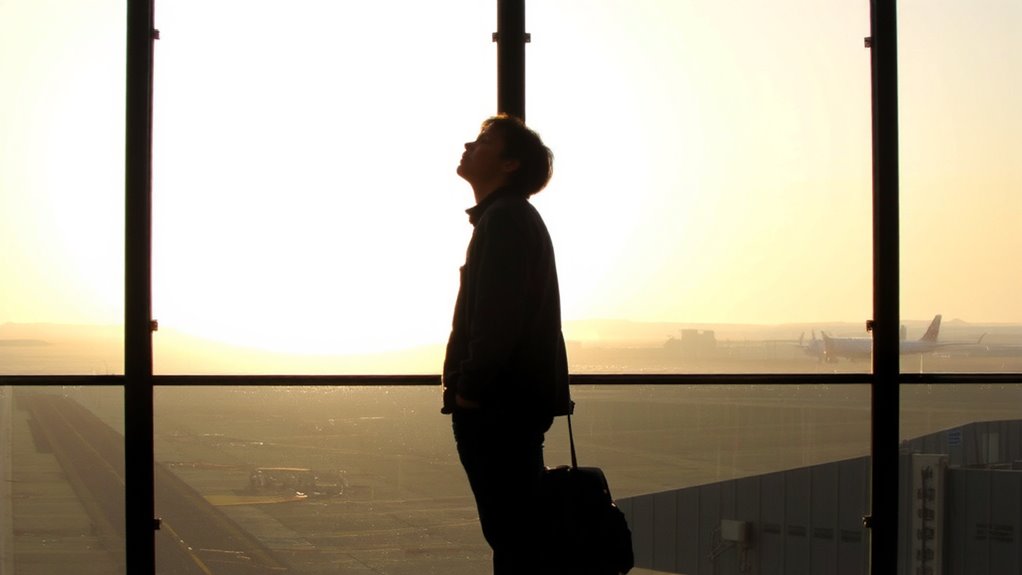
How could something as simple as light help you adjust faster after crossing time zones? Your body’s internal clock responds strongly to light cues. When traveling east, expose yourself to bright morning light at your destination-it signals your system to wake up and start the day, helping shift your rhythm earlier. Heading west? Seek light later in the day and embrace evening darkness to delay your sleep cycle gradually. Morning light boosts alertness and helps reset your timing, while avoiding screens and bright lights during evening darkness supports melatonin release. Using sunglasses on long flights can also help manage light exposure. These strategies work best when timed precisely to your destination’s schedule. Light therapy boxes can assist if natural light isn’t available. With consistent light cues, you’ll adapt faster and sleep better. For reliable options, consider trying one of the top-rated light therapy lamps based on expert reviews and user feedback.
Hydrate Well and Avoid Alcohol on the Plane
Staying well-rested during travel starts with what you do while you’re in the air, not just when you land. The cabin pressure at high altitudes lowers humidity and can dehydrate you quickly, affecting your sleep quality and energy levels. You’ll feel better if you drink water consistently before and during your flight-aim for about 8 ounces every hour. Avoid alcohol, since it may help you relax at first but actually disrupts sleep cycles and worsens dehydration. Even one drink can reduce your sleep quality, especially in a pressurized cabin. Without enough hydration, your body struggles to adjust to time zone shifts later. Carry a refillable bottle and skip the wine or beer. This small change supports your body’s natural rhythm and keeps your mind sharper upon arrival. Hydration is a simple, effective step you can control.
Sync to Local Time Immediately: Eat, Move, and Get Sunlight
Once you land, shifting your body to the local time zone right away can make a real difference in how quickly you adjust. Set your watch to the destination time as soon as you board the plane and begin aligning your routine. Match meal timing to local mealtimes, even if you’re not hungry-this helps reset your internal clock. Seek natural sunlight during daylight hours, as light exposure strongly influences circadian rhythms. Pair this with light physical activity, like walking or stretching, to boost alertness and energy. Avoid napping, especially in the early evening, to protect nighttime sleep drive. Moving and eating on local time supports faster adaptation without relying on sleep aids. This approach works with your body’s natural responses, reducing reliance on medication. With consistent cues, your sleep pattern will stabilize more smoothly.
Eat and Move Strategically to Speed Up Adjustment
You’ve already started aligning your body with local time by adjusting meals, light exposure, and activity upon arrival. Now, fine-tune meal timing to further reset your internal clock. Eating meals at local times signals your body to adapt, especially when you avoid heavy eating during nighttime hours. Light breakfasts and larger daytime meals support this shift naturally. Pair this with consistent physical activity, like walking or light exercise, to boost alertness and improve nighttime sleep. Just don’t overdo evening workouts-they might delay sleep if too close to bedtime. Physical activity earlier in the day strengthens circadian cues, especially when combined with daylight. Stick to regular meal timing and daily movement, even if you’re tired. These habits work together to shorten adjustment time. Over a few days, your energy and sleep patterns will stabilize. No supplements needed-just consistency.
On a final note
You can ease jet lag by adjusting your sleep schedule before travel and using light exposure to reset your internal clock. Stay hydrated, skip alcohol, and align with local time quickly through meals and outdoor activity. These steps support natural rhythm shifts without relying on sleep aids. If considering aids, choose ones with clear dosing and short-term use guidance. Always consult a healthcare provider to rule out underlying sleep disorders.