The Impact of Light Therapy on Circadian Rhythm Disorders Among Elderly Populations
You may find it harder to sleep as you age because your circadian rhythm weakens and melatonin production drops. Light therapy helps by delivering 10,000 lux of bright, UV-filtered light that resets your internal clock, especially when used each morning for 20–30 minutes. Devices with adjustable stands and full-spectrum bulbs work best and often come with a 1–2 year warranty. Most notice improved sleep within a few weeks. Consistency matters-using the lamp at the same time daily increases effectiveness. There’s more to learn about matching the right device to your routine.
Notable Insights
- Light therapy helps counteract age-related circadian rhythm disruptions by stimulating the suprachiasmatic nucleus with bright, full-spectrum light.
- Morning light exposure between 6:00 and 8:00 a.m. can phase-advance sleep cycles, improving sleep onset and quality in older adults.
- Regular use of 10,000 lux light therapy for 20–30 minutes daily enhances circadian entrainment and reduces sleep fragmentation.
- Improvements in sleep and daytime alertness typically emerge within 1–2 weeks, with optimal results after 3–4 weeks of consistent use.
- Proper device selection, including UV filtration and stable placement, minimizes side effects like eye strain and supports long-term adherence.
Why Older Adults Struggle With Circadian Rhythm
You might notice that as you get older, falling asleep earlier or staying asleep through the night becomes more of a challenge-and you’re not alone. This shift often ties to natural changes in your circadian rhythm, including a drop in melatonin production. Melatonin decline makes it harder to signal sleep at the right times, throwing off your internal clock. Sleep fragmentation becomes more common, too-meaning you wake up more frequently during the night, reducing sleep quality. These patterns aren’t inevitable, but they do require attention. Adjusting bedtime routines, managing light exposure, and evaluating sleep environments can help. Some consider melatonin supplements, though effectiveness varies and timing matters. Always consult a healthcare provider before starting aids. Understanding your body’s changes helps you make informed choices about rest, treatments, and habits that support healthier sleep over time. Using a clinically effective light therapy lamp can significantly improve circadian alignment in older adults.
How Light Therapy Resets the Clock in Seniors
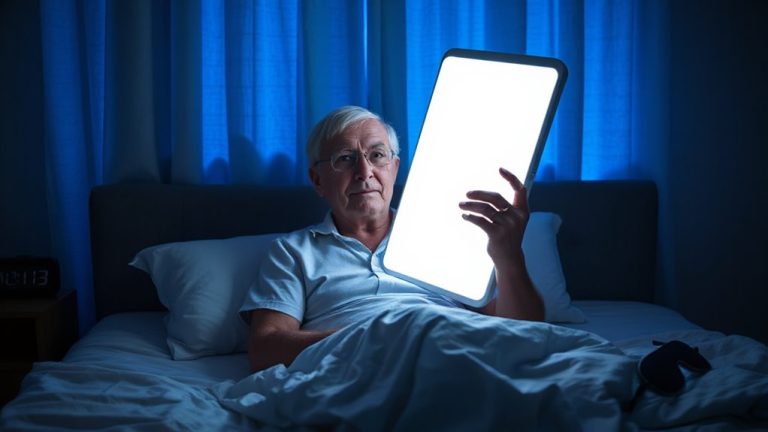
Although aging can shift your internal clock earlier and reduce sensitivity to natural light cues, light therapy offers a practical way to resynchronize your circadian rhythm. Biological aging and neural degradation often dampen your brain’s response to light, making dawn signals less effective. Light therapy boxes compensate by delivering bright, full-spectrum light that mimics sunlight, stimulating retinal pathways to the suprachiasmatic nucleus. This helps recalibrate your sleep-wake cycle over time.
| Feature | Standard Lamp | High-Intensity Lamp |
|---|---|---|
| Brightness (lux) | 2,500 | 10,000 |
| Use Time | 30–60 min | 20–30 min |
| Best For | Mild disruption | Significant delays |
Units typically feature diffusers, adjustable stands, and UV filters. Most come with a 1–2 year warranty. Consistent morning use shows steady improvement in alertness and sleep timing.
When to Use Light Therapy for Best Results
Timing matters just as much as brightness when getting the most out of light therapy. For seniors with delayed sleep phases, morning exposure is key-it helps shift your internal clock earlier, making it easier to fall asleep and wake up at desired times. Aim for 20 to 30 minutes soon after waking, ideally between 6:00 and 8:00 a.m., when natural light is weakest. This early stimulation signals your brain to stop producing melatonin, boosting alertness. Timing consistency strengthens results; using light therapy at the same time daily trains your body’s rhythm more effectively. Irregular use can reduce benefits or shift your cycle unpredictably. For advanced sleep phases, morning light may worsen early sleepiness, so consult a specialist. Always align treatment with your specific circadian pattern, and consider tracking sleep changes over two to three weeks to evaluate effectiveness. Choosing the right device can enhance outcomes, and many experts recommend trying one of the best sleep therapy lights for consistent, effective illumination.
Best Light Therapy Devices for Seniors
Several reliable light therapy devices can make a real difference for seniors managing circadian rhythm disorders, and choosing the right one often comes down to brightness, size, portability, and ease of use. You’ll want a device that emits bright white light with a solid concentration of blue light, which helps regulate melatonin. Look for models with at least 10,000 lux output, as this intensity typically delivers results in 20–30 minutes. Full-spectrum lamps mimic natural sunlight and reduce eye strain, especially important if you’re using the device daily. Choose ones with a sturdy base or wall-mount option to keep them in place. Compact, lightweight versions are easier to move from room to room. Many trusted brands offer a 30-day trial and warranty, so you can test comfort and effectiveness. Check filter quality-good construction blocks UV rays while letting beneficial light through.
What Results to Expect From Daily Light Therapy
You’ll likely notice improvements in your sleep and energy within one to two weeks of using light therapy daily, especially when you stick to a consistent schedule. Morning light exposure helps reset your circadian rhythm, leading to earlier sleep onset and reduced nighttime awakenings. Some people also report better mood and alertness during the day. While results vary, most older adults see meaningful changes after three to four weeks. Keep in mind that light therapy requires a long term commitment-stopping too soon can bring back symptoms. Side effects are usually mild, like eye strain or headaches, but they often go away as your body adjusts. Bright light exposure at the wrong time of day might disrupt sleep, so timing matters. For lasting benefits, use the device regularly and follow clinical guidelines. Not all effects are immediate, but steady use supports more stable sleep patterns over time.
How to Build a Consistent Light Therapy Routine
If you’re starting light therapy, setting a reliable routine is key to getting the best results. Use your light box at the same time each morning, ideally within an hour of waking, to help regulate your circadian rhythm. Position it about 16 to 24 inches from your face while eating breakfast or reading-no need to stare directly at it. Make sure the device provides 10,000 lux of light intensity, as this level has been shown to be effective. Keep session duration to 20–30 minutes, unless your healthcare provider recommends otherwise. Consistency matters more than length, so choose a schedule you can maintain. Track how you feel over two to three weeks to gauge improvements in sleep and alertness. If results are slow, check the light intensity and timing. A steady routine increases the therapy’s effectiveness over time.
On a final note
You can improve your sleep by using light therapy early in the morning, aligning your internal clock with natural day-night cycles. Choose a device with 10,000 lux, a diffuse light design, and UV filters for safety. Most users see results within two to four weeks. Start with 20–30 minutes daily, follow the manufacturer’s instructions, and check return policies before buying to guarantee the device meets your needs.