Jet Lag Solutions for Business Travelers: Maximizing Productivity by Aligning Sleep Patterns With Local Times
You lose productivity when your sleep clashes with local time, but you can cut jet lag in half by adjusting your schedule before flying. Shift your sleep 20–30 minutes earlier or later based on direction, and align in-flight rest with destination nights using eye masks and hydration. Skip alcohol and try melatonin to ease the shift. Once there, follow local meals and sunlight-especially in the morning-to reset your rhythm fast. Avoiding naps helps too. Small steps now mean sharper focus later.
Notable Insights
- Gradually shift sleep times by 20–30 minutes nightly before travel to ease circadian adjustment.
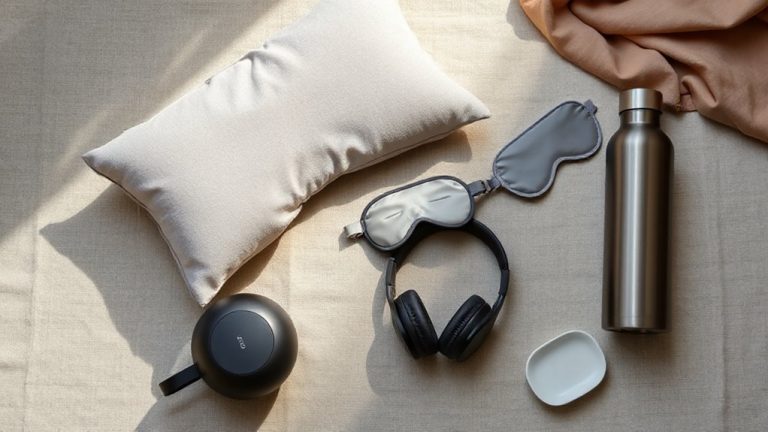
- Align in-flight sleep with destination time using eye masks, noise-canceling headphones, and melatonin.
- Set your watch to local time upon landing to mentally begin adjusting immediately.
- Avoid naps and follow local meal and light exposure schedules for the first 48 hours.
- Use morning sunlight or bright-light therapy to reset your internal clock upon arrival.
Why Jet Lag Hits Business Travelers
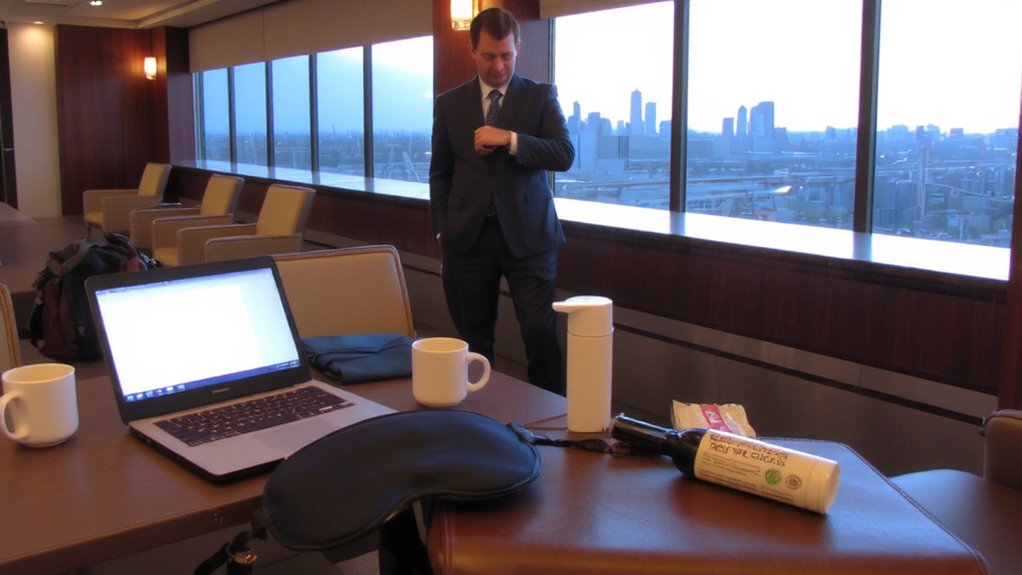
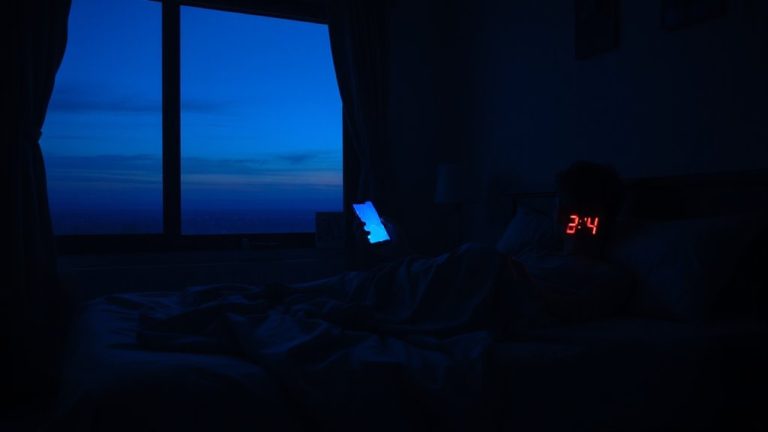
Jet lag doesn’t play favorites, but business travelers often feel its effects more sharply due to erratic schedules and tight itineraries. You’re likely facing circadian disruption when crossing time zones rapidly, confusing your body’s internal clock. This mismatch leads to sleepiness during meetings or insomnia at night, reducing mental sharpness. Unlike leisure travelers, you can’t ease into new time zones-your work starts the moment you land. That pressure worsens travel fatigue, a cycle of exhaustion, poor sleep quality, and low concentration. These symptoms may mimic mild sleep disorders, making it harder to decide if you need sleep aids or just adjustment time. Some travelers use melatonin or light therapy tools designed to reset rhythms, often backed by trial periods or clear usage guidelines. Devices that simulate sunrise, for example, ease shifts without medication. Recognizing the signs early helps you choose solutions wisely.
Adjust Your Sleep Before the Flight
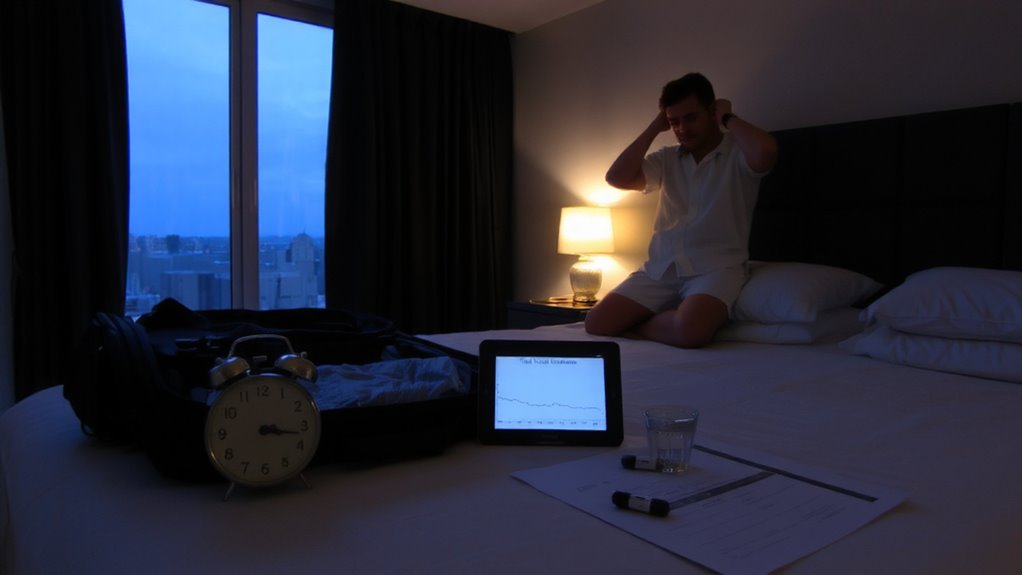
If you’re heading into a new time zone, shifting your sleep schedule a few days before your flight can ease the shift, helping your body adapt before you board. This pre flight adjustment reduces fatigue and sharpens focus upon arrival. Gradually move your sleep timing earlier or later by 20–30 minutes each night, depending on your destination. Avoid screens and caffeine close to your new target bedtime to support the change.
| Change Direction | Adjust by Nightly |
|---|---|
| Eastbound travel | 20–30 min earlier |
| Westbound travel | 20–30 min later |
| Stay consistent | Yes, no exceptions |
| Max shift window | 2–3 days |
This method supports circadian alignment and improves rest quality. Use light exposure and meal timing to reinforce the new rhythm. Simple, consistent steps make sleep timing adjustments effective.
Sleep on the Plane Like It’s Local Time
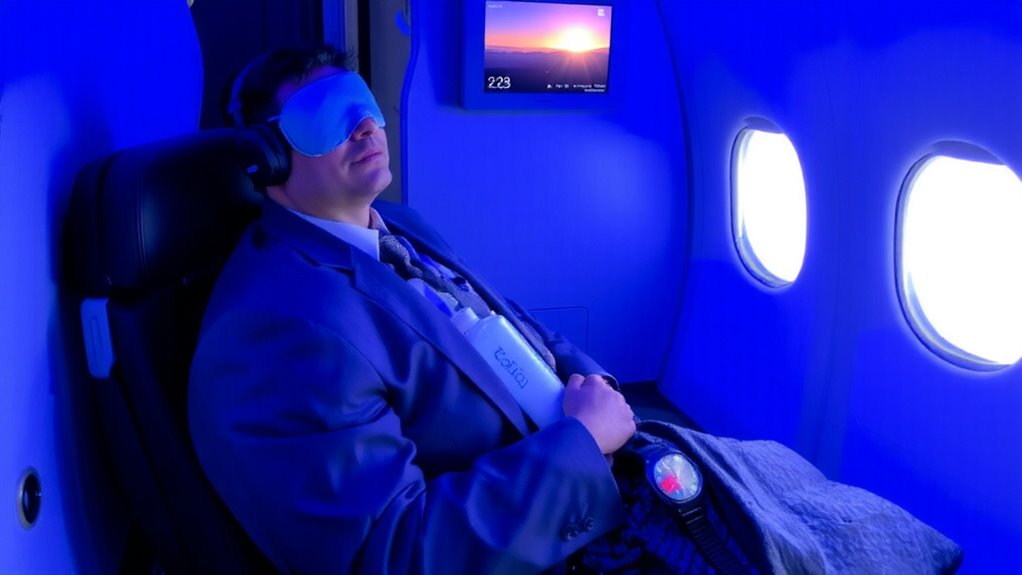
How well you rest during the flight often depends on aligning your in-air routine with the destination’s local time. If it’s nighttime at your destination, prepare to sleep early, even if your body clock resists. Use an eye mask and noise-canceling headphones to manage the in flight ambiance, which can disrupt natural sleep cycles. The low cabin pressure reduces oxygen flow slightly, which may cause fatigue but also disturb deep sleep. Stay hydrated to offset these effects. Consider a melatonin supplement if you struggle to fall asleep, as it helps regulate sleep timing without strong sedation. Avoid alcohol-it may make you drowsy but degrades sleep quality. Use a supportive neck pillow and wear loose clothing to improve comfort. Choose aisle seats if you prefer to stretch or walk periodically. Plan rest periods based on arrival time, aiming to mirror your destination’s sleep schedule as closely as possible mid-flight. For added comfort, consider using a Cal King comforter when sleeping on long-haul flights with extra legroom or lie-flat seats.
Sync to Local Time the Moment You Land
Though your body might still feel tied to your departure time, treating the new time zone as your official schedule from the moment you step off the plane helps reset your internal clock faster. Adjust your watch right away and align your actions with local time. Stick to local meal timing, even if you’re not hungry-eating signals your body it’s time to adapt. Pair this with a consistent hydration strategy, drinking water regularly while avoiding excess caffeine or alcohol, which disrupt both sleep and alertness. You’ll support your body’s natural shift without relying on sleep aids, reducing the risk of dependency or grogginess. This method works best when you avoid napping, even if tired. Over the first 24 to 48 hours, you’ll likely notice improved focus and energy as your system syncs.
Use Morning Light to Reset Your Clock
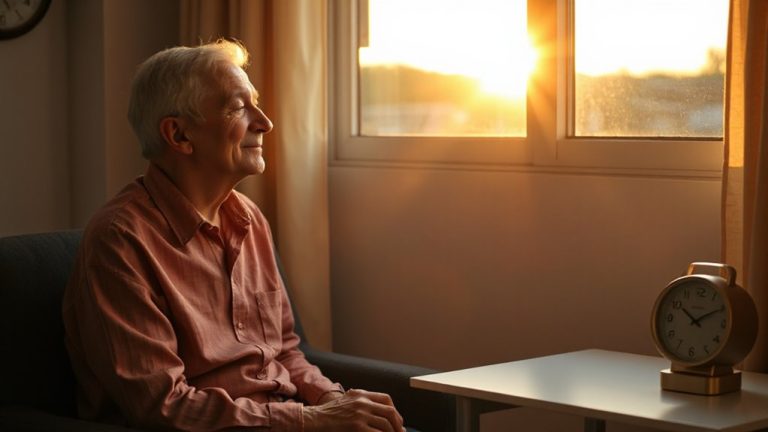
Morning light plays a key role in resetting your body’s internal clock, especially after crossing time zones. When you’re exposed to morning light, it sends strong circadian cues that help shift your sleep schedule to match local time. This light exposure suppresses melatonin, making you feel more alert and awake during the day. The timing matters-getting light within an hour of waking boosts its effect. A well-rested mind starts with quality sleep, and using a supportive mattress topper can enhance rest when adapting to new time zones. Here’s how to use it effectively:
| Time of Exposure | Light Type | Duration |
|---|---|---|
| 6–8 AM local | Natural sunlight | 20–30 min |
| 6–8 AM local | Bright lamp | 30 min |
| After 8 AM | Sunlight preferred | 15–20 min |
| Avoid at night | Blue-light devices | Limit |
Aligning with natural light strengthens circadian cues and supports healthier sleep patterns without relying on sleep aids.
Re-Adjust to Home Time Without Crashing
What happens when you return home after a business trip and your body still feels stuck in a different time zone? That’s when reverse adaptation becomes key to regaining normal sleep patterns. Your body needs to re-sync with local time, not just physically but biologically. Start by aligning light exposure-spend time outdoors in the morning to signal wakefulness. Maintain a consistent sleep schedule, even if you feel tired earlier or later than usual. Avoid long naps, as they delay homeostasis recovery. If needed, short-term use of melatonin may help, but check with a healthcare provider first. Gradual adjustment works better than forcing abrupt changes. Support your body’s natural rhythm with hydration, balanced meals, and light exercise. The goal isn’t to eliminate fatigue overnight but to steadily restore balance, ensuring you stay productive without crashing. A comfortable sleep environment, including selecting the right best beds for Airbnb, can significantly improve rest quality during adjustment periods.
On a final note
You’ll adjust faster by treating your body like a clock syncing to a new time zone. Start shifting sleep times a few days before your trip, use light exposure wisely, and stick to local schedules once you land. Consider short-term sleep aids only if needed, but prioritize natural rhythm alignment. Most travelers find consistency and light management more effective than medication, with fewer side effects. Test strategies on shorter trips first.