Using Light Therapy to Combat Seasonal Circadian Rhythm Disorders Caused by Jet Lag
You can use light therapy to reset your circadian rhythm after jet lag by exposing yourself to bright 10,000 lux light at strategic times. Traveling east? Seek morning light and avoid blue light at night. Going west? Use light in the late afternoon and skip early exposure. Portable, lightweight devices with timers and adjustable brightness make it easy to stay consistent. Pair this with solid sleep habits-like fixed bedtimes and a dark room-for best results. There’s more to contemplate for timing and device choice.
Notable Insights
- Light therapy resets circadian rhythms disrupted by jet lag using timed exposure to bright light.
- Morning light advances the internal clock, aiding adaptation after eastward travel.
- Evening light exposure helps delay the clock, supporting westward travel adjustment.
- 10,000 lux light devices used for 20–30 minutes are effective and minimally disruptive.
- Combining light therapy with sleep hygiene enhances circadian realignment and sleep quality.
How Jet Lag Disrupts Your Circarian Rhythm
While your body tries to adjust to a new time zone, jet lag throws off your internal clock, making it harder to sleep or stay awake at the right times. This disruption causes circadian misalignment, where your natural sleep-wake cycle no longer matches the environment’s light-dark schedule. One key factor is melatonin suppression, which happens when light exposure at the wrong time blocks the release of this sleep-promoting hormone. Without timely melatonin, falling asleep becomes a struggle, even if you’re exhausted. Your performance, mood, and alertness may all feel dulled as your body lags behind local time. Recognizing these signs helps you decide whether to use light exposure strategies or sleep aids. Though temporary, these disruptions affect travel efficiency and daily function, making understanding circadian biology practical for better rest and recovery across time zones. Using a Top Light Therapy Lamps can help regulate your circadian rhythm by providing controlled bright light exposure at strategic times.
How Light Therapy Resets Your Body Clock
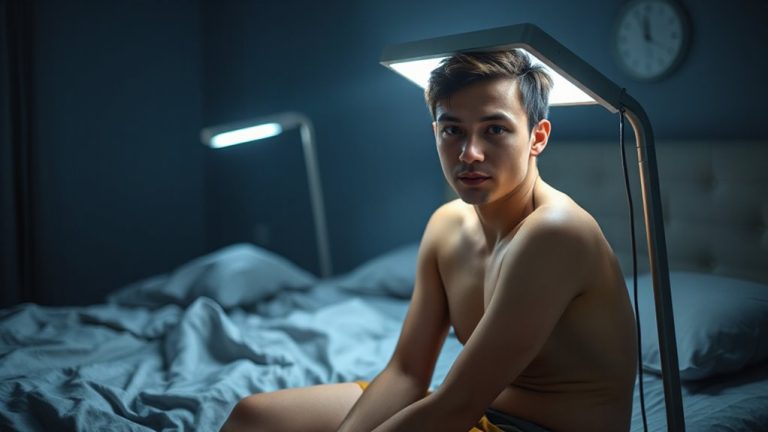
What if you could shift your internal clock more easily after a long flight? Light therapy helps by using bright light to influence your biological mechanisms directly. When you expose yourself to bright light at the right time, it signals your brain to adjust your circadian rhythm. This works through specialized neural pathways that connect your eyes to the suprachiasmatic nucleus, the body’s master clock. The light suppresses melatonin production, making you feel more alert and resetting your sleep-wake cycle. You don’t need expensive equipment-many light boxes deliver 10,000 lux, proven effective in studies. Most recommend 20–30 minutes daily, with minimal side effects. Look for devices with a clean spectrum and FDA clearance. Check return policies in case it doesn’t suit your routine. Consistency matters more than intensity, so use it at the same time each day for best results. For improved outcomes, consider using best sleep therapy lights designed specifically for circadian rhythm regulation.
When to Use Light Therapy: East vs. West
How do you adjust your light therapy schedule when crossing time zones? It depends on your direction-east or west-because each shifts your circadian rhythm differently. For eastward travel, advance your clock with morning exposure to bright light and evening avoidance of blue light. This helps you fall asleep earlier at your destination. Traveling west? Delay your rhythm by seeking light later in the day and avoiding it in the early morning.
| Travel Direction | Light Therapy Timing |
|---|---|
| Eastbound | Morning exposure, evening avoidance |
| Westbound | Late-day exposure, morning avoidance |
Use timing strategically to align with local sleep times. Morning exposure resets your clock forward; evening avoidance prevents delays. Consistency matters, so stick to the plan for best results. Using a sleep therapy lamp can enhance the effectiveness of your light exposure schedule.
Best Light Therapy Devices for Travelers
You’ve just kept your circadian rhythm on track using smart light exposure, whether you were flying east or west. Now, choosing the right device matters. Look for a light therapy lamp with a portable design so it fits easily in your carry-on. Many top models weigh less than a pound and fold flat, making them ideal for tight spaces. Battery life is key-some units offer up to five sessions per charge, lasting 20 to 30 minutes each. Opt for LED-based lights that deliver 10,000 lux, the standard intensity for effective therapy. Most come with a stand or clip for hands-free use. Check if the device includes a timer and brightness settings for flexibility. Reputable brands often provide a 30-day trial and a one-year warranty, so you can test it risk-free. These features help you stay consistent, no matter your destination.
Build a Custom Light Therapy Schedule
Why does timing matter so much when using light therapy to beat jet lag? Because your body’s internal clock responds strongly to when you get light. To reset it quickly, you need strategic morning exposure and evening avoidance. If you’re traveling east, get bright light in the morning at your destination time-this helps shift your rhythm earlier. If you’re flying west, avoid bright light in the evening and seek it later in the morning. Morning exposure signals it’s time to wake up, while evening avoidance prevents delays in your sleep cycle. Use your light therapy device for 20–30 minutes right after waking. Stick to a consistent schedule for several days. Most devices offer adjustable brightness and a timer, so set it to mimic natural sunrise. Check warranty terms and trial periods before buying-they help you test what works best.
Combine Light Therapy With Proven Sleep Habits
While light therapy helps reset your internal clock, pairing it with consistent sleep habits boosts its effectiveness and speeds up adjustment to a new time zone. Good sleep hygiene-like avoiding screens before bed and keeping a regular sleep schedule-supports this process. Adding relaxation techniques such as deep breathing or gentle stretching can help you fall asleep faster and improve sleep quality. Below are key habits to combine with light therapy:
| Habit | Benefit | Timing |
|---|---|---|
| Limit blue light | Improves melatonin release | 1–2 hours before bed |
| Use relaxation techniques | Reduces nighttime anxiety | Evening routine |
| Maintain fixed sleep times | Stabilizes circadian rhythm | Daily, even on weekends |
| Keep room cool and dark | Enhances sleep depth | At bedtime |
| Avoid caffeine late | Prevents sleep disruption | After 2 PM |
These practices work best when used consistently alongside your light therapy sessions.
On a final note
You can manage jet lag by using light therapy to reset your circadian rhythm, especially when traveling across time zones. Devices like portable light boxes or wearable light therapy glasses offer flexibility and proven results. Pair light exposure with consistent sleep habits-dark rooms, set bedtimes-for best outcomes. Look for FDA-cleared models with adjustable brightness and solid warranties. Test routines gradually, tracking how well you adapt, to fine-tune timing and duration based on your needs.