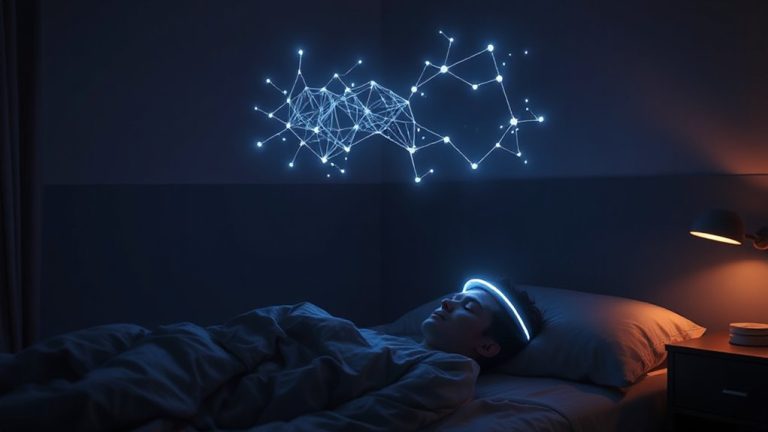
How Light Exposure Affects Melatonin Release: Strategies to Improve Your Sleep Hygiene at Home
You can boost melatonin by controlling light throughout the day. Get bright morning light to reset your sleep clock, using sunlight or a dawn simulator with adjustable brightness and trial options. Wear blue-blocking glasses or use screen filters at night to reduce eye strain and support melatonin. Swap cool-white bulbs for warm LEDs (2200K–2700K), which are energy-efficient and often come with long warranties. Use blackout curtains or contoured eye masks to seal out light. More details on optimizing each method follow.
Notable Insights
- Morning bright light exposure suppresses melatonin and resets your internal clock to improve sleep consistency.
- Use artificial dawn devices to gradually increase light, mimicking sunrise and easing wakefulness naturally.
- Avoid blue light in the evening by using screen filters or blue-blocking glasses to support melatonin release.
- Replace cool-white bulbs with warm-toned lighting (2200K–2700K) in the evening to minimize melatonin suppression.
- Optimize bedroom darkness with blackout curtains or contoured eye masks to enhance melatonin production during sleep.
Control Light to Regulate Your Sleep Hormone
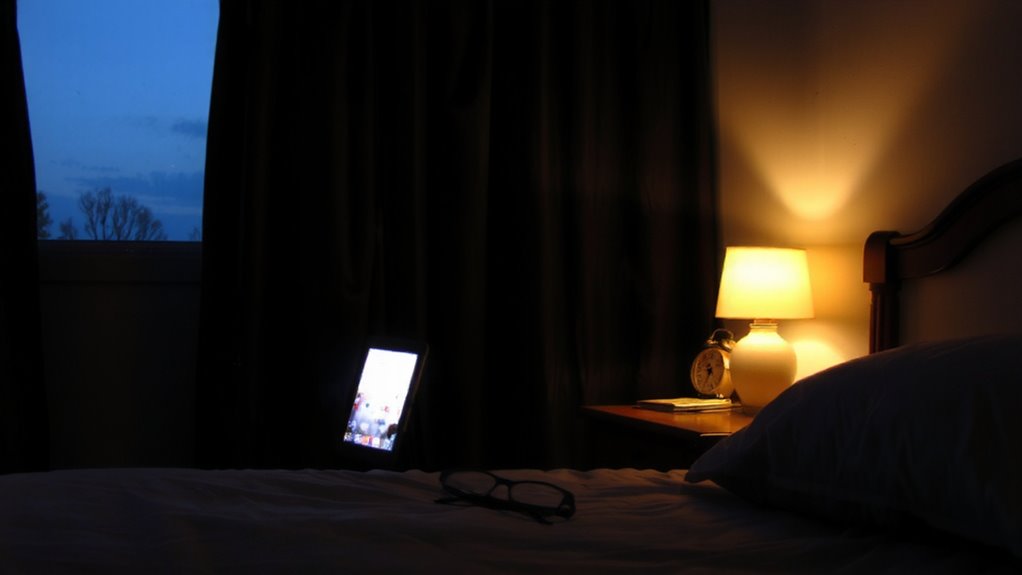
Even though your body naturally produces melatonin to help you sleep, how much light you’re exposed to can either support or disrupt that process. Controlling light intensity throughout the day helps align your internal clock with your sleep schedule. In the morning, exposure to bright light signals your brain to stop melatonin production, boosting alertness. Some people use devices with an artificial dawn feature, which gradually increases light intensity before waking, mimicking sunrise and easing the shift from sleep. This gentle light exposure supports natural hormone shifts without jarring alarms. These tools are easy to use and often come with adjustable settings, allowing you to tailor brightness and duration. Most have trial periods or warranties, so you can test what works best for your routine. Using controlled light exposure helps regulate melatonin, supporting consistent sleep patterns and improving overall sleep hygiene without relying on supplements or medication. For optimal results, consider incorporating best sleep-friendly lighting systems designed to support circadian rhythm regulation.
Block Evening Blue Light to Protect Melatonin
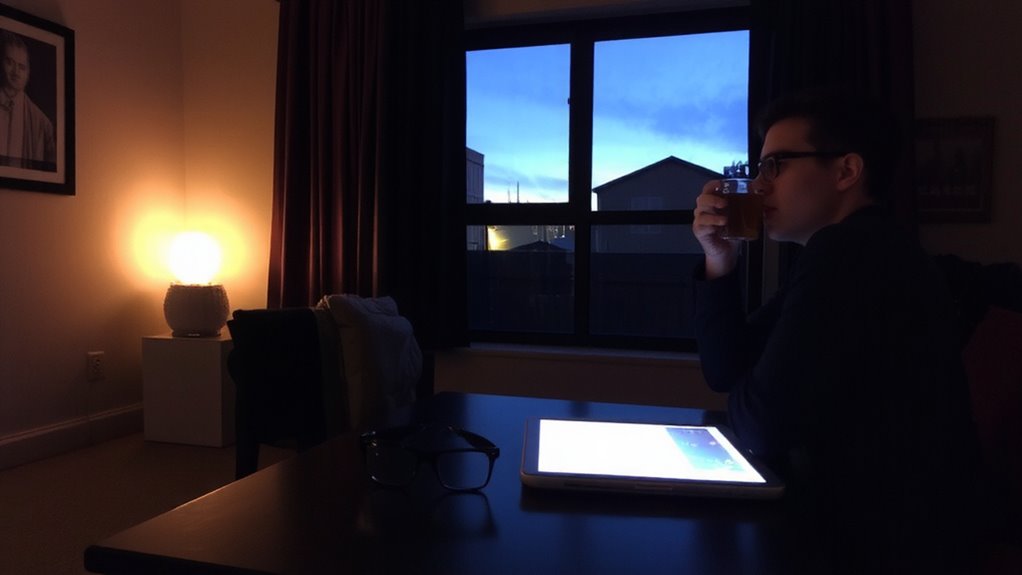
Since blue light can interfere with your body’s melatonin production in the evening, reducing exposure during the hours before bed helps protect your natural sleep rhythm. You can use light filters on screens to reduce blue wavelengths, which may otherwise trick your brain into thinking it’s still daytime. These filters are built into most smartphones and computers or available as apps, often with customizable settings and trial periods. Wearing blue-blocking glasses is another option, especially if you’re sensitive to screen use at night. They’re designed to minimize eye strain and support melatonin release. While some find these tools helpful for improving sleep quality, results vary. Consider testing a few options at home to see what fits your routine. Check warranty details when buying specialty glasses or lighting to guarantee durability and performance.
Get Morning Light to Set Your Sleep Clock
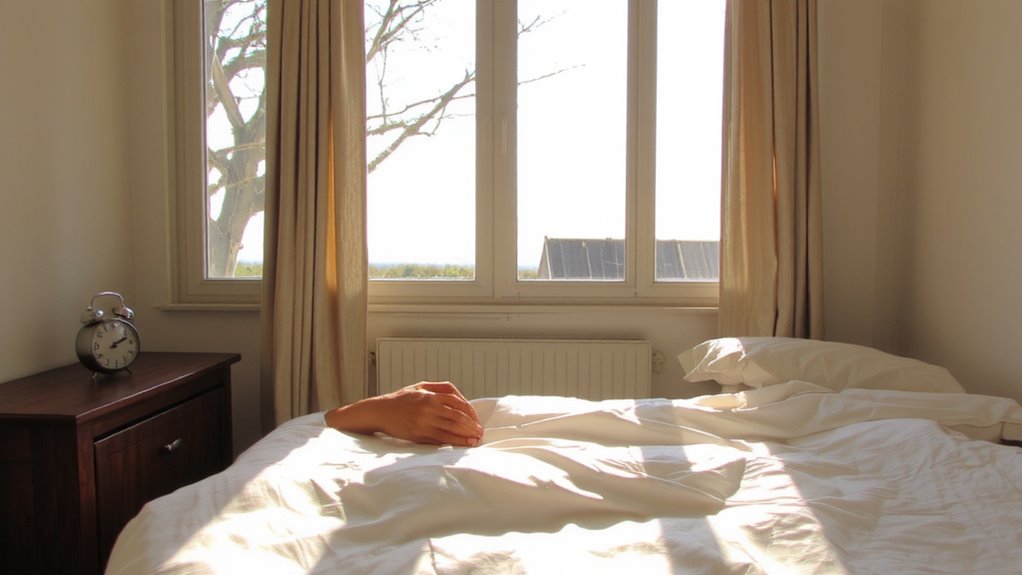
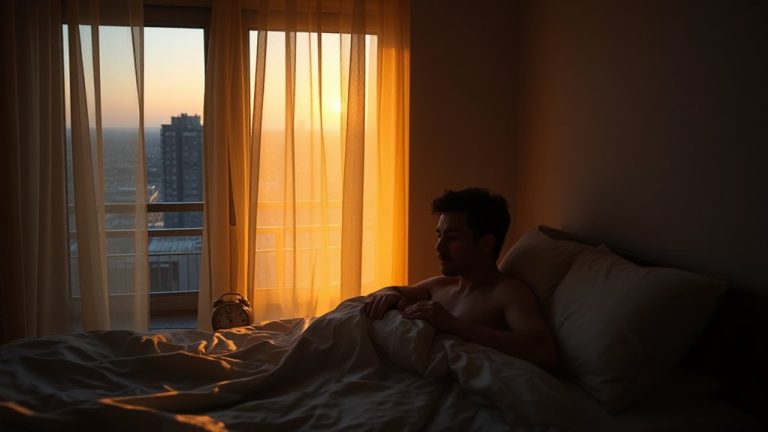
When you get bright light early in the day, especially from sunlight, it helps reset your internal clock and strengthens your natural melatonin cycle. Exposure to morning light signals your body to stop producing melatonin, making you feel more alert and awake. This helps align your sleep schedule with your natural rhythms, improving sleep quality over time. Even on cloudy days, outdoor light is much brighter than indoor lighting and works faster to set your clock. If you struggle to wake up or get outside, consider a sunrise simulation lamp. These devices gradually brighten your room, mimicking dawn and easing your body into wakefulness. They’re especially useful in winter months or for people with limited morning sun exposure. Consistent use supports better timing of melatonin release each night. Try using one for at least two weeks to evaluate its effects on your sleep onset and morning alertness. For effective alternatives, explore top-rated sleep therapy lamps that support circadian rhythm regulation.
Switch to Warm Bulbs for Better Melatonin
Light plays a quiet but powerful role in shaping your sleep. In the evening, your body expects a drop in light temperature to start releasing melatonin. Cool-white or blue-tinted bulbs delay this process. Switching to warm bulbs supports natural melatonin release. The bulb color you choose directly affects this shift.
| Bulb Type | Light Temperature (Kelvin) | Effect on Melatonin |
|---|---|---|
| Incandescent | 2700K | Supports release |
| Warm LED | 2200K–2700K | Promotes release |
| Cool White LED | 4000K–5000K | Suppresses release |
| Daylight LED | 5000K–6500K | Strongly suppresses |
| Halogen | 3000K | Mild suppression |
Choose bulbs at or below 2700K in bedrooms and living areas. These warmer tones mimic sunset light, helping your body prepare for rest. Many warm LEDs are energy-efficient and last years. Some come with warranties up to 10 years-ideal for long-term sleep hygiene adjustments. For even greater benefits, consider red light bulbs which are specifically designed to minimize circadian disruption and enhance sleep quality.
Reduce Screen Time Before Bed
Though your screen habits might seem harmless, the blue light they emit can interfere with your body’s ability to wind down at night. This type of light suppresses melatonin, the hormone that signals it’s time to sleep, making it harder to fall and stay asleep. Phones, tablets, and computers all produce significant blue light, especially in dark environments. To protect your sleep, consider starting a digital detox at least one hour before bed. Swap screens for low-light activities like reading a book or journaling. If you must use devices, enable night mode settings to reduce blue light emission. These adjustments don’t require drastic changes but do offer measurable improvements in sleep quality. Over time, consistent screen reduction may decrease reliance on sleep aids. Small, informed choices now support long-term sleep health without discomfort or inconvenience.
Make Your Bedroom Darkness-Ready
Cutting back on screens helps lower blue light exposure, but even small sources of light in your room can keep melatonin levels low and disrupt your sleep cycle. To fix this, consider blackout curtains, which block outside light completely and improve sleep quality over time. They’re made with thick, layered fabric that absorbs light and often come with a warranty for durability. Some attach to the wall or ceiling to seal gaps, boosting performance. If you can’t install curtains or travel often, eye mask use is a practical alternative. Look for contoured masks that don’t press on your eyes, made with soft, breathable materials. Try different styles to find one that stays in place and feels comfortable all night. Both options help signal your body it’s time to rest, supporting natural melatonin release. Test what works best for your space and sleep habits.
On a final note
You can improve sleep by managing light wisely. Morning sunlight helps set your internal clock, while reducing blue light at night supports melatonin release. Swap bright, cool bulbs for warm ones after dusk, and limit screen use before bed. A dark, quiet bedroom boosts sleep quality. These simple changes may reduce reliance on sleep aids. Try adjustments for at least a week to see results-small steps often lead to better rest over time.