Best Sleep-Friendly Lighting Systems for a Restful Night
Choose sleep-friendly lighting that supports your natural rhythm by reducing blue light and offering warm tones below 3000K. Models like the Revive Red Light Lamp or NorbSLEEP provide circadian-friendly warmth, while the Casper Sleep Glow Night Light auto-activates with motion. For ambiance, the UFO Star Projector combines soothing visuals with white noise. Many systems include dimming, app control, or Bluetooth. Devices often come with warranties or customer support to try with confidence-options vary in brightness, power, and features, so consider your nightly routine when deciding.
We are supported by our audience. When you purchase through links on our site, we may earn an affiliate commission, at no extra cost for you. Learn more. Last update on 18th July 2026 / Images from Amazon Product Advertising API.
Notable Insights
- Use circadian rhythm–supportive red or warm lights below 3000K to minimize melatonin disruption and promote natural sleep onset.
- Choose sunrise simulation alarms like the Philips Wake-Up Light to gradually ease into wakefulness with light and sound.
- Opt for motion-activated night lights such as the Casper Sleep Glow for hands-free, low-lumen illumination during nighttime movements.
- Select flicker-free, high-CRI reading lights with adjustable color temperatures for comfortable, eye-friendly evening reading.
- Integrate smart app-controlled lighting systems that support scheduling, dimming, and warm-to-red light transitions for optimal sleep hygiene.
Sound Oasis Bluetooth Tinnitus Therapy Alarm Clock

If you’re living with tinnitus and need a sleep aid that combines therapeutic sound support with smart, sleep-friendly lighting, this clock could be your best match. I use its 30 built-in, clinically backed sounds to shift my focus away from ringing, helping me fall asleep faster. The orange-backlit display won’t disrupt melatonin, and I adjust brightness across 31 levels, even turning it off completely. Bluetooth lets me stream calming audio, while the rear speaker delivers rich, even sound. I appreciate the sleep timer, headphone jack, and USB-C charging, which supports 7–16 hours of use.
Best For: Individuals with tinnitus seeking a portable, sound therapy-powered sleep aid with customizable lighting and Bluetooth connectivity.
Pros:
- Offers 30 clinically backed therapeutic sounds to help manage tinnitus and improve sleep
- Features a sleep-friendly orange-backlit display with 31 adjustable brightness levels and Bluetooth streaming capability
- Includes USB-C charging, 7–16 hours of battery life, and a headphone jack for private, undisturbed listening
Cons:
- No built-in Wi-Fi or smart speaker functionality for voice control or app-based sound expansion
- Sleep timer maxes out at 90 minutes, which may be limiting for some users
- Removable sound card slot requires purchasing additional cards separately to expand sound library
Sound Oasis Bluetooth Sleep Sound System (BST-150)

The Sound Oasis Bluetooth Sleep Sound System (BST-150) works best for people who need reliable sound and light control to improve sleep, especially those dealing with tinnitus or light sensitivity. I’ve found its 30 built-in, doctor-recommended sounds effectively mask background noise and support relaxation. The rear-facing speaker with subwoofer delivers rich, full audio, and Bluetooth lets me stream from my phone. Its orange backlit display offers 31 brightness levels, reducing eye strain at night. A rechargeable battery lasts 7–16 hours, and I can use it while charging via USB-C. It includes free app access and a helpful sleep guide, making it practical for home or travel use.
Best For: People seeking a portable, feature-rich sleep sound system to improve sleep quality, especially those managing tinnitus or sensitive to light and noise.
Pros:
- 30 doctor-recommended built-in sounds effectively mask noise and support relaxation
- Orange backlit display with 31 brightness levels reduces nighttime eye strain
- Rechargeable battery with USB-C charging allows use at home or on the go
Cons:
- No built-in Wi-Fi limits direct app sound streaming without Bluetooth
- Removable sound cards require additional purchases for expanded sound options
- Limited bass projection in larger rooms due to compact speaker design
Casper Sleep Glow Night Light, White, Two Pack
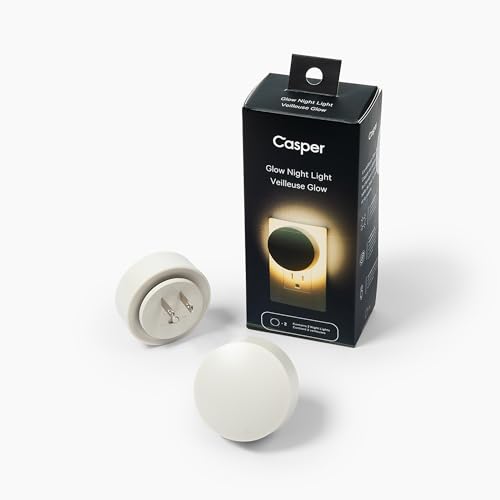
I choose the Casper Sleep Glow Night Light, White, Two Pack when I need soft, reliable lighting that won’t disrupt my sleep cycle, especially if I’m moving around at night. It uses motion and ambient light sensors to turn on automatically, glowing gently within 2 to 4 meters. The 12-lumen LED emits warm white light, dimming after I return to bed, which helps maintain my night vision. It’s corded, uses 2.3 watts, and requires no batteries. Each round, matte-finish unit mounts directly into a wall outlet. They’re not waterproof, so I keep them indoors. Casper backs them with a 1-year warranty.
Best For: People seeking a non-disruptive, motion-activated night light to safely navigate dark rooms while preserving sleep quality.
Pros:
- Automatically activates with motion and ambient light sensors for hands-free, gentle illumination
- Emits a soft 12-lumen warm white light that gradually dims to maintain night vision
- Energy-efficient, corded design with no batteries required and low 2.3-watt power consumption
Cons:
- Not waterproof, limiting use to indoor, dry locations like bedrooms and hallways
- Fixed brightness level with no manual brightness adjustment beyond touch control
- Plugs directly into outlet, which may block access to the second outlet in a duplex socket
Revive Red Light Lamp 660nm Sleep Aid

Who benefits most from a lighting solution that supports natural sleep without disrupting melatonin levels? I’ve found the Revive Red Light Lamp 660nm helps people sensitive to blue light, shift workers, or anyone struggling with sleep onset. Its 660nm red LED light supports melatonin production and circadian rhythm regulation. I appreciate the flicker-free glow that lasts 20,000 hours. The 360° touch dimmer and app control make adjusting brightness easy. It’s safe for nurseries and ideal for bedrooms or reading nooks. I use it before bed to wind down, and it’s improved my sleep quality without harsh light.
Best For: Individuals sensitive to blue light, shift workers, and those struggling with sleep onset who want to support natural melatonin production and improve sleep quality.
Pros:
- Delivers 660nm red light proven to support melatonin production and circadian rhythm regulation
- Offers dual control via app and 360° touch dimmer for customizable, flicker-free brightness
- Compact, portable design with soft red glow ideal for bedrooms, nurseries, and nighttime use
Cons:
- Limited to red light only, which may not suit users wanting white or color-changing lighting
- App functionality may be unnecessary for users preferring simple manual controls
- Higher upfront cost compared to standard night lights without red light therapy benefits
UFO Star Projector with White Noise & RGB

When seeking a sleep-friendly lighting system that doubles as a soothing ambiance tool, the UFO Star Projector with White Noise & RGB stands out for anyone wanting both visual and auditory support for relaxation-especially if you’re sensitive to harsh light or restless silence. I use its 360° rotating galaxy projections-like Saturn, Black Hole, or Milky Way-to soften my ceiling into a calming night sky, adjustable in focus and viewable up to 754 sq ft. The 15 white noise options, from rainfall to ocean waves, help quiet my mind, while the RGB night light offers gentle color shifts. It runs via USB, has a 4-hour auto-off default, and includes a remote. With 13 film discs, Bluetooth audio, and a solid ABS build, it’s practical for nightly use. FlyLily’s 24-hour support makes troubleshooting quick, and its CE, FCC, and RoHS compliance guarantees safety. It’s not battery-powered, so cord access is needed, but the lack of batteries means less maintenance. For under-bed, desk, or bedside setups, it balances function and calm without glare or noise spikes-ideal for light-sensitive or noise-reactive sleepers.
Best For: Light-sensitive or noise-reactive individuals seeking a multifunctional, sleep-supportive ambiance device with immersive visuals, soothing audio, and safe, corded operation.
Pros:
- Offers 360° rotating galaxy projections with manual focus and coverage up to 754 sq ft for immersive, customizable stargazing
- Combines 15 white noise options, RGB night light, Bluetooth speaker, and auto-off timer for comprehensive relaxation support
- Durable ABS construction with CE, FCC, RoHS compliance and responsive 24-hour customer support for safety and reliability
Cons:
- Requires constant USB power connection, limiting placement flexibility without nearby outlets
- Not portable due to lack of battery power, making it unsuitable for wireless or on-the-go use
- Remote control functionality may be limited in range or responsiveness in larger rooms
Philips SmartSleep Wake-Up Light HF3650/60
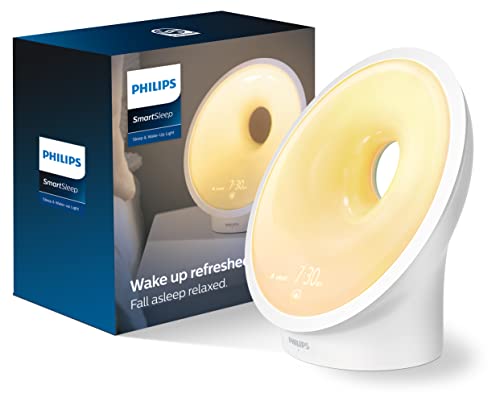
Could your mornings feel more energized and your nights more peaceful with a light that adapts to your body’s rhythms? I rely on the Philips SmartSleep Wake-Up Light HF3650/60 because it mimics sunrise and sunset naturally, easing me awake with light and sound. Doctors and pharmacists recommend it, and clinical proof supports its benefits for sleep regularity. It features a RelaxBreathe program, FM radio, and a midnight light-all customizable. The display dims automatically, and it includes a phone charging dock and power backup. I appreciate the smart snooze and bedside lamp for convenience. Its proven support for healthy sleep cycles makes it a reliable choice.
Best For: Individuals seeking a clinically validated, feature-rich wake-up light to improve sleep quality and support natural circadian rhythms.
Pros:
- Clinically proven to enhance sleep-wake regularity and morning mood with sunrise and sunset simulations
- Comprehensive features including RelaxBreathe breathing guide, FM radio, bedside lamp, and phone charging dock
- Highly customizable light and sound settings with smart functionalities like auto-dimming and power backup
Cons:
- Higher price point compared to basic alarm clocks or simpler wake-up lights
- Some features may have a learning curve for users unfamiliar with smart sleep devices
- Limited color temperature customization compared to advanced smart lighting systems
NorbSLEEP Low-Blue LED Sleep Light (4 Pack)

I’ve found the NorbSLEEP Low-Blue LED Sleep Light (4 Pack) works best for people who want to support their natural sleep cycle without changing their nightly routine. These 6W bulbs emit a 2650K warm light that mimics sunset tones, helping your body produce melatonin naturally. With 520 lumens and a 97 CRI, they’re bright enough for reading but low in blue light, so they won’t disrupt sleep. They’re dimmable, instant-on, and fit standard E26 fixtures. Made of aluminum and UL-listed, each bulb lasts about 25 years. The 4-pack works well paired with NorbSMILE daytime lights. Backed by Amazon’s 30-day return, they’re a practical trial.
Best For: Individuals seeking to support natural melatonin production and circadian rhythm with low-blue lighting that fits seamlessly into their existing evening routine.
Pros:
- Emits a 2650K warm light that mimics natural sunset tones, promoting melatonin production without disrupting sleep
- 520 lumens and 97 CRI provide clear, high-quality illumination ideal for reading and nighttime use
- Dimmable, instant-on, and compatible with standard E26 fixtures, offering convenience and long-term durability with a 25-year lifespan
Cons:
- Not battery-operated, limiting use to corded electrical outlets
- Higher upfront cost compared to standard LED bulbs, though offset by longevity
- Optimal benefits require pairing with daytime lighting (e.g., NorbSMILE), which is sold separately
Dicoool USB Touch Bedside Table Lamp

The Dicoool USB Touch Bedside Table Lamp is a practical choice for anyone seeking a simple, functional light source with added convenience features for small indoor spaces like bedrooms, dorms, or nurseries. I appreciate its warm 3000K light and dimmable touch control, which help create a calm atmosphere conducive to sleep. It includes a built-in USB A and Type C charging station, so I can power devices without extra outlets. The matte cream finish and linen shade give it a soft look, while the 6W LED provides 680 lumens-bright enough for reading but not too harsh. At under 1.3 pounds, it’s lightweight and easy to place. It’s UL listed, requires no assembly, and comes with a bulb. Buyers get Amazon’s 30-day return option, and warranty details are available.
Best For: Individuals seeking a compact, stylish bedside lamp with integrated device charging and adjustable lighting for small indoor spaces like bedrooms, dorms, or nurseries.
Pros:
- Features dimmable touch control and warm 3000K lighting ideal for creating a relaxing atmosphere
- Includes built-in USB A and Type C charging ports for convenient device charging
- Comes with a 6W LED bulb, requires no assembly, and is UL listed for safety
Cons:
- Not water-resistant, limiting use to dry indoor environments only
- Maximum brightness of 680 lumens may be insufficient for task lighting in larger rooms
- Lightweight design may feel less sturdy on uneven or wobbly surfaces
LED Reading Light with USB & Dimmable Touch Control
Though I prioritize a restful night’s sleep, I still want to unwind with a book without disrupting my circadian rhythm, which is why this LED Reading Light with USB & Dimmable Touch Control works best for light-sensitive readers or anyone managing sleep disorders. Its 15-inch flexible gooseneck and aluminum build offer durable, precise positioning, while the flicker-free beam targets pages without flooding the room. I appreciate the warm, natural, and white light options, adjustable with a touch, and the dimming lets me fine-tune brightness. It mounts easily and includes a USB port for charging devices-handy during nightly routines. The 2-pack adds value, and support responds within 12 hours, making trial low-risk.
Best For: Light-sensitive readers or individuals managing sleep disorders who want customizable, targeted lighting for nighttime reading without disrupting their circadian rhythm.
Pros:
- Flicker-free, dimmable LED with 3 color temperature settings allows personalized, eye-friendly illumination
- 15-inch flexible gooseneck and wall/headboard mounting enable precise positioning for comfortable reading
- Built-in USB port and 2-pack value enhance convenience and functionality for bedside use
Cons:
- Lacks an on/off switch separate from the touch control, which may lead to accidental activation
- USB port output (5V 1A) is adequate but not fast-charging for modern devices
- Installation requires wall mounting, which may not suit renters or those preferring clamp-style lights
Casper Sleep Glow Light, Double Pack, White
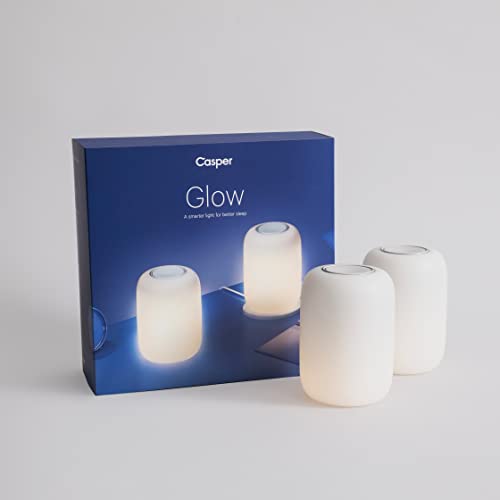
If you’re someone who winds down with a book or struggles to signal to your body that it’s time to sleep, the Casper Sleep Glow Light, Double Pack, White offers a subtle yet effective solution. I use it to create a calm glow that eases my nighttime routine. Its built-in gyroscope lets me twist to adjust brightness smoothly. The wireless charging is fast, and each charge lasts a long time. It connects to an Apple iOS app, so I can schedule lighting and fine-tune settings. The twin set fits well in shared spaces, and the design stays unobtrusive.
Best For: Nighttime readers and relaxation seekers looking for a seamless, app-controlled lighting solution to support a calming bedtime routine.
Pros:
- Built-in gyroscope allows intuitive brightness adjustment with a simple twist
- Wireless fast charging and long battery life enhance convenience and usability
- Integrates with Apple iOS app for customized scheduling and precise lighting control
Cons:
- Limited app compatibility, working only with Apple iOS devices
- Higher price point compared to standard bedside lamps
- Subtle glow may not provide enough light for users needing brighter illumination
Factors to Consider When Choosing Sleep-Friendly Lighting Systems
You’ll want to pick a sleep-friendly light that fits your nightly routine and room setup. Look at the light spectrum, brightness control, and color temperature-these affect how well your body winds down. Smart features, easy installation, and dimming options can help you adjust the lighting without hassle, especially if you’re sensitive to glare or trying to manage sleep patterns over time.
Light Spectrum Selection
What kind of light are you exposed to after sunset? Blue-heavy light between 400–500 nm suppresses melatonin, disrupting your sleep cycle and making it harder to fall asleep. You’re better off choosing bulbs that emit red or amber wavelengths-600–700 nm-since they interfere less with melatonin and support natural sleep onset. Look for lights with a color temperature below 3000K; these warmer tones help your body wind down. Make sure the lighting is flicker-free to avoid subtle eye strain that can keep you alert. A high CRI (above 90) gives truer color without needing brighter light, easing visual fatigue during evening reading or relaxing. These features work together to create a lighting environment that aligns with your body’s rhythms. You’ll likely sleep better when your evening light supports, rather than fights, your biology.
Brightness And Dimming Options
When selecting sleep-friendly lighting, brightness and dimming options play a key role in supporting your body’s natural wind-down process. You’ll want lights that offer low brightness levels-between 1 and 15 lumens-to provide just enough light without interfering with melatonin. Look for models with at least 10 dimming levels so you can fine-tune the glow to match your routine. Stepless or continuous dimming gives smoother shifts, helping ease your mind toward sleep. Automatic features like gradual dimming over time or motion-triggered fade-out let you maintain consistency without effort. Pairing dimming with low brightness guarantees minimal disruption to your sleep cycle. Check whether the system allows precise control via app, remote, or switch, and consider trying it during a warranty period to test how well it fits your nighttime habits.
Color Temperature Control
Because color temperature plays a direct role in regulating your body’s internal clock, choosing lights that support natural melatonin release is essential for restful sleep. You’ll want fixtures that offer warm white tones below 3000K, especially in the evening, since temperatures around 2650K or lower help maintain circadian rhythm by reducing blue light. Avoid using lights above 4000K at night, as they can delay sleep onset by suppressing melatonin. Look for tunable systems that let you adjust from cooler 5000K–6500K light in the morning to warmer 2700K–3000K in the evening. Models with smooth increments between 2700K and 5000K give you precise control, mimicking natural daylight changes. These features support healthy sleep cycles without harsh shifts. Check warranty terms and try systems with adjustable settings to find what works best for your routine.
Smart Connectivity Features
How do your lights know when to wind down for bedtime? They sync with your smartphone, using smart connectivity to automate schedules, adjust brightness, and follow your circadian rhythm. You can set personalized routines that gradually dim the lights, mimicking sunset to support natural melatonin release. With Bluetooth, you stream sleep sounds or control settings through an app, tailoring the environment without moving. Voice control lets you adjust color or intensity hands-free, while remote controls offer quick, tactile changes. These systems use automatic time sync to turn lights on or off at the same time every day, helping you stick to a consistent sleep-wake cycle. You maintain control over your routine, with programmable timers that adapt to your needs. Most apps allow trial periods, so you can test settings before committing. Warranties often cover connectivity issues, giving you peace of mind as you fine-tune your rest.
Ease Of Installation
You’ve already set up your lights to sync with your phone and adjust throughout the evening, but setting them up shouldn’t mean wrestling with wires or calling an electrician. Choose systems that plug into standard outlets or screw into common E26 bases so you can install them fast, no hardwiring needed. Pick corded models with included cables so you’re ready to go right out of the box. If you want flexibility, go for portable lights with built-in batteries or USB-C charging-they work anywhere, no outlet required. Look for tool-free mounting options that attach easily to walls or headboards with adjustable arms for quick positioning. Wireless charging, touch controls, and smartphone sync cut down on extra wiring and simplify setup even more. These features save time and let you test placement without commitment, making it easier to find what works for your sleep space.
Timer And Automation Settings
While you’re winding down for the night, a light that turns off on its own can make a real difference in your sleep routine. Timer settings with 30-, 60-, or 90-minute auto-shutoffs match how long it usually takes to fall asleep, so you’re not lying in light all night. Automated dimming slowly lowers brightness, mimicking sunset and helping your body ease into rest. Some systems even offer sunrise simulations, gently brightening 15 to 30 minutes before your alarm to support consistent wake times. Motion-activated lights give you short-term illumination when you move, then switch off automatically, cutting down on sleep disruptions. With smart lighting, you can use an app to program daily schedules that follow natural light cycles, adjusting color and brightness throughout the day. These features work together to support better sleep hygiene without needing constant input from you.
Frequently Asked Questions
How Do I Clean My Sleep-Friendly Light Device?
You clean your sleep-friendly light device by powering it off and unplugging it first. You wipe the surface with a soft, dry cloth; if needed, you slightly dampen the cloth with water or a mild cleaner, avoiding harsh chemicals. You don’t spray liquid directly on it. You gently clean sensors or lenses with a cotton swab. You let it dry completely before use, ensuring no moisture enters vents or ports.
Can These Lights Be Used Outdoors?
You can’t use these lights outdoors because they’re built for indoor spaces and aren’t weatherproof. Their construction lacks sealing against moisture or temperature shifts, so rain or humidity could damage internal parts. If you want outdoor lighting that won’t disrupt sleep, look for fixtures labeled for exterior use with warm, dimmable LEDs. Always check the product’s IP rating and warranty-using indoor lights outside usually voids coverage.
Are Replacement Parts Available for These Lamps?
Yes, you can get replacement parts for these lamps, and manufacturers usually stock bulbs, bases, and adjustable arms. You’ll find ordering simple through the brand’s website or customer service. Most models are built for easy maintenance, so swapping parts doesn’t require tools. Check warranty details-many offer one to two years of coverage, including component failures. That helps if something breaks during regular use. Always keep your receipt and model number ready.
Do Any of These Lights Work During Power Outages?
You’ll find most of these lights don’t work during outages unless they’re battery-powered or have built-in backups. Plug-in models usually stop when power drops. Some LED lamps with USB ports stay on briefly using internal batteries. Check product specs for “battery backup” or “uninterruptible” features. If outage performance matters, choose a light marketed for emergency use. Test units if possible, and consider a separate backup light to support nighttime routines safely.
Can Children Safely Use These Sleep Lighting Systems?
Yes, children can safely use these sleep lighting systems if you choose models with cool-to-the-touch surfaces, low heat emission, and shatterproof materials. Look for units with automatic shutoff timers and dimmable brightness to prevent overexposure. Most are UL-certified and use LED tech, making them energy-efficient and safe. Always supervise initial use, check for small parts, and opt for cordless designs when possible to reduce risks.