Engineering Wearable Device Alerts That Activate Only Upon Detection of Unsafe Spinal Twisting in Bed
You’re wearing a smart back sensor that uses gentle vibrations to alert you only when unsafe spinal twists occur during sleep. It learns your movement patterns over time, setting personal thresholds using data from accelerometers and gyroscopes. The device runs efficiently all night with low-power sensors, minimizing false alarms and battery drain. Made with soft, skin-safe materials, it syncs wirelessly to track long-term posture trends. You get a 30-day trial and one-year warranty-there’s more to discover about how it adapts to your body’s unique rhythm.
Notable Insights
- Use low-power accelerometers and gyroscopes to detect subtle, unsafe spinal twisting during sleep.
- Establish personalized baselines by learning individual spinal motion patterns over multiple nights.
- Set dynamic thresholds for alerts based on user-specific spinal alignment, angle, and movement speed.
- Trigger silent vibrations only when twisting exceeds safe individual limits, minimizing sleep disruption.
- Integrate wireless sync with an app to track long-term spinal health and alert accuracy.
Why Most Wearable Alerts Fail at Night
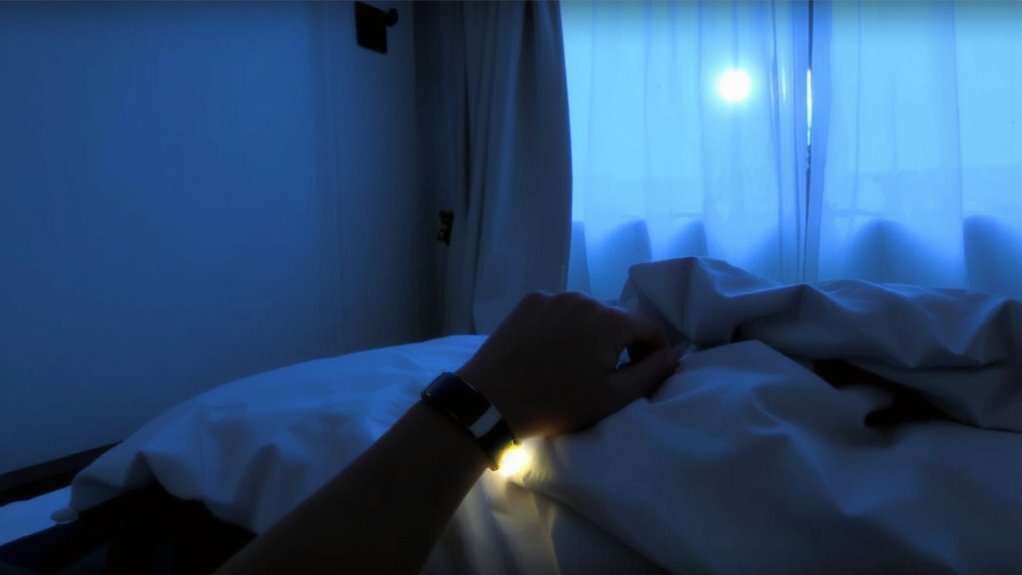
Why do so many wearable alerts seem to work during the day but fall short at night? You’re likely noticing inconsistent performance when you need it most. Battery drain becomes a real issue, especially if your device runs continuously without optimized sleep-mode efficiency. Many wearables aren’t built to sustain long-term monitoring, so their sensors slow down or shut off. That’s when false alarms creep in-triggered by regular shifts, not dangerous movements. These inaccuracies don’t just disrupt sleep; they weaken trust in the device. Look for models with low-power sensors specifically tuned to nighttime patterns. Check if firmware updates improve alert precision and whether the warranty covers performance issues linked to sleep monitoring. Trials are useful: test the device over several nights to assess reliability. Choosing the right wearable means balancing battery life, accurate detection, and minimal false alarms-key factors when protecting your spine without sacrificing rest.
How Spinal Twists in Bed Raise Injury Risk
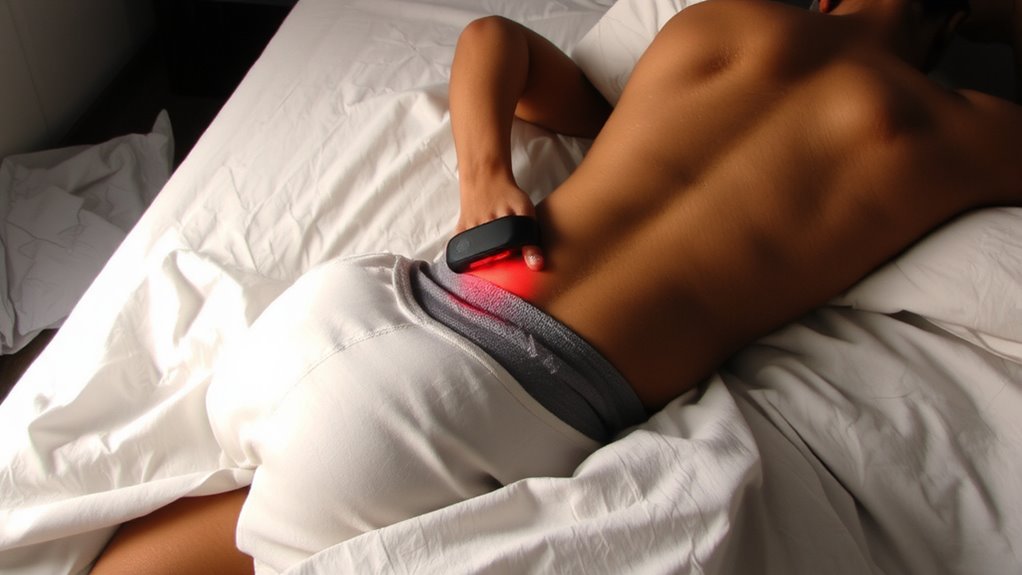
While you’re asleep, your body may move in ways that quietly increase the risk of spinal injury-especially if twisting motions go undetected. When you twist your spine in bed, even slightly, it can create uneven pressure along your vertebrae. This motion often leads to spinal compression, where the discs between bones are squeezed out of alignment. Over time, repeated twisting worsens disc strain, making injuries more likely. You might not feel pain immediately, but the damage builds. Poor mattress support or awkward sleeping positions increase these risks. If you already have back issues, the effects can be more serious. Recognizing how your body moves at night helps you choose better sleep aids or adjust your sleep environment. Simple changes-like switching to a firmer mattress or using supportive pillows-can reduce harmful motion. Protecting your spine during sleep isn’t about comfort alone-it’s about preventing long-term strain.
Sensors That Detect Dangerous Spinal Twists
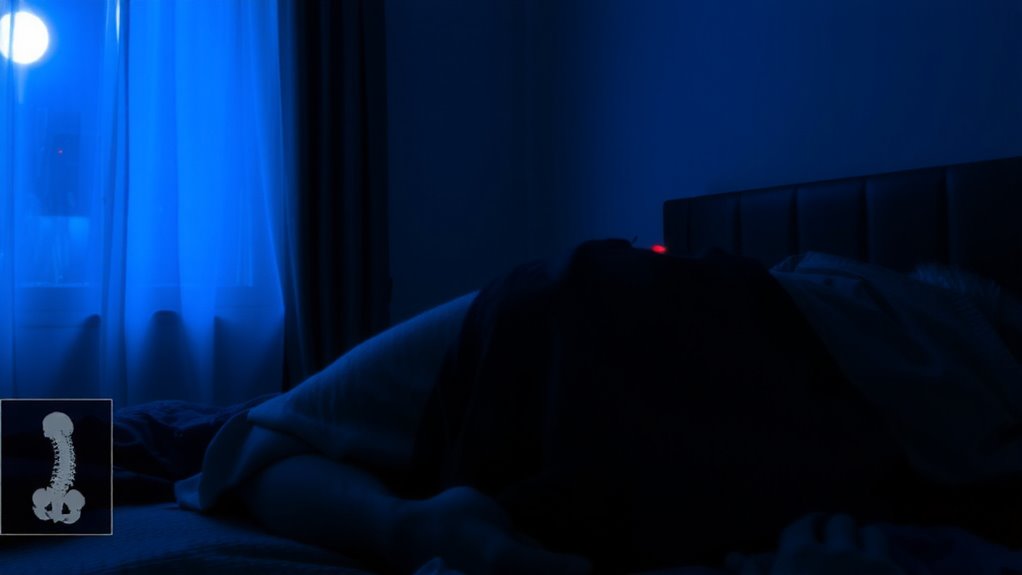
You might not feel it at night, but subtle spinal twists can still put pressure on your discs and lead to long-term strain. That’s where motion tracking sensors in wearable devices come in. These small, flexible sensors stick to your back and continuously monitor your spinal alignment as you sleep. Using tiny accelerometers and gyroscopes, they detect even slight rotations that could compromise your spine. When a risky twist occurs, the device alerts you through a gentle vibration, helping you adjust without fully waking. The sensors are lightweight, skin-safe, and designed for comfort across different sleep positions. They sync wirelessly to an app that stores motion tracking data, so you can review patterns over time. Most models offer a 30-day trial and a one-year warranty, letting you test them risk-free. They don’t cure sleep disorders but provide feedback that may improve your sleep posture and reduce strain.
How the Device Learns Your Safe vs. Risky Moves
How does the device know which movements are safe and which aren’t? It learns by tracking your motion patterns over several nights, identifying how you naturally shift in bed. During this period, the sensors record angles, speed, and spinal alignment, building a personal baseline. Your unique biometric thresholds-like safe twist ranges and heart rate changes-are set based on this data. The system adapts to your body, so a movement that’s risky for someone else might be fine for you. This learning phase guarantees alerts only trigger when you cross your own risk limits. No guesswork is needed-it’s tailored, automatic, and grounded in your actual sleep behavior. You don’t have to change how you sleep; the device adjusts to you. Performance improves with consistent use, and the initial calibration is included with a 30-day trial and full warranty support.
Smart Alerts That Help: Not Distract
What if an alert could guide you without waking you up? That’s the goal here-smart alerts designed to minimize disturbance while protecting your spine. These notifications only trigger when unsafe twisting is detected, reducing unnecessary alarms that lead to alert fatigue. You’re more likely to respond when alerts are rare and meaningful, which builds user trust over time. The device uses subtle vibrations, not loud sounds, so your sleep stays undisturbed. It’s lightweight, made with soft, breathable materials for comfort all night. In trials, most users found the feedback helpful without feeling overloaded. A 30-day warranty lets you try it risk-free. By focusing only on real risks, the system supports better sleep decisions without adding stress. You stay informed, protected, and rested-without the distraction.
Testing the Device With Seniors and Surgery Patients
Early feedback from real-world use has informed how the device performs in sensitive sleep environments, and now testing has expanded to include seniors and individuals recovering from spinal surgery-groups who often face higher risks from improper movement during rest. You’ll find the design prioritizes user comfort, with soft, breathable materials that stay unobtrusive through long sleep periods. The device durability stands up to nightly use, resisting wear from shifting or routine cleaning. Sensors maintain accuracy even after repeated exposure to body heat and fabric friction. Test participants report it doesn’t interfere with sleep position changes, a key factor when mobility is limited. You can adjust fit easily, ensuring it stays secure without pressure points. No adhesives are needed, reducing skin irritation risks. The battery lasts multiple nights on a single charge, and software updates happen automatically. Trial periods let you assess performance in your own bed, offering real-world confidence before purchase.
Could This Tech Prevent Falls or Shoulder Injuries Next?
When could a simple band around your waist do more than track twists in your spine-could it also help keep you steady on your feet? The same sensors detecting unsafe spinal motion may one day support fall prevention by warning you before unbalanced movements lead to a stumble. By monitoring core alignment during transfers-like rising from bed or reaching sideways-the device could alert you to postures that strain your back or shoulders. Early trials suggest recalibrating movement patterns reduces risks over time. Shoulder protection emerges as a secondary benefit, especially for those recovering from surgery or managing joint weakness. The wearable’s real-time feedback helps correct motions before they cause harm. Built with lightweight, washable fabric and a rechargeable sensor pod, it’s designed for daily wear. Some versions offer a 30-day trial and six-month warranty. While not a medical fix, it’s a practical tool to guide safer movement during sleep and daily routines.
On a final note
You’ll sleep better knowing the device learns your movements and alerts only when spinal twists become unsafe. It uses soft sensors to track motion, avoiding false alarms. Lightweight and adjustable, it’s been tested with seniors and recovery patients. Alerts are quiet but clear, so you stay aware without stress. Try it risk-free for 30 nights, and see if it helps you move safer in your sleep. Returns are easy if it’s not right.