Why Using a Smartphone in Bed Worsens Neck Strain and Delays Sleep Onset
Leaning over your phone in bed strains your neck because the low angle increases spine pressure from 12 to over 60 pounds. This forward head tilt stresses your cervical spine over time. Blue light from the screen also suppresses melatonin, disrupting your sleep cycle. Scrolling keeps your brain alert, delaying sleep onset. Propping your phone at eye level and reducing screen time before bed can help-small changes that support better posture and natural sleep patterns.
Notable Insights
- Holding your phone low in bed increases neck strain by tilting the head forward, doubling spinal load.
- At 60° forward tilt, neck pressure rises to 50–60 lbs, stressing the cervical spine over time.
- Blue light from screens suppresses melatonin, disrupting circadian rhythm and delaying sleep onset.
- Scrolling at night causes cognitive arousal, keeping the brain alert instead of preparing for sleep.
- Propping the phone at eye level and charging it outside the bedroom reduce strain and improve sleep.
How Your Phone Hurts Your Neck in Bed
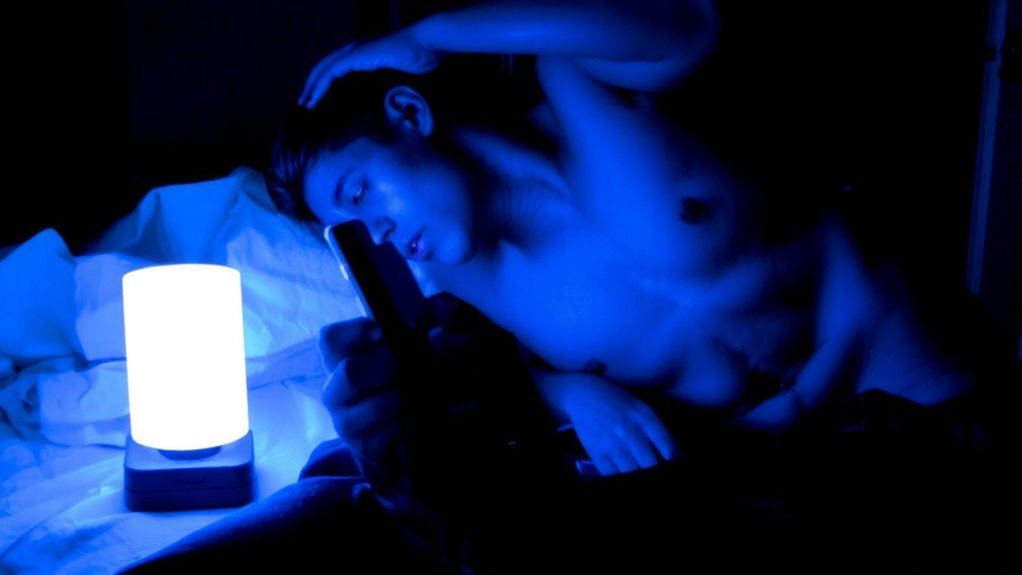
Leaning over your phone while lying in bed may seem harmless, but it places real strain on your neck. Poor text posture-hunching forward with your head down-increases stress on your cervical spine. When your device angle is too low, like when propped on your chest or lap, you’re more likely to tilt your head sharply, worsening the load. Over time, this can lead to discomfort, muscle fatigue, or even chronic neck issues. A better approach is propping your phone higher, near eye level, so your neck stays aligned. This reduces strain and supports a neutral spine. While pillows or bed-mounted holders can help maintain a healthier device angle, consistency matters most. You don’t need special gear to start-just awareness. Adjusting your text posture tonight may ease tension and improve how you feel in the morning. Small shifts now can make a lasting difference. Supportive sleeping positions are easier to maintain when using a bed frame designed for proper mattress alignment, such as those with sturdy best bed frames for mattresses.
How Screen Position Doubles Spine Pressure
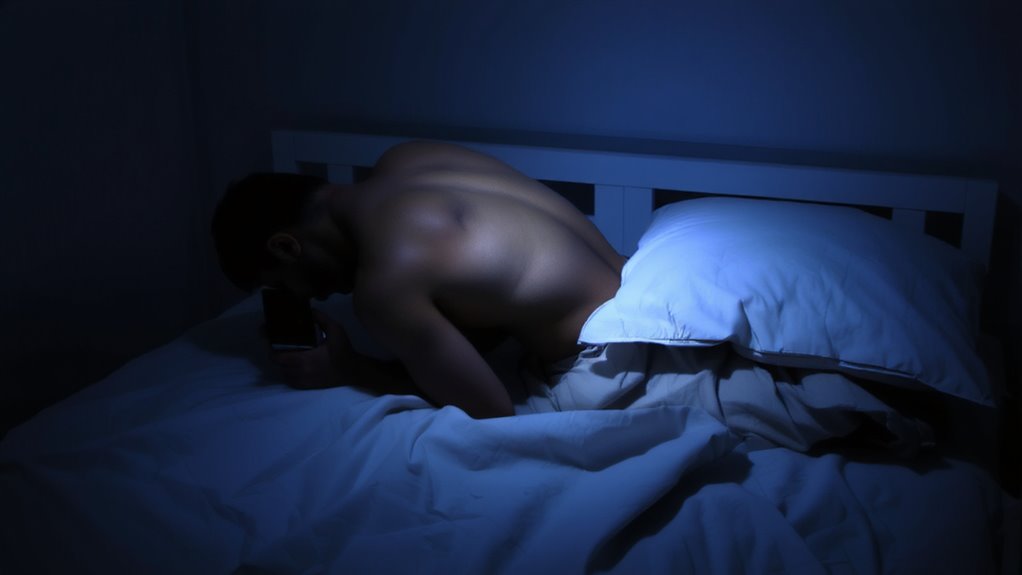
While you might not think much about where you place your phone before dozing off, the position of your screen can considerably increase pressure on your spine. Holding your device too low forces your neck forward, doubling spinal load. Maintaining an ergonomic posture reduces this strain markedly. Raising your phone with proper device elevation brings the screen closer to eye level, supporting a neutral spine.
| Neck Angle | Spine Pressure (lbs) | Device Position |
|---|---|---|
| 0° (neutral) | 10–12 | At eye level |
| 30° forward | 30–40 | Lap or chest level |
| 60° forward | 50–60 | Lower, like on blankets |
Simply propping your phone with a hands-free stand or pillow can improve device elevation. Small changes support better alignment and long-term comfort, especially if used nightly. Try adjustable sleep aids with trial periods to test what maintains ergonomic posture without disrupting rest. Using a cervical neck pillow can further support proper spinal alignment during screen use in bed.
How Blue Light Disrupts Your Sleep Cycle
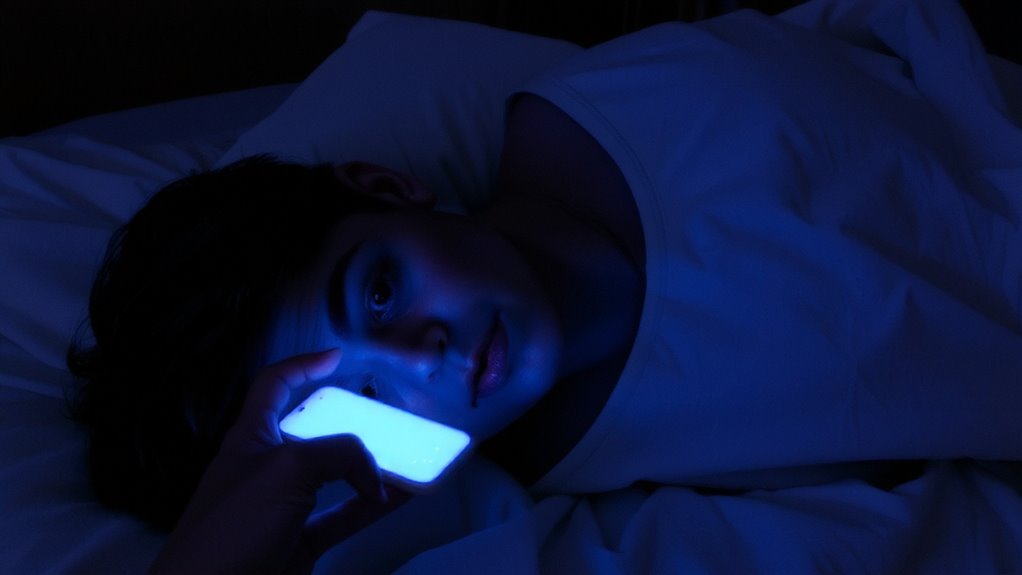
Have you ever wondered why scrolling through your phone at night makes it harder to fall asleep? The blue light from your screen contributes to circadian disruption by tricking your brain into thinking it’s still daytime. This delays your body’s natural wind-down process. At the same time, blue light causes melatonin suppression, reducing the production of this essential sleep hormone. Without enough melatonin, your sleep cycle loses its rhythm, making it harder to fall and stay asleep. Over time, this may affect sleep quality and contribute to sleep disorders. Limiting screen use at least one hour before bed can help your body maintain a healthier circadian rhythm. Some find blue light filters or nighttime modes useful, though their effectiveness varies. Consider testing these features to see if they improve your sleep onset. Simple changes like dimming screens and using warm-toned lighting at night support better sleep hygiene.
Why Nighttime Scrolling Keeps You Awake
What keeps you staring at your phone when you should be winding down? It’s not just habit-it’s cognitive arousal. Every message, video, or article pulls your brain into mental engagement, making it harder to relax. Your mind stays alert, processing information instead of preparing for rest. Scrolling triggers emotional reactions and quick decisions, which increases brain activity. This mental engagement delays sleep onset because your brain isn’t in a rest-ready state. Even if you feel tired, cognitive arousal keeps your internal systems active, disrupting natural sleep signals. Over time, this pattern can contribute to ongoing sleep difficulties. You don’t need extreme measures-just awareness of how mental stimulation affects your body’s readiness for sleep. Recognizing the impact helps you make small, informed choices that support healthier sleep patterns.
How to Break the Bedtime Phone Habit
You’ve likely felt how late-night scrolling keeps your mind racing, making it harder to fall asleep even when your body is tired. Improving sleep hygiene starts with setting boundaries-like charging your phone outside the bedroom. That small change supports a consistent digital detox, reducing blue light exposure and mental stimulation. Try using an old-school alarm clock so you won’t need your phone nearby. If you rely on your phone to wind down, set a nightly app limit or enable “Do Not Disturb” mode to minimize temptation. Over time, these habits condition your brain to associate bed with sleep, not screens. A digital detox doesn’t mean cutting out tech forever-it’s about timing and balance. Consider tracking your progress for a few weeks; many notice better sleep quality and less neck strain. It’s a practical trade-off worth trying.
Better Ways to Unwind Before Sleep
Isn’t it curious how the quiet moments before bed can make the biggest difference in your rest? Instead of scrolling, try reading books with physical pages or an e-ink reader, which emits less blue light and reduces eye strain. You’ll likely find it easier to relax, especially if you choose low-stimulation material. Listening to music at low volume through over-ear headphones or a small speaker can also help, particularly if you pick slow, instrumental tracks. These options support natural melatonin release and avoid disrupting your sleep cycle. Unlike screens, they don’t encourage mental engagement that delays sleep onset. Give each method a trial over a few nights-many libraries offer free audiobooks and e-books. Consider how your neck feels and whether you fall asleep faster. Small changes in routine can improve sleep quality without requiring supplements or sleep aids.
On a final note
Using your phone in bed strains your neck and delays sleep, so try holding it at eye level to reduce spine pressure. The blue light shifts your sleep cycle, making it harder to fall asleep. Instead of scrolling, try reading a book or using a sleep aid with a warm light and timer. Many have trial periods, so test what works. Small changes improve rest without drastic shifts.