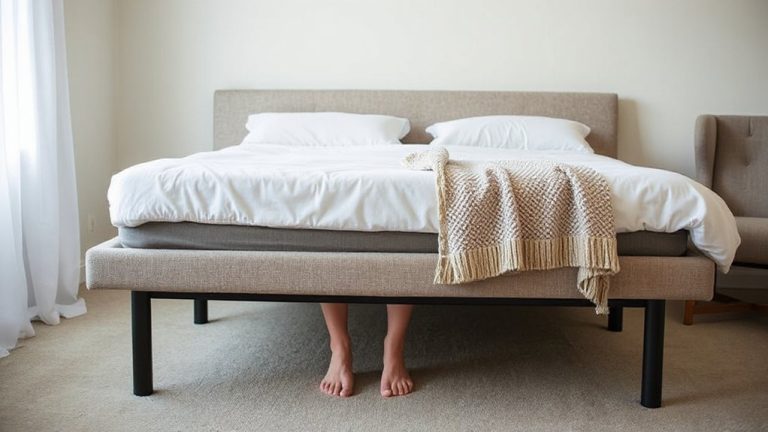
Designing a Bedroom Environment That Supports Joint Immobility Prevention and Restful Sleep
Set your bed height so the top of the mattress aligns with your bent knee-about 18 to 23 inches from the floor-to ease joint strain when sitting down or standing. Choose a high-density memory foam mattress with cooling gel to reduce pressure and regulate temperature, ideally with a 10-year warranty and 90-night trial. Consider an adjustable frame with quiet motors for customized support and smoother movement. Keep pathways clear, use non-slip flooring, and install motion-sensor lighting for safer nighttime navigation. Add personal alarms or wearable call buttons for added security. Control light with blackout curtains and keep the room between 60–67°F for deeper sleep. Smart adjustments like cooling pillows or dimmable lighting can enhance comfort over time-more thoughtful upgrades await.
Notable Insights
- Position the bed so the mattress top aligns with bent knee height (18–23 inches) for easier, safer access.
- Choose a high-density memory foam mattress with cooling features to reduce joint pressure and support spinal alignment.
- Use an adjustable bed frame with preset positions to relieve joint stress and enhance independence during rest.
- Keep pathways clear and install motion-sensor lighting to ensure safe, unobstructed movement at night.
- Maintain a cool (60–67°F), dark bedroom environment with blackout curtains and temperature-regulating bedding for optimal sleep.
Optimize Bed Height for Safer Entry and Exit
While getting in and out of bed might seem simple, choosing the right bed height can make a big difference if you’re dealing with joint stiffness or mobility issues. You’ll want a frame that lets your feet rest flat when sitting on the edge, reducing strain on hips and knees. Ideally, the top of the mattress should align with the height of your bent knee, roughly 18 to 23 inches from the floor. Proper bed placement matters-leave space on both sides for grabbing support or using assistive devices. Make sure the floor next to your bed offers good traction; a non-slip rug or textured mat can prevent slips when getting up at night. Pairing ideal height with stable floor traction improves safety and confidence. Test different bed heights if possible, especially if you use mobility aids. Many adjustable frames offer trial periods, letting you assess comfort and ease over time. For dorm residents or those in rental spaces, best bed risers can safely elevate bed height without permanent modifications.
Choose a Supportive Mattress to Reduce Joint Pressure
You’ve picked a bed height that makes getting up and down easier, and now it’s time to focus on what you’re actually sleeping on-your mattress. A supportive mattress helps reduce joint pressure and promotes better sleep. Memory foam conforms to your body, offering targeted pressure relief by evenly distributing weight and minimizing stress on hips, shoulders, and knees. Look for high-density memory foam-between 3 and 5 pounds per cubic foot-for longer-lasting support and fewer sagging issues. Mattresses with cooling gel infusions help prevent overheating, which can disrupt sleep. Consider ones with a 10-year warranty and sleep trials lasting at least 90 nights, so you can test comfort and support over time. A good mattress won’t cure joint conditions, but proper pressure relief can lessen discomfort and improve rest quality. Choose based on how well it supports your body’s natural alignment.
Add Adjustable Beds and Assistive Devices for Independence
Independence in sleep starts with control over your environment, and an adjustable bed frame can give you just that. You can raise your head or feet with the touch of a button, easing pressure on stiff joints and improving circulation while you rest. Look for models with quiet motors and sturdy frames that support your mattress without sagging. Many let you set preset positions for reading, lounging, or reducing snoring. Pair your bed with custom lighting-like motion-sensor strips or dimmable lamps-so you can see at night without straining. Add personal alarms within reach, such as wireless call buttons or wearable pendants, for safety during sudden discomfort. These devices boost confidence and reduce anxiety about moving alone. Most quality brands offer home trials and long warranties, letting you test comfort and reliability. Try different settings to find what helps you sleep better and move more freely. Top-rated models feature dual-motor systems for independent partner adjustments and zero-gravity positioning to enhance comfort and best adjustable beds performance.
Declutter and Organize for Easier Movement at Night
A clear space around your bed makes it easier to move at night, especially when joint stiffness or limited mobility affects how you shift in bed or get up to use the bathroom. Keep floor pathways wide and free of clutter so you can walk safely, even in low light. Place frequently used items like glasses, medication, or a phone within easy reach on a nightstand. Use night lighting along the path to the bathroom-motion-sensor or plug-in lights work well and reduce strain. Avoid heavy furniture or loose rugs that block movement or create tripping hazards. Choose storage with doors or lids to contain clutter but keep surfaces clear. Test different layouts to find what allows the smoothest transfer in and out of bed. A tidy, thoughtful setup supports safer nighttime mobility and reduces stress on joints, helping you stay independent and comfortable.
Control Light and Temperature for Better Sleep and Mobility
When light and temperature aren’t managed well, they can disrupt sleep quality and worsen joint stiffness, making it harder to move comfortably through the night. Effective light control helps signal your body when it’s time to rest-blackout curtains or smart shades reduce unwanted illumination, supporting natural melatonin release. For temperature regulation, aim for a bedroom climate between 60–67°F, which most people find ideal for deep sleep. Cooling mattresses, breathable bedding, and adjustable thermostats or fans let you maintain consistent comfort. Some sleep aids, like temperature-regulating pillows or wearable devices, offer trial periods so you can test performance. Poor regulation may aggravate discomfort, while steady conditions promote circulation and easier movement. Consider products with warranties that cover material degradation. Adjustments often require a few nights to evaluate fully, so give changes time before deciding. Good light control and temperature regulation support rest and joint mobility without extra effort. Apartments benefit from best blackout curtains that combine ease of installation with maximum light blockage.
On a final note
You can improve sleep and joint health by adjusting bed height, choosing supportive mattresses, and using adjustable frames for easier movement. Decluttering and managing light and temperature help maintain restful sleep cycles. Consider devices with trial periods or warranties to test comfort and function. These practical changes support mobility and sleep quality without requiring extreme adjustments, giving you flexible, effective solutions tailored to your nightly needs and physical comfort.