The Effects of Overstimulation on Sleep Quality in Toddlers
Overstimulation overwhelms your toddler’s developing nervous system, making it harder to fall and stay asleep. Evening screen time, loud noises, or active play can delay melatonin release and keep cortisol high, leading to restlessness and poor sleep quality. You might notice frantic energy, crying, or resistance to comforting routines. To help, create a calm pre-bed routine with dim lights and quiet time. Consistent habits improve sleep over time-you’ll discover effective strategies that support lasting rest.
Notable Insights
- Sensory overload keeps toddlers’ nervous systems in high alert, disrupting sleep onset and quality.
- Evening screen time delays melatonin release, making it harder for toddlers to fall asleep.
- Overstimulation from loud noises or active play elevates heart rate and hinders relaxation before bed.
- Toddlers may show frantic energy, crying, or resistance to calming routines when overstimulated at bedtime.
- High cortisol and low melatonin due to overstimulation interfere with restful, restorative sleep.
What Is Toddler Overstimulation and How It Affects Sleep?
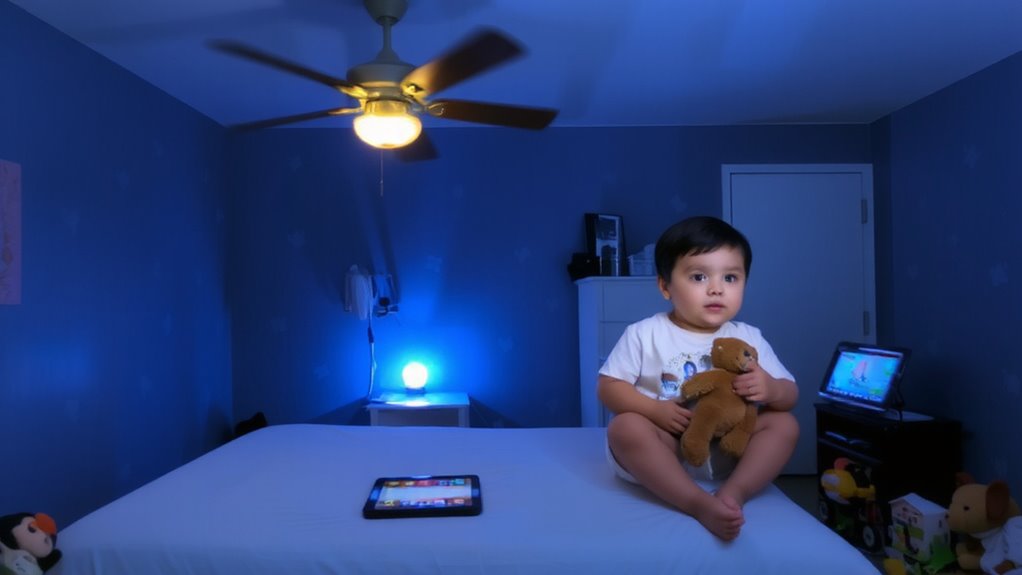
Why does your toddler seem wired despite being exhausted? It’s likely due to sensory overload-too much noise, light, or activity overwhelming their developing nervous system. This overstimulation can trigger emotional dysregulation, making it hard for your child to calm down, even when tired. Instead of relaxing, their body stays in high alert, disrupting sleep onset and quality. Over time, repeated episodes may contribute to irregular sleep patterns or mild sleep disorders. You might notice resistance at bedtime, frequent night wakings, or restless sleeping. Addressing the root causes-like minimizing stimulating activities before bed-can improve outcomes. Consider gentle, evidence-backed sleep aids only after evaluating environmental and behavioral factors. Many come with trial periods or warranties, allowing you to test effectiveness. Focus on gradual adjustments that support your toddler’s natural sleep rhythm, ensuring safer, more sustainable results over time.
Common Evening Overstimulation Triggers for Toddlers
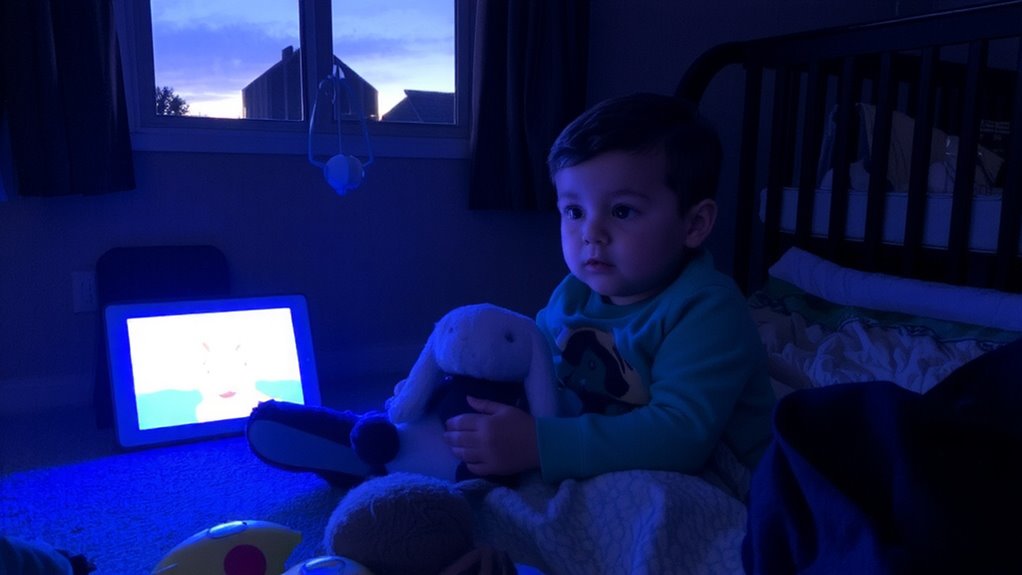
Many toddlers struggle to wind down at night because their senses are still buzzing from the day’s activity, and you might not realize how everyday routines are adding to that overload. Evening screen time, especially fast-paced shows or bright tablets, overloads their developing brains. Loud noises from appliances, shouting, or energetic play keep their nervous systems alert. Even seemingly harmless activities can disrupt sleep onset and quality. You can reduce these triggers by adjusting timing and environment. A small fan for white noise can effectively mask disruptive household sounds while promoting a consistent sleep-friendly atmosphere.
| Trigger | Effect on Sleep | Practical Adjustment |
|---|---|---|
| Evening screen time | Delays melatonin release | Stop 60 minutes before bedtime |
| Loud noises | Increases arousal | Use white noise or quiet zones |
| Active play late PM | Elevates heart rate | Shift to calmer routines after 7 |
Small changes in timing and exposure can improve your toddler’s ability to shift to sleep, supporting better rest without relying on interventions.
Signs Your Toddler Is Overstimulated at Bedtime
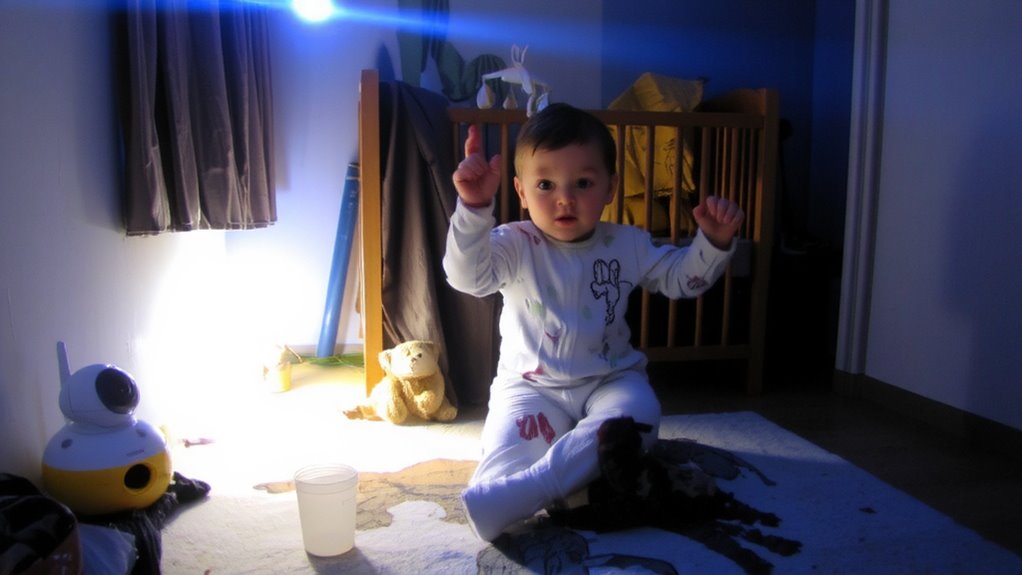
How can you tell when your toddler’s bedtime resistance isn’t just stubborn物料 but a sign of overstimulation? You might notice frantic energy, crying jags, or difficulty settling despite tiredness. They could resist familiar sleep associations, like a favorite blanket or lullaby, and seem confused or irritable during bedtime routines. Overstimulated toddlers may flinch at touch or sound, blink rapidly, or withdraw. Their bodies stay tense instead of relaxing into sleep. These reactions suggest their nervous system is overloaded. Consistent bedtime routines help signal when it’s time to wind down, yet overstimulation disrupts their ability to respond. Watch for cues like clinging, fussing, or sudden hyperactivity late at night. These signs mean your current approach may need recalibration-possibly earlier wind-down times or reduced sensory input. Adjusting sleep associations and streamlining routines can support calmer shifts to rest.
Why Overstimulation Makes It Hard to Fall Asleep
When your toddler seems wired despite being exhausted, it’s likely their brain is still processing a flood of sensory input from the day. Sensory overload from bright lights, loud sounds, or busy environments can disrupt normal brain chemistry, keeping cortisol levels high and melatonin low. This imbalance makes it hard for your child to shift into sleep, even when tired. Overstimulation causes the nervous system to stay alert, as if it’s still responding to external demands. You might notice restlessness, irritability, or difficulty settling-signs the brain hasn’t shifted into rest mode. Since quality sleep supports cognitive and physical development, recognizing how overstimulation affects sleep onset is key. Consider adjusting daytime activities and evening routines to reduce sensory input. While sleep aids or specialized products exist, their effectiveness varies. Always evaluate options based on safety, trial periods, and pediatric guidance.
How to Calm an Overstimulated Toddler Before Bed
A calm bedtime routine can make all the difference in helping your overstimulated toddler shift smoothly into sleep. When sensory overload occurs, your child’s nervous system needs time to reset. Start by reducing lights and noise 30 minutes before bed. Use gentle activities like reading or soft music to signal it’s time to wind down. Consistency matters-follow the same steps each night to build predictability. Consider using tools like white noise machines or weighted blankets if they seem comforting, but observe how your child responds.
| Strategy | Purpose |
|---|---|
| Dim lighting | Reduces visual stimulation |
| Quiet time | Lowers auditory input |
| Calming touch (e.g., back rub) | Soothes nervous system |
| Predictable sequence | Reinforces bedtime routine |
These steps help manage sensory overload and support a sustainable bedtime routine.
Daytime Habits That Prevent Bedtime Overstimulation
While it might seem like bedtime challenges begin at night, the foundation for calm sleep often starts with choices made throughout the day. You can help prevent overstimulation by establishing consistent routines that include limiting screen time, especially in the hours before bed. Bright screens and fast-paced content increase alertness, making it harder for toddlers to wind down. Instead, encourage quieter activities like reading or drawing. Reducing noise levels during the late afternoon supports a smoother shift to bedtime-consider using white noise machines or closing windows near busy streets. Structured downtime gives your toddler a chance to process sensory input, which improves sleep readiness. These habits don’t need to be perfect, but consistency matters. Small, practical changes in daily patterns support better sleep regulation without reliance on sleep aids. Over time, you’ll likely notice improved sleep quality as your child’s nervous system stays balanced.
When to See a Specialist for Toddler Sleep Issues
How do you know when persistent sleep troubles go beyond typical toddler behavior? If your child’s sleep issues last more than a few weeks despite consistent routines, it might be time to act. You should consider a medical evaluation if there are signs of breathing problems, frequent night wakings, or daytime irritability. These could point to underlying conditions like sleep apnea or reflux. A pediatrician can assess symptoms and decide if specialist input is needed. Behavioral therapy is often recommended when habits-like bedtime resistance or dependency on rocking-disrupt sleep. Certified sleep consultants or child psychologists can guide you through structured plans tailored to your toddler. These approaches focus on positive routines without sleep aids. Early intervention improves outcomes. A specialist won’t push quick fixes but will help you weigh options based on evidence. When in doubt, professional insight brings clarity.
On a final note
You can improve your toddler’s sleep by recognizing overstimulation signs and adjusting evening routines. Limit screens, loud play, and bright lights before bed to support natural wind-down. Calm activities like reading or soft music help regulate their nervous system. Consistent daytime habits also reduce bedtime stress. If sleep issues persist despite changes, consider consulting a pediatric sleep specialist to explore underlying causes and safe, effective strategies tailored to your child’s needs.