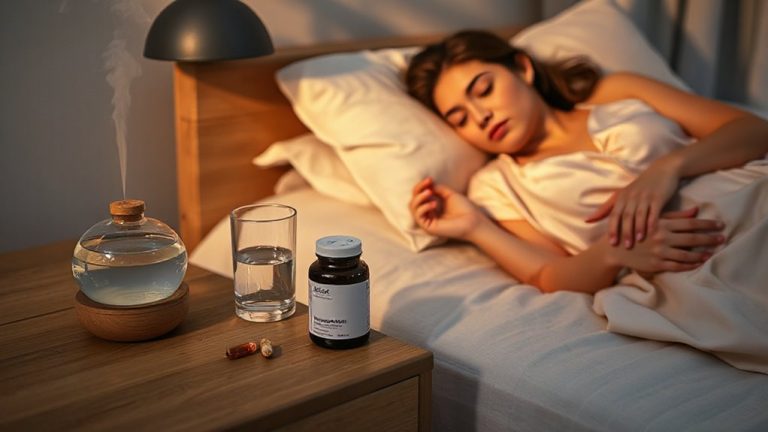
Using Timed Light Exposure to Treat Advanced Sleep Phase Disorder
You can reset your early sleep pattern with timed evening light therapy. Use a 10,000 lux light box for 30–60 minutes between 6–9 p.m. to delay your internal clock. Sit 16–24 inches away, with eyes open but not staring. Choose a UV-filtered, large-surface device with a stand or clip for consistency. Avoid morning light, which reinforces early waking. Stick to the routine nightly, and consistency will help improve sleep timing. More details follow on fine-tuning your approach.
Notable Insights
- Use evening light therapy between 6–9 p.m. to delay the internal clock and shift sleep to a later time.
- Apply 30–60 minutes of 10,000 lux bright light daily for effective circadian phase delay.
- Avoid bright or blue-enriched evening light from screens and lamps to prevent unintended circadian disruption.
- Position a UV-filtered light box 16–24 inches away, with eyes open but not staring directly at it.
- Maintain consistent timing and duration of light exposure to support long-term improvement in sleep-wake patterns.
What Is Advanced Sleep Phase Disorder?
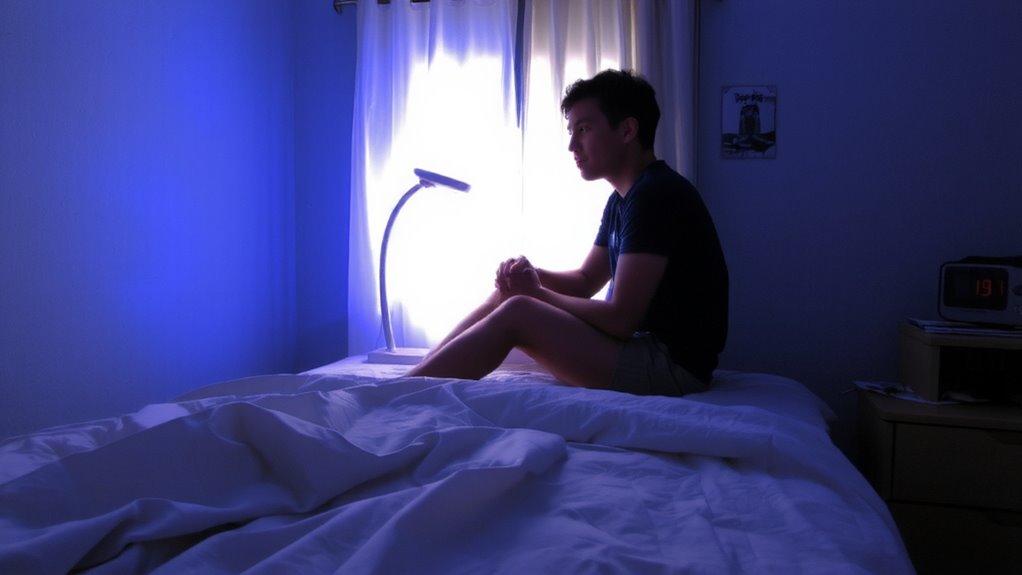
Advanced Sleep Phase Disorder (ASPD) means your body clock shifts earlier than normal, making you feel sleepy in the late afternoon or early evening-sometimes as early as 6 or 7 p.m.-and wake up in the middle of the night, say around 2 or 3 a.m., whether you want to or not. You might not realize this is a disorder, especially if you’ve always felt this way. There’s often a genetic predisposition-meaning it can run in families. It’s also linked to age related decline in circadian flexibility, which is why it’s more common in older adults. While some adjust their schedules to fit this rhythm, it can disrupt work, social life, or family time. You may feel alert in the early evening but struggle to stay awake for dinner or conversations. Recognizing ASPD is the first step toward managing it. Treatments exist, but they depend on accurate identification of your sleep pattern and its impact. You’ll want to track symptoms before trying any intervention.
How Light Therapy Resets Your Body Clock
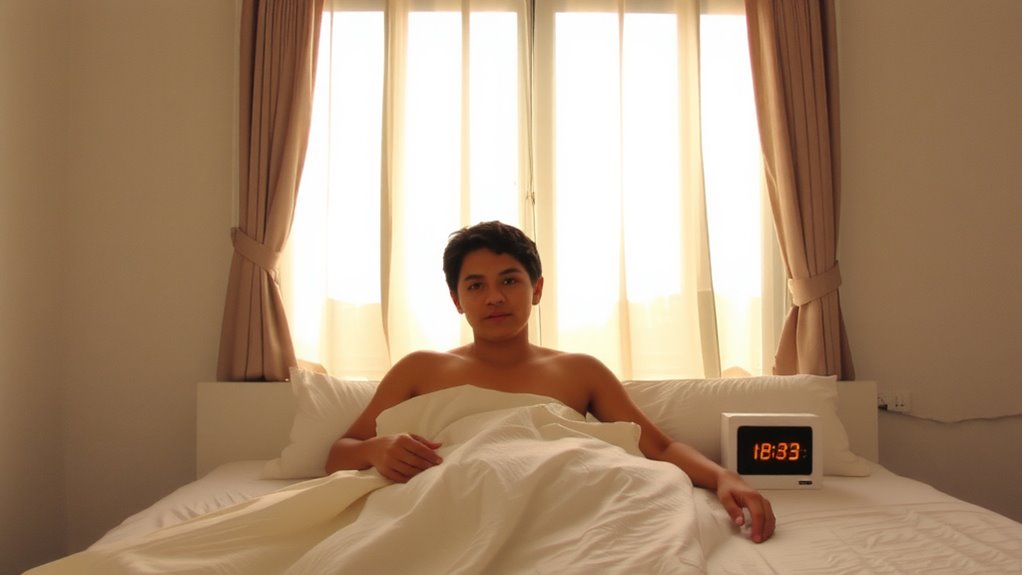
Light therapy works by using timed exposure to bright light to shift your internal body clock to a more typical schedule. When you use bright light in the morning, it triggers circadian alignment by signaling your brain that it’s time to be awake. This exposure helps delay your sleep phase gradually, making it easier to stay up later and wake up later. The light also causes melatonin suppression, reducing the sleep-promoting hormone that’s typically released in the evening. By controlling when melatonin drops, you can reset your rhythm over days or weeks. For best results, sit near a light box emitting 10,000 lux for 30–45 minutes soon after waking. Consistency matters-using it at the same time daily improves outcomes. Most users see improvements within two weeks. Check device warranties and look for ones designed specifically for circadian disorders. A dawn simulator can enhance morning light exposure by gradually increasing light intensity, mimicking natural sunrise and promoting gentler wake-up lights arousal.
Why Evening Light Delays Sleep in ASPD
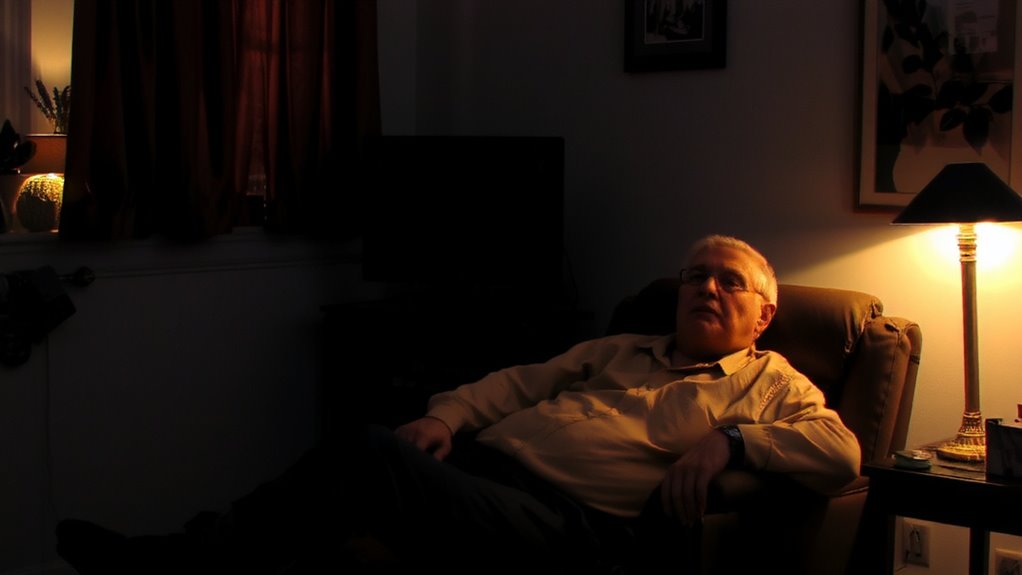
While your body naturally prepares for sleep as evening approaches, exposure to bright light during this time can interfere with that process, especially if you have Advanced Sleep Phase Disorder (ASPD). That’s because evening light causes melatonin suppression, delaying the signal that tells your brain it’s time to sleep. This worsens circadian misalignment, shifting your internal clock later than intended. Even everyday lamps or screens can contribute, making symptoms harder to manage. Choosing lighting with warm color temperatures can help minimize circadian disruption in the evening.
| Effect | Impact on ASPD |
|---|---|
| Bright evening light | Delays sleep onset |
| Melatonin suppression | Reduces sleep drive at night |
| Circadian misalignment | Worsens early waking |
| Blue-enriched light | Increases alertness when you should wind down |
Timing light exposure carefully helps reduce these effects without oversimplifying your treatment plan.
When to Use Light Therapy for Best Results
How can you time light therapy to get the most benefit if you’re managing Advanced Sleep Phase Disorder? Use bright light in the early evening, typically 6–9 p.m., to help delay your internal clock. This timing consistency strengthens your body’s rhythm over time. Aim for daily sessions of 30–60 minutes, ideally at the same time each night, to reinforce the shift. Light boxes should deliver 10,000 lux of white light-this intensity level is most effective for circadian adjustment. Lower intensity levels require longer exposure but may be easier to tolerate. Sit about 16–24 inches from the device, with eyes open but not staring directly at the light. You’ll likely notice gradual improvements in sleep timing after one to two weeks. Stick with it-timing consistency and proper intensity levels are key to meaningful results. Avoid using it too late, as it could disrupt sleep onset.
Choose a Light Box Designed for ASPD
You’ve already started aligning your evenings with bright light to shift your internal clock, and now it’s time to make sure the tool you’re using fits your needs. Look for a light box designed specifically for ASPD, not just general seasonal support. It should deliver at least 2,500 to 10,000 lux of light intensity when placed at a typical distance-this affects how long you’ll need to sit in front of it. Higher intensity often means shorter treatment duration, usually 30 to 60 minutes. Choose a box that filters out harmful UV rays and has a large, evenly lit surface to reduce eye strain. Many models offer stand, clip, or wall-mount options for convenience. Check if the manufacturer provides a trial period or warranty-this lets you test comfort and brightness without risk. A well-built device supports consistent use, making it easier to stick with your schedule.
Why Skipping Morning Light Is Crucial
Why is it so important to avoid bright light first thing in the morning if you’re managing ASPD? Because early light exposure reinforces circadian misalignment, making your body think it’s time to wake up even earlier. Your internal clock already runs ahead, so morning light worsens the shift. Light avoidance during these hours helps prevent strengthening a cycle that disrupts your sleep-wake rhythm. By delaying light intake, you create conditions that support a later bedtime. This practice isn’t about deprivation-it’s strategic timing. Even dim indoor light can interfere, so consider wearing tinted glasses or keeping lights low until the scheduled time. Consistent light avoidance in the morning, paired with evening light therapy, gradually resets your clock. Success depends on precision and routine, not effort alone. Small, deliberate choices make a measurable difference over time.
Stick to Your Evening Light Routine
A consistent evening light session can make a meaningful difference in shifting your internal clock to a more typical schedule. Evening consistency helps your body adjust gradually, reinforcing a later sleep onset without strain. Aim for daily sessions lasting 30 to 60 minutes, ideally starting two to three hours before your current bedtime. Stick to the same start time each night to support steady progress. Proper light timing is key-too early or too late can reduce effectiveness or even shift your rhythm in the wrong direction. Use a light box that emits 10,000 lux, sitting at the recommended distance. Avoid screen light afterward, as it may interfere. This routine won’t fix things overnight, but with regular use, you’ll likely notice improved sleep timing. Track changes weekly to assess what’s working.
On a final note
You can manage advanced sleep phase disorder by using timed light exposure to shift your sleep schedule later. Evening light therapy delays your body clock, so aim for 1–2 hours of bright light, starting 1–2 hours before bedtime. Use a medical-grade light box with 10,000 lux, sitting close without staring directly. Avoid morning light-it can worsen early waking. Stick to a consistent routine, and consider models with built-in timers or warranty support for long-term use.