Why Using a Memory Foam Pillow Reduces Cervical Spine Stress and Morning Headaches
A memory foam pillow supports your neck by contouring to your head and spine, keeping them aligned and reducing cervical stress. If your pillow’s too high or too flat, it can strain muscles and trigger morning headaches. Memory foam adapts to your shape and sleep position, offering consistent support all night. Higher-density foams last longer and resist sagging, while many models come with trial periods and warranties, so you can test comfort risk-free-there’s more to discover about finding your best fit.
Notable Insights
- Memory foam pillows maintain proper spinal alignment by contouring to the neck and head.
- They reduce cervical spine stress by supporting the natural curve of the neck during sleep.
- Correct pillow height prevents neck overextension or shoulder strain that can cause morning headaches.
- Adaptive foam responds to body heat, evenly distributing pressure and minimizing muscle tension.
- Durable, high-density foam retains shape, offering consistent support longer than traditional pillows.
Why Neck Support Matters for Better Sleep

Proper spinal alignment starts with your neck. When you lie down, your pillow plays a key role in maintaining ergonomic alignment, keeping your head and neck in line with your spine. Without support, your neck tilts too far up or down, straining muscles and stressing the cervical spine. A quality memory foam pillow contours to your shape, promoting even pressure distribution across your head and neck. This reduces strain and helps you stay comfortable through the night. You’re more likely to wake up without stiffness or soreness. Look for pillows with adaptive foam that responds to your body heat and movement. Many offer trial periods or warranties, so you can test them risk-free. Good neck support doesn’t guarantee perfect sleep, but it improves your chances-especially if you shift positions or have mild sleep discomfort. It’s a practical step toward better rest. For those seeking targeted relief, the best cervical neck pillows provide structured cervical support to stabilize the neck and reduce discomfort.
Can Your Pillow Cause Morning Headaches?
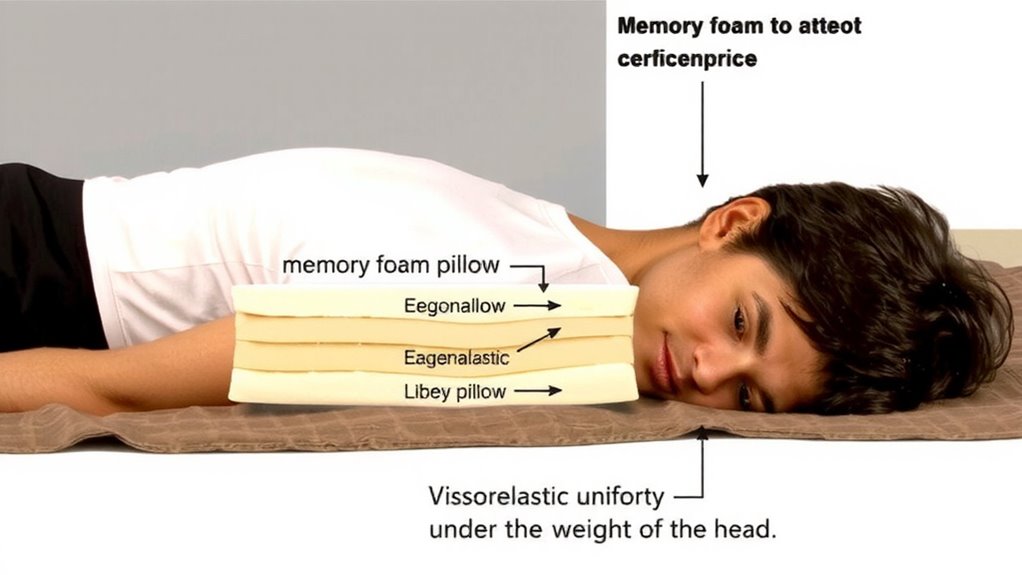
You might not realize it, but your pillow could be the reason you wake up with a headache. An incorrect pillow height or mismatched material density may strain your neck, leading to tension and discomfort by morning. When your spine isn’t properly aligned, muscles work harder throughout the night, increasing the chance of headaches. These issues often go unnoticed until symptoms become consistent. Best pillows for neck pain are specifically designed to support spinal alignment and reduce cervical stress during sleep.
| Factor | Effect on Sleep |
|---|---|
| Pillow height too high | Overextends neck, compressing nerves |
| Pillow height too low | Causes shoulder strain, misaligns spine |
| Low material density | Loses shape quickly, offers poor support |
Choosing the right pillow means balancing support and comfort based on your sleeping position. Adjustable loft and responsive materials help maintain alignment. Many quality pillows also offer trial periods, so you can test long-term comfort without risk.
How Memory Foam Supports Your Neck All Night
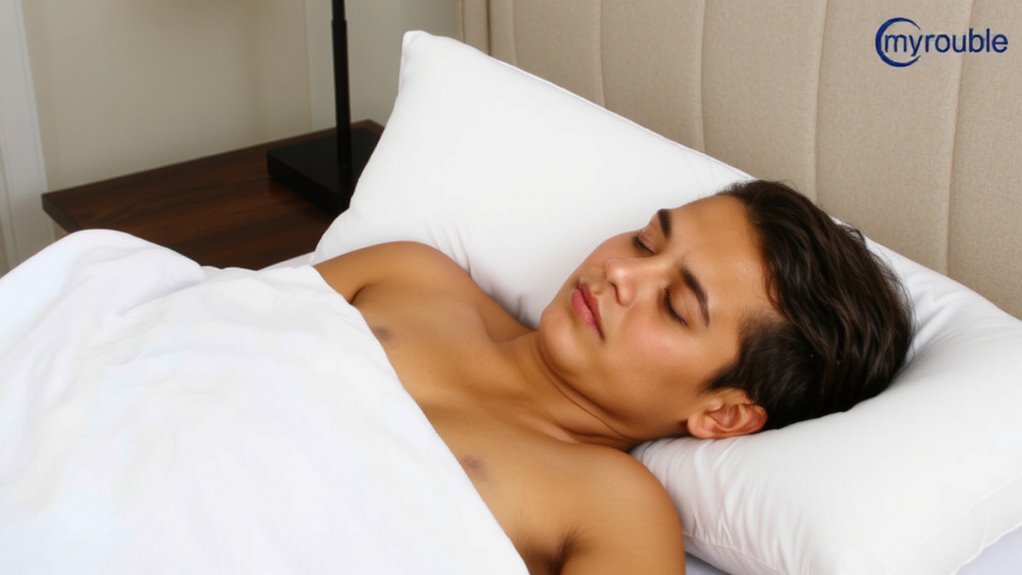
While it might seem like a small detail, the way your pillow cradles your neck through the night can make a big difference in how rested you feel. Memory foam molds to your shape, offering even pressure distribution that helps keep your spine aligned. It responds to your body’s temperature sensitivity, softening where you need support and firming up where less pressure is applied. This means your neck stays supported in a natural curve, reducing strain through the night. Unlike flatter pillows, memory foam adapts whether you sleep on your back, side, or stomach. Most models come with a breathable cover to manage heat and include trial periods so you can test comfort risk-free. Durability varies, but higher-density foams often last longer. Choosing one with a warranty gives you added assurance. It’s not a fix for all sleep issues, but it can be a helpful part of better sleep support. Stomach sleepers benefit significantly from low-profile designs, such as those in the best memory foam pillows for stomach sleepers, which help maintain proper neck alignment without elevating the head too much.
Memory Foam Vs. Traditional Pillows: Which Wins for Spine Health?
Memory foam holds its shape in response to heat and pressure, giving you support that’s tailored to your neck and sleeping position. Unlike traditional pillows, which often flatten over time, memory foam maintains alignment for better spine health. Pillow durability is a key advantage-many memory foam options last 3–5 years with minimal sagging, while down or polyester fills may lose resilience in 1–2 years. But material breathability varies; some memory foam traps heat, though newer versions include gel infusions or open-cell structures to improve airflow. Traditional pillows like down or fiberfill can be cooler but offer less consistent support. Over time, poor support increases cervical stress, possibly contributing to morning discomfort. If you prioritize spinal alignment and long-term use, memory foam often performs better. Consider models with removable, breathable covers and trial periods to test comfort safely.
How to Pick the Right Memory Foam Pillow for Your Sleep Style
How do your sleep habits shape the ideal pillow for your neck and spine? Your preferred sleep position plays a key role in choosing the right support. Side sleepers usually need a higher loft and firmer material density to keep the neck aligned, while back sleepers benefit from a medium height and softer density. Stomach sleepers should opt for a low-profile design to avoid neck strain. Consider the pillow shape-contoured versions support the neck’s natural curve, while wedge styles help with breathing or reflux. Memory foam with higher density tends to last longer and offer better support, though it may feel firmer. Look for models with removable covers and trial periods so you can test comfort. A good warranty also protects your investment. Make sure the pillow fits your body size and sleep pattern for best results.
What Really Happens When You Switch to a Memory Foam Pillow
Why does your neck feel different the first night on a new memory foam pillow? Because your body is adjusting to improved pressure distribution and the pillow’s slow material adaptation. Memory foam responds to heat and weight, molding to your head and neck over minutes. This helps align your cervical spine, reducing strain. At first, the firmness might feel odd, especially if you’re used to flat or lumpy pillows. The material adaptation period usually takes a few nights-your sleep position, body heat, and pillow density all influence how fast it conforms. You might notice less morning stiffness as the pillow supports natural spinal curves. Most quality models come with trial periods, so give it time before deciding. Uniform pressure distribution minimizes trigger points that contribute to tension headaches. Give your body a full week to adapt, and assess changes in comfort and neck pain objectively.
Get the Most From Your Memory Foam Pillow
A well-chosen pillow can make a real difference in how you feel each morning, especially when it’s designed to support your cervical spine. To get the most from your memory foam pillow, practice regular pillow fluffing by gently kneading it each day-this restores its shape and keeps the foam responsive. Pairing your pillow with sleep tracking can help you notice patterns in neck comfort and overall sleep quality. Look for models with removable, washable covers and open-cell construction for better airflow. Most quality memory foam pillows come with a 30- to 90-night trial, so test it alongside your usual sleep habits. If you wake with stiffness, adjust the pillow’s position or thickness. Many brands offer warranties of up to five years, which protects your investment. A well-maintained memory foam pillow adapts to your shape, supports proper alignment, and may reduce cervical strain over time.
On a final note
You’ll find neck support matters more than you think, especially if morning headaches linger. A memory foam pillow molds to your shape, keeping your cervical spine aligned. Unlike traditional pillows that flatten, memory foam maintains support. Most come with trial periods, so testing comfort is low-risk. For side or back sleepers, proper height and density matter. Check return policies, and give it a few nights. Alignment may reduce strain-you might wake feeling clearer.