The Impact of Reduced Evening Light on Advanced Sleep Phase Disorder
You might notice your sleep slipping earlier if you’re getting less evening light, especially around dusk. That dim indoor lighting and lack of outdoor exposure reduce a key signal that delays your body clock, letting melatonin rise sooner. This reinforces early sleep-say, by 7 p.m.-and early waking around 3 a.m., common in Advanced Sleep Phase Disorder. Using brighter, blue-enriched light in the evening may help shift your rhythm later. Staying consistent with light timing and avoiding morning light can support better alignment-there’s more to explore when adjusting your pattern.
Notable Insights
- Reduced evening light exposure fails to delay the circadian clock, reinforcing early sleep onset in ASPD.
- Dim indoor lighting lacks sufficient intensity to suppress melatonin and shift sleep timing later.
- Limited natural dusk exposure deprives ASPD patients of critical phase-delaying light cues.
- Evening screen use with blue light can counteract advanced timing if properly timed and intensified.
- Insufficient evening light contributes to circadian misalignment by allowing endogenous phase advances to go unopposed.
What Is Advanced Sleep Phase Disorder?
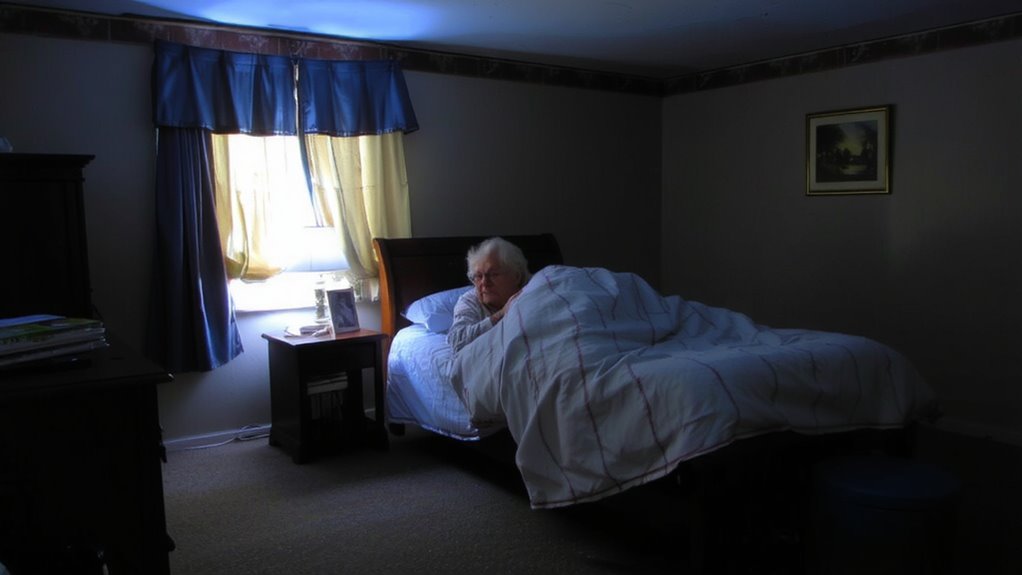
Ever wonder why some people feel sleepy as early as 6 or 7 p.m. and wake up wide awake by 2 or 3 a.m., unable to go back to sleep? You might be experiencing Advanced Sleep Phase Disorder (ASPD), a condition where your internal clock shifts earlier than typical. It’s often linked to genetic predisposition-many with ASPD have family members with similar patterns. Age related changes also play a role, especially in older adults, whose circadian rhythms naturally advance. This isn’t just preference; it’s a diagnosed shift in sleep timing. People with ASPD fall asleep and wake up much earlier than social norms, which can disrupt work, relationships, or evening activities. Diagnosis usually involves sleep logs or actigraphy. Treatment options vary, but light therapy in the evening can help delay sleep onset. Understanding your body’s signals and consulting a sleep specialist improves management. Consider tracking your sleep before trying aids.
How Light Resets Your Body Clock
Light plays a key role in setting your body’s internal clock, acting like a natural reset button for your sleep-wake cycle. When you’re exposed to light, especially in the morning, specialized cells in your eyes detect it through photoreceptor sensitivity, sending signals to your brain’s master clock. This triggers chronobiology mechanisms that regulate hormones like melatonin, helping align your body with the day-night cycle. These internal processes rely on consistent timing and light intensity to function properly. Morning light exposure is particularly effective because your body is most responsive then. You can support this natural rhythm by opening blinds, spending time outside, or using light boxes designed for circadian regulation. Devices vary in brightness and spectrum, so choose one that mimics daylight and allows adjustable exposure times. Many come with trial periods and carry warranties, letting you test them comfortably. Making smart lighting choices helps maintain healthy sleep patterns over time. For those seeking timed light exposure, a light alarm clock can gradually simulate sunrise to support circadian alignment.
Why Evening Light Delays Sleep Onset
Though your body’s natural rhythm expects darkness to signal rest, exposure to light in the evening can interfere with that process by delaying the release of melatonin. You might not realize how much this affects your sleep timing. Evening light triggers melatonin suppression, pushing your internal clock later and increasing the risk of circadian misalignment. This shift makes it harder to fall asleep at your desired time, especially if you rely on consistent sleep for health or daily performance. Even moderate indoor lighting can have this effect, particularly blue-rich light from screens or LEDs. Over time, this delay in sleep onset may contribute to sleep issues without obvious cause. Recognizing how light impacts your cycle helps you make informed choices about environment and habits. Simple adjustments-like dimming lights or using warmer tones in the evening-can support healthier timing without immediate need for sleep aids. Trial periods with these changes often show measurable improvements. Consider wearing blue light glasses to reduce evening light exposure and support natural melatonin production.
How Modern Life Reduces Evening Light Exposure
While many people associate evening light with sleep disruption, modern routines often limit exposure in ways that quietly shift circadian timing. You spend evenings indoors, where artificial lighting is usually dim and inconsistent, failing to signal wakefulness like natural light. Urban design further restricts access to bright evening environments-narrow streets, tall buildings, and limited public spaces reduce opportunities for outdoor activity at dusk. Commutes and screen time replace time outside, cutting contact with ambient evening brightness. Even well-lit cities expose you to scattered, low-intensity illumination that doesn’t effectively influence your internal clock. These patterns weaken the body’s response to natural light cycles, subtly advancing sleep onset. Recognizing how environment and lighting shape rhythms helps you make informed choices about light exposure, timing, and tools that support healthier circadian alignment, without relying on sleep aids or medical intervention.
How Dim Light Triggers Early Sleep in ASPD
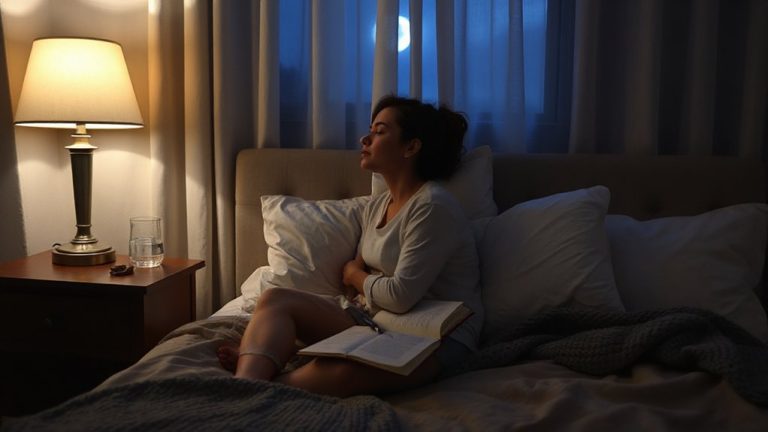
You might not realize how much the dim lighting in your evening environment plays a role in shaping your sleep schedule, especially if you’re noticing a pattern of falling asleep unusually early and waking up too soon. In advanced sleep phase disorder (ASPD), your body has heightened melatonin sensitivity, meaning even low light levels can trigger melatonin release earlier than typical. This shift tells your brain it’s time for bed, advancing your internal clock. Over time, this contributes to circadian misalignment, where your sleep cycle runs out of sync with external day-night cues. Regular exposure to dim evenings reinforces this early rhythm, making it harder to stay awake past 7 or 8 p.m. Recognizing this pattern helps you assess whether environmental changes or light-based interventions might support better timing. Tracking your light exposure and sleep times can guide decisions about treatment options, including timed light therapy or adjusting indoor lighting to reshape your natural rhythm.
How Brighter Evening Light May Delay Sleep in ASPD?
Bright evening light can help delay sleep onset in people with advanced sleep phase disorder by signaling the brain to suppress melatonin longer. You may have a genetic predisposition that shifts your internal clock earlier, but exposure to brighter light in the evening can support better circadian flexibility. This means your body can adapt more easily to a slightly later sleep schedule. Use bright, blue-enriched light boxes or overhead lighting for 30–60 minutes in the early evening, ideally between 6–8 PM. Consistency matters-regular use strengthens the effect over time. Results vary based on individual sensitivity and environment, so start with modest sessions and adjust as needed. While this approach isn’t a cure, it offers a non-invasive way to realign your rhythm. Always consider consulting a sleep specialist, especially if symptoms persist or interfere with daily function. A supportive sleep environment includes choosing the right best mattresses for teens to enhance comfort and promote consistent sleep patterns.
Light Strategies Specifically for ASPD
Since your internal clock runs ahead of typical sleep-wake schedules with advanced sleep phase disorder (ASPD), timing your light exposure right can make a noticeable difference. Evening light delays circadian misalignment by suppressing melatonin-this melatonin suppression helps push your sleep time later. For best results, use bright, blue-enriched light starting 2–3 hours before your current bedtime.
| Timing | Light Intensity | Purpose |
|---|---|---|
| Early Evening (6–8 PM) | 10,000 lux | Delay circadian phase |
| Morning | Avoid bright light | Prevent further advance |
| Bedtime | Use dim, warm light | Support melatonin recovery |
Consistency matters-you’ll see clearer results after 1–2 weeks. Light boxes with adjustable color temperature offer better control. Most come with a 30-day trial, letting you test effectiveness. These strategies aim to improve sleep timing without medications.
On a final note
You may notice earlier sleep and wake times if reduced evening light affects your rhythm. Brighter evening exposure, especially from lamps or light boxes, can help delay sleep onset in ASPD. These tools work best when used consistently, 1–2 hours before bedtime. Look for devices with 1,000–10,000 lux; check warranty and light temperature. Trial use over 1–2 weeks shows real effects. Track changes simply to assess benefits.