Mastering the Art of Falling Asleep Faster Every Night
You can fall asleep faster by making your bedroom cool, dark, and quiet-aim for around 65°F with blackout curtains and breathable bedding. Try a 30-minute wind-down routine with dim lights and no screens to support melatonin release. Stick to the same bedtime and wake time daily, even on weekends, to steady your body’s clock. Use slow, focused breathing or calming mental visuals to quiet a busy mind. Common barriers like stress and blue light delay sleep, so write down worries and avoid electronics an hour before bed. Small, consistent changes improve your chances of falling asleep more easily each night, especially when combined with proven relaxation methods.
Notable Insights
- Keep your bedroom dark, cool (60–67°F), and quiet to support natural sleep onset.
- Practice 4-7-8 breathing and calming visualizations to relax your mind and body.
- Establish a 30-minute pre-sleep routine with dim lights and no screens.
- Go to bed and wake up at the same time daily, even on weekends.
- Reduce mental clutter by journaling worries and avoiding blue light before bed.
Make Your Bedroom a Sleep Sanctuary
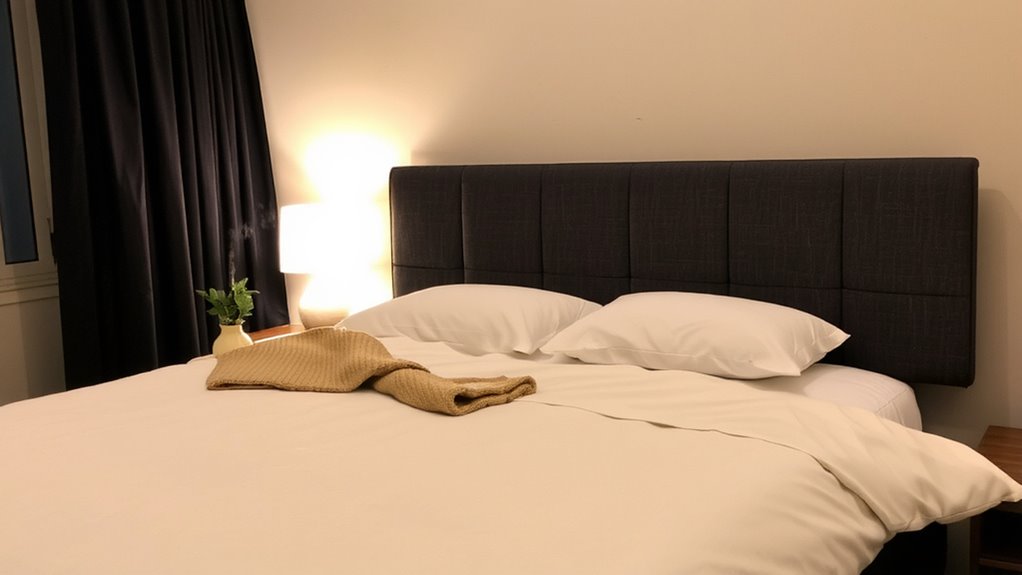
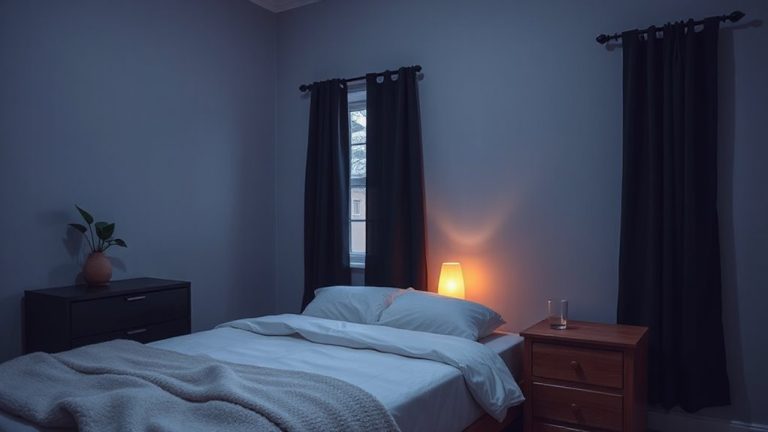
While your bedroom may seem like just another room in your home, turning it into a dedicated sleep sanctuary can make a meaningful difference in how quickly and easily you fall asleep. To support natural sleep cycles, aim for dark lighting-use blackout curtains or an eye mask to block outside light, which can interfere with melatonin production. Pair this with a cool temperature, ideally between 60 and 67 degrees Fahrenheit, as your body naturally lowers its core temperature to initiate sleep. Choose breathable bedding and adjustable thermostats to maintain comfort throughout the night. These features aren’t luxuries-they’re practical adjustments backed by sleep science. While individual preferences vary, most people sleep better in environments that are consistently dark and cool. Test these changes for at least a week to assess improvement in your sleep onset time. For optimal light blocking, consider installing high-quality blackout curtains designed to seal out even the smallest amount of external light.
Quiet Your Mind With Breathing and Visualization

A simple breathing technique can help you quiet your mind and prepare for sleep, especially when racing thoughts make it hard to wind down. Deep breathing slows your heart rate and signals your body it’s time to rest. Pair it with mental imagery to deepen relaxation-picture a calm scene, like waves gently rolling on a beach. Focus on details: the sound, the scent, the warmth. This combination distracts from stress and eases you into drowsiness. Use the table below to guide your rhythm.
| Count | Breath Action | Focus Point |
|---|---|---|
| 1–4 | Inhale slowly | Cool air through nose |
| 5–8 | Hold gently | Quiet in your chest |
| 9–12 | Exhale fully | Warm air through mouth |
| 13–16 | Pause softly | Peaceful mental imagery |
Repeat this 4-7-8 style pattern to regulate your breath and mind. Practice nightly to build consistency.
Create a 30-Minute Wind-Down Routine
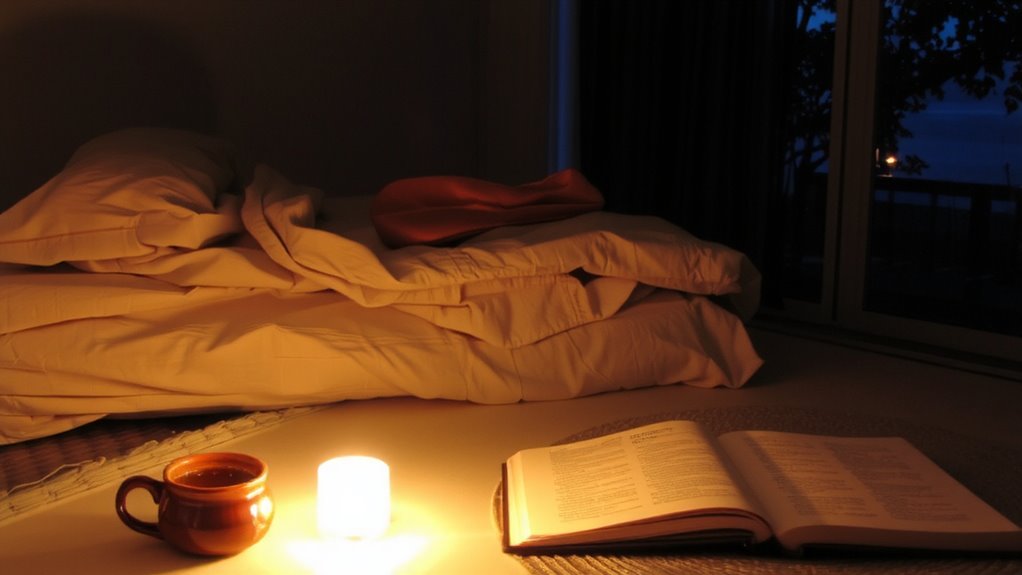
You’ve already started calming your mind with breathing and visualization, and now building a consistent 30-minute wind-down routine can reinforce your body’s signal that it’s time to sleep. Begin by dimming the lights to support natural melatonin release-dim lighting helps shift your body into rest mode. Avoid screens or use blue light filters to reduce stimulation. Use this time to shift with low-energy activities, like reading or gentle stretching. Consider drinking a cup of caffeine-free herbal tea, such as chamomile or valerian root, which may promote relaxation for some users. Perform each step in the same order nightly to build predictability. This routine isn’t a sleep aid, but a behavioral tool that, with consistent use, may improve sleep onset over time. Trial it for at least two weeks to assess its effect on your personal sleep pattern. For the most soothing experience, choose a high-quality chamomile tea, as the best chamomile tea options are known for their calming flavor and aromatic profile.
Stick to a Consistent Sleep Schedule
The best way to regulate your sleep is by going to bed and waking up at the same time every day, even on weekends. This builds strong bedtime consistency, which trains your body’s internal clock. When you follow a regular schedule, your sleep rhythm stabilizes, making it easier to fall asleep and wake up naturally. Your body learns when to release sleep-related hormones like melatonin, improving overall sleep quality. Shifts in timing-even on weekends-can disrupt this rhythm, leading to trouble falling asleep. You don’t need a perfect schedule, but aiming within a 30-minute window daily helps. This practice supports long-term adjustments and works well with other habits like a wind-down routine. It’s a foundation, not a fix-all, but one backed by sleep research. Over time, you’ll notice better alignment between your planned bedtime and your actual ability to sleep.
Fix Common Reasons You Can’t Fall Asleep Fast
Why do you lie awake when you’re tired? Common factors like poor stress management and late screen exposure disrupt your ability to fall asleep fast. When stress isn’t managed, your mind stays active, making it hard to relax. Simple techniques-like deep breathing or writing down worries-can help quiet mental noise. At the same time, blue light from phones, tablets, or TVs suppresses melatonin, the hormone that signals sleep. Reducing screen exposure at least one hour before bed supports your body’s natural rhythm. Consider using dim red lights at night and avoiding stimulating content. These changes don’t require sleep aids or medical intervention for most people. If issues continue, tracking sleep patterns can clarify whether lifestyle adjustments, therapy, or professional evaluation might help. Small, consistent improvements often deliver the best long-term results.
On a final note
You can fall asleep faster by shaping your environment and habits. A quiet, dark bedroom, consistent bedtime, and a 30-minute wind-down help signal your body it’s time to rest. Breathing exercises or visualization quiet a busy mind. If sleep problems continue, consider common causes like stress or screen use. Track patterns for a few weeks, then discuss them with a healthcare provider. Some find sleep aids useful short-term, but they’re not always needed. Look for non-habit-forming options with clear labels, and check whether a doctor’s guidance is advised. Trial periods and money-back guarantees can reduce risk when testing new solutions. Small, informed changes often work better than quick fixes.