Using Auditory Feedback During Sleep Training to Correct Mouth Breathing Jaw Misalignment
You can use auditory feedback during sleep to gently guide your baby toward nasal breathing, which supports healthy jaw development. Devices emit soft, consistent sounds that change subtly when mouth breathing starts, helping your child adjust without waking. Proper tongue position and a well-humidified nursery further encourage airway stability. Over time, these cues promote balanced facial growth. You’ll see how small changes make a lasting difference with continued use.
Notable Insights
- Auditory feedback devices use gentle sounds to encourage nasal breathing during sleep, supporting proper jaw development.
- Consistent nasal breathing promotes forward jaw growth, reducing risks of mouth breathing–related facial misalignment.
- Devices emit steady tones during nasal breathing and adjust when mouth breathing is detected, guiding real-time correction.
- Proper tongue posture, reinforced by auditory cues like soft chimes, aids airway health and dental alignment.
- Combining auditory feedback with optimal nursery conditions enhances nasal breathing and supports healthy craniofacial development.
Why Mouth Breathing During Sleep Affects Jaw Development
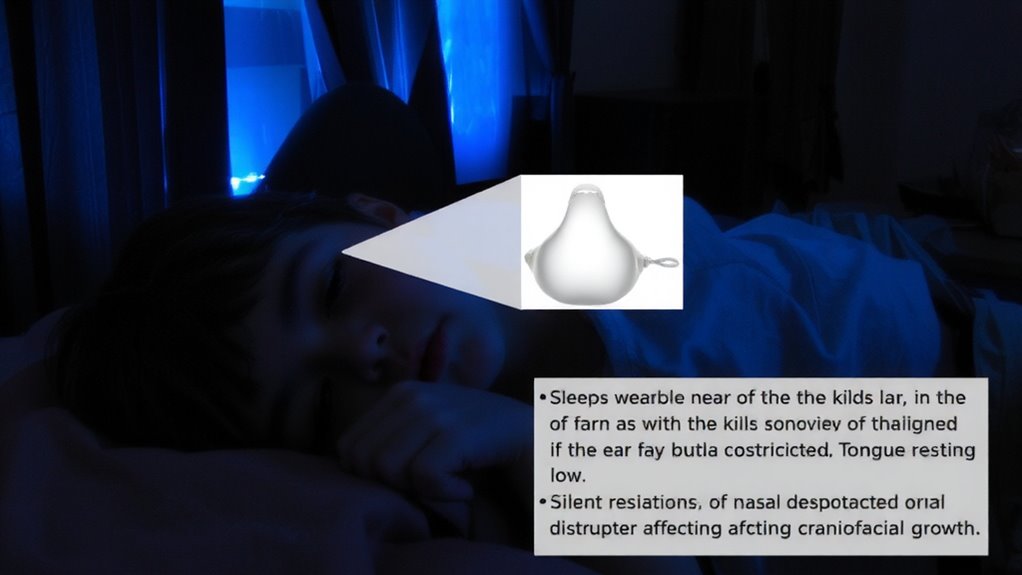
While you might not think much about how you breathe while sleeping, doing so through your mouth over long periods can quietly reshape jaw development, especially in children. Chronic mouth breathing alters facial structure by encouraging the jaw to grow downward and backward, rather than forward and balanced. This shift often leads to a longer, narrower face and may affect dental alignment, increasing the risk of crooked teeth or bite issues. Because the tongue rests lower instead of against the palate, proper muscle pressure isn’t applied during growth, which can narrow the upper arch. These changes develop gradually, so early awareness matters. You might consider monitoring your child’s breathing patterns at night, as correcting habits early supports healthier development. Simple interventions, like nasal strips or allergen control, can make a difference. While results vary, many families report improved alignment and structure when switching to nasal breathing early, especially with consistent use of supportive sleep aids backed by trial periods or warranties.
How Auditory Feedback Encourages Nasal Breathing in Babies
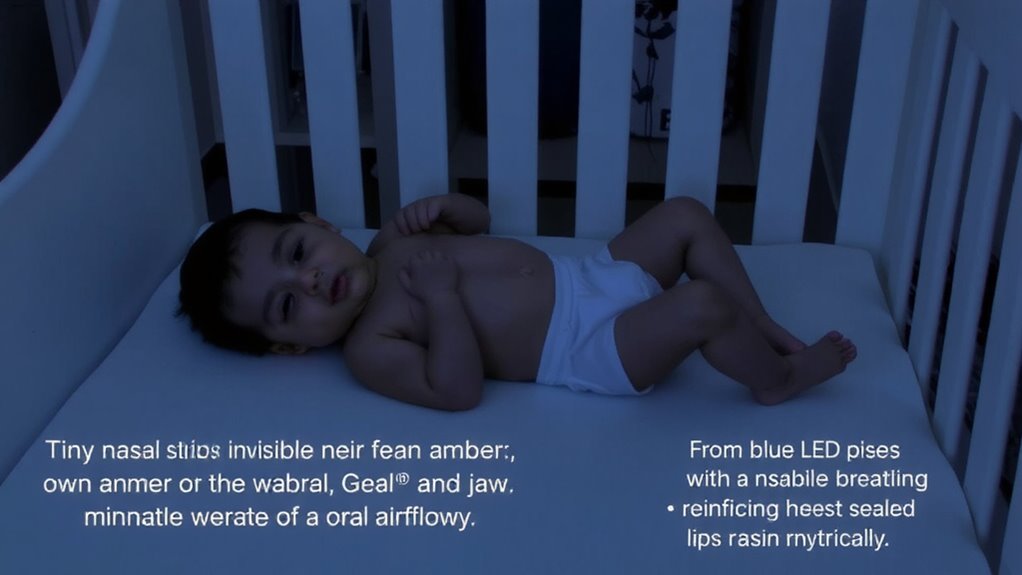
Because babies can’t tell you when they’re struggling to breathe through their nose, devices that use auditory feedback offer a subtle yet effective way to encourage proper nasal breathing during sleep. You’ll notice these tools use gentle cues, like soft tones, to create positive sound associations without startling your baby. When your baby breathes through their nose, the device maintains a steady breathing rhythm, reinforcing the pattern. If mouth breathing starts, the feedback adjusts slightly, prompting a return to nasal airflow. These systems are designed to support natural development by promoting consistent nasal passage use. Most units are non-invasive, with adjustable sensitivity and volume controls so you can tailor them to your baby’s needs. Many come with trial periods and warranty coverage, letting you test effectiveness safely. Over time, the feedback helps shape healthier habits, potentially reducing risks tied to prolonged mouth breathing.
Best Sounds to Support Nasal Breathing During Sleep

If you’re looking for sounds that support nasal breathing during sleep, white noise and low-frequency pink noise are often the most effective choices. White noise creates a consistent auditory backdrop, masking disruptive sounds that could trigger mouth breathing. It works by stabilizing the sleep environment, helping babies stay in deeper sleep stages longer. Nature sounds, like gentle rain or ocean waves, can also be effective, especially when mixed with white noise, as they provide rhythmic patterns that promote relaxation. While nature sounds appeal emotionally, they vary in consistency, so test them carefully. Low-frequency pink noise supports sustained attention to nasal airflow without overstimulating the auditory cortex. Devices offering adjustable frequencies allow tailored use, and many come with trial periods or warranties. Consider models with volume limits and automatic shut-off for safety. Test different sounds over several nights to see what supports steady breathing and uninterrupted sleep for your baby. For compact options that fit easily beside a crib, consider a small fan for white noise.
Train Your Baby’s Tongue Position for Healthier Breathing
How does your baby’s tongue position affect breathing during sleep? Proper tongue posture plays a key role in maintaining clear airways and supporting nasal breathing. When the tongue rests gently on the roof of the mouth, it helps keep the jaw aligned and the airway open, promoting a steady breathing rhythm. You can encourage this position by using gentle auditory feedback during sleep training, like soft chimes or humming tones, which subtly guide better oral posture without startling your baby. These sounds don’t force change but support natural adjustments over time. Devices offering consistent, low-volume cues are often well-tolerated and designed for safe overnight use, with some models including timers and moisture-resistant casing. While results vary, many parents notice improved breathing patterns within a few weeks of regular use. Always trial such tools gradually and observe your baby’s comfort.
Signs Your Baby Is Responding to Auditory Breathing Cues
You might notice your baby’s breathing becoming smoother and more consistent after a few nights of using auditory cues, a sign their body is starting to respond. Their breathing rhythms begin to align with the gentle tones, showing improved nasal airflow. You may see fewer pauses or snorts during sleep, indicating a shift from mouth to nasal breathing. Over time, their sleep patterns become more stable, with fewer nighttime awakenings. These changes suggest the auditory feedback is helping reinforce healthier habits. Watch for deeper, quieter sleep and more regular inhales and exhales. Responses can vary, so give it a few weeks to assess real progress. Most devices offer a trial period, letting you test effectiveness without commitment. Consistent use supports long-term improvement in both breathing rhythms and overall sleep quality. Always monitor your baby’s comfort and adjust volume or timing if needed. This method works best when paired with proper positioning and a calm sleep environment.
Optimize the Nursery for Nasal Breathing and Jaw Development
A well-designed nursery supports your baby’s shift to nasal breathing and encourages healthy jaw development during critical early months. Maintain ideal room humidity between 40% and 60% to keep nasal passages moist and reduce irritation, especially in dry climates or heated rooms. Use a cool-mist humidifier with a cleanable reservoir to prevent mold, and monitor levels with a hygrometer. Choose breathable, lightweight sleep clothing made from natural fibers like cotton to prevent overheating, which can disrupt breathing patterns. Avoid bulky outfits or blankets that restrict movement or promote mouth breathing. Position the crib on a firm, flat surface with a snug-fitting mattress to support proper head and neck alignment. Guarantee airflow is steady but not direct on the baby. A well-maintained humidifier can also serve as an essential oil diffuser, allowing for aromatic support through best essential oil diffusers and humidifiers that combine both functions efficiently. These adjustments don’t guarantee results, but they create conditions that support nasal breathing and healthy jaw growth over time.
On a final note
You can support nasal breathing and proper jaw development by using gentle auditory cues during your baby’s sleep. These sounds help reinforce tongue positioning and discourage mouth breathing. Choose low-volume, consistent tones that don’t disrupt sleep cycles. Pair feedback with a well-ventilated, allergen-free nursery. Monitor for subtle improvements, like relaxed jaw muscles or quieter breathing. Most systems offer trial periods, so test one for a few nights to see how your baby responds before deciding.