The Impact of Blue Light on Initial Sleep Stage Transition
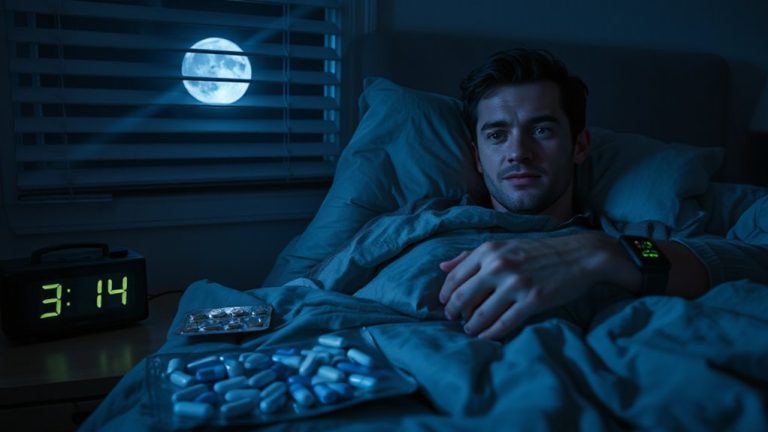
Blue light from screens and lights delays your sleep onset by blocking melatonin, the hormone that signals bedtime. It tricks your brain into thinking it’s still daytime, pushing back your natural sleep cycle. This makes shifting into the first sleep stage harder and less smooth. Using night modes, dimming lights, or wearing blue-blocking glasses in the evening can help. Sticking to a screen curfew improves sleep quality over time-you’ll see how simple changes make a noticeable difference.
Notable Insights
- Blue light exposure before bed suppresses melatonin, delaying the transition to the initial sleep stage.
- Evening screen use shifts circadian rhythm, reducing readiness for sleep onset.
- High-energy blue wavelengths increase alertness, interfering with early sleep phase progression.
- Using blue light filters or amber glasses in the evening supports faster sleep stage transition.
- Screen curfews 30–60 minutes before bed improve initial sleep onset and circadian alignment.
What Is Blue Light and Why Does It Affect Sleep?
What exactly is blue light, and why does it seem to disrupt your sleep more than other kinds of light? Blue light is a high-energy visible light emitted by the sun, LED screens, and fluorescent bulbs. Your eyes let in this light easily, and it strongly influences your circadian rhythm-the internal clock that tells your body when to sleep and wake. Compared to other light, blue wavelengths have the greatest effect on this cycle. Even small amounts of evening light exposure can shift your rhythm, making it harder to fall asleep. Devices like phones and tablets add to your daily light exposure, especially at night. Managing when and how much you’re exposed helps maintain natural sleep patterns. Using screen filters or wearing blue-blocking glasses in the evening offers a practical option. These adjustments support better alignment of your circadian rhythm without eliminating screen use entirely.
How Blue Light Suppresses Melatonin and Wrecks Your Sleep Schedule
At night, your body relies on darkness to begin producing melatonin, the hormone that signals it’s time to sleep, but blue light from screens and indoor lighting can interfere with that process. This disruption tricks your brain into thinking it’s still daytime, delaying melatonin release and throwing off your circadian rhythm. As a result, you may experience increased sleep latency, meaning it takes longer to fall asleep. Over time, consistent exposure can deepen sleep difficulties and affect overall rest quality. Using blue light filters on devices or wearing amber-tinted glasses in the evening may help support melatonin production. Some sleep aids also consider circadian timing, offering formulations designed for alignment with natural hormone shifts. When choosing solutions, look for those with transparent ingredient lists, clinical backing, and clear usage guidelines to support informed decisions.
Why Blue Light Sabotages Falling Asleep
Why does it feel so hard to wind down after scrolling through your phone or working on a computer late at night? That’s because blue light triggers circadian disruption, tricking your brain into thinking it’s still daytime. This leads to sleep onset delay, making it take longer to fall asleep. Your body’s natural rhythm gets thrown off, reducing your readiness for rest.
| What You Feel | What’s Actually Happening |
|---|---|
| Alertness | Melatonin production drops |
| Frustration | Circadian disruption deepens |
| Restlessness | Sleep onset delay increases |
Over time, this can affect sleep quality and overall health. Understanding how blue light impacts your body helps you make informed choices about screen use, sleep aids, or protective eyewear. Simple changes may support better alignment with your natural sleep cycle.
Late-Night Screen Habits That Delay Sleep (And What to Do)
How often do you check your phone right before bed, only to lie awake minutes later? That late-night scroll disrupts your body’s cue to wind down, weakening your sleep hygiene. Screens emit blue light, which delays melatonin release and pushes back your initial sleep stage shift. To counter this, set a daily screen curfew at least 30–60 minutes before bed. This digital detox lets your brain shift naturally into rest mode. Swap scrolling for low-light activities like reading a physical book or light stretching. If you must use devices, enable nighttime settings, but don’t rely on them entirely. A consistent routine strengthens long-term sleep patterns. Over time, these small changes improve sleep onset and quality without immediate reliance on sleep aids. Consider the trade-offs: convenience now versus restful sleep regularly. Better habits today support sustainable, healthier nights.
Science-Backed Ways to Reduce Blue Light for Better Sleep
You’re likely already aware that late-night screen use affects your ability to fall asleep, but understanding how to reduce blue light exposure goes a step further in protecting your rest. Blue light disrupts your circadian rhythm by suppressing melatonin, making it harder to shift into deeper sleep stages. To improve sleep hygiene, consider using blue light filters on phones and computers-many devices now offer built-in night modes that shift screen tones to warmer colors. Wearing blue light-blocking glasses in the evening can also help, especially if you work late. Dim indoor lights an hour before bed and opt for red or amber nightlights if needed. Avoid bright overhead lights, as they signal wakefulness to your brain. These changes, supported by research, enhance melatonin release and align your internal clock. Consistency strengthens results, so apply these practices nightly.
On a final note
You’ll sleep better by reducing blue light exposure an hour before bed. It helps your body produce melatonin naturally, easing the shift into early sleep stages. Try dimming screens, using blue light filters, or switching to warm lighting. If sleep problems continue, consider discussing sleep aids or disorders with a professional. Many devices and apps offer free trials, so test options to see what works. A small change in habits can make a meaningful difference over time.