Advanced Sleep Phase Disorder: When to Time Your Medication
You can adjust medication timing to help delay your sleep by taking melatonin 1–2 hours before your desired bedtime, not too early, to avoid worsening early sleep. Shift sedating medications like certain antidepressants to midday under a doctor’s guidance to improve evening alertness. Combine this with morning bright light therapy for best results. Consistency matters-mistimed doses or high doses can disrupt progress. Small, steady changes supported by your healthcare provider often work best, and there’s more to learn about fine-tuning your approach.
Notable Insights
- Shift sedating medications to earlier in the day to avoid reinforcing early sleep onset in ASPD.
- Take evening melatonin 1–2 hours before desired bedtime to help delay circadian rhythm.
- Avoid early evening dosing of medications that cause drowsiness, as it may worsen phase advancement.
- Consider moving antidepressant doses from morning to midday to support evening alertness and delay sleep.
- Combine medication timing changes with morning light therapy for improved circadian realignment.
What Is Advanced Sleep Phase Disorder (ASPD)?

A pattern of early sleep and wake times defines Advanced Sleep Phase Disorder (ASPD), and it’s more than just being a “morning person.” You might find yourself feeling sleepy as early as 6 or 7 p.m. and waking up wide awake by 2 or 3 a.m., even if you don’t want to. This shift in sleep onset is tied to your circadian rhythm, which runs on an earlier cycle than most people’s. Your body naturally releases melatonin sooner, signaling bedtime earlier. ASPD is common in older adults but can affect younger people too. It’s not a choice-it’s a biological shift. You can’t simply “stay up later” to fix it. Managing it means working *with* your rhythm, not against it. Light exposure, daily routines, and timing of activities can help regulate your cycle. Treatment focuses on shifting sleep onset gradually. Understanding your circadian rhythm helps you make informed choices about lifestyle adjustments.
How Medication Timing Can Delay Your Sleep Schedule
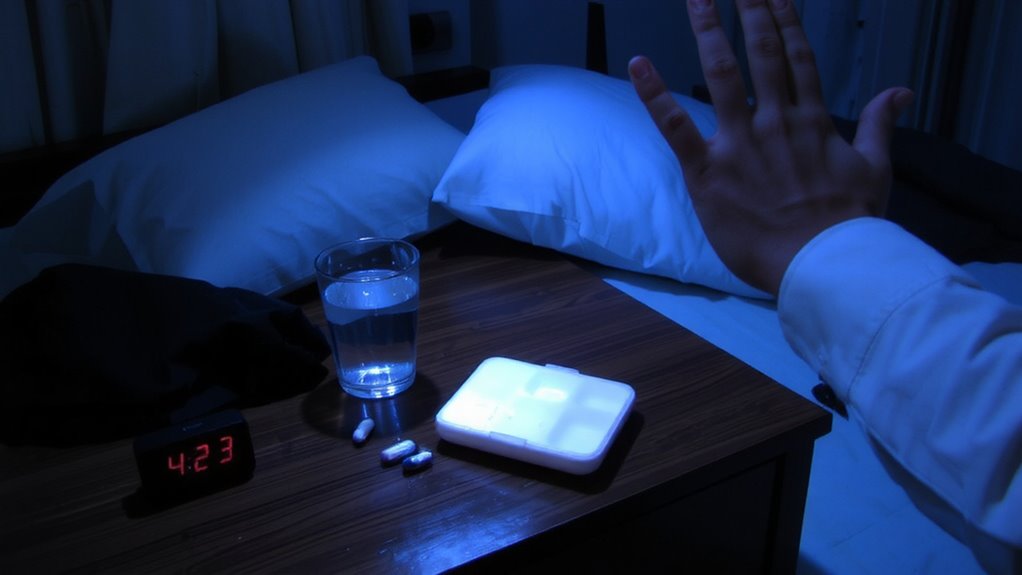
Since your body’s internal clock shifts earlier with ASPD, timing your medications right can help push your sleep schedule back just enough to fit better with daily life. Circadian misalignment means your sleep drive kicks in too soon, but adjusting medication timing may gently delay that signal. Below is how timing affects impact:
| Medication Taken | Likely Effect on Sleep Schedule |
|---|---|
| Early evening | Mild delay, low risk |
| Late evening | Moderate delay, watch for side effects |
| Early morning | Minimal effect on delay |
Pharmacokinetic variability means your body processes drugs differently, so responses vary. Some see a shift in just a few days, others take weeks. Always track your response and discuss timing adjustments with your doctor. Small changes can reduce fatigue and improve nighttime sleep quality without overcorrection.
Using Evening Melatonin and Morning Light to Reset Your Clock

What if you could gently nudge your internal clock back into sync using just two everyday tools? Taking a low-dose melatonin supplement in the evening-about 0.5 to 3 mg, 1–2 hours before your desired bedtime-can help delay your circadian rhythm. Combined with exposure to bright light when you wake up, ideally 10,000 lux for 20–30 minutes, you signal your body to stay alert earlier in the day. This dual approach works best when used consistently, supporting natural shifts in your sleep-wake cycle. Morning light suppresses melatonin production, making you feel more awake, while evening melatonin promotes drowsiness at a later time. You’ll likely see results within a week or two. Pair this routine with solid sleep hygiene-like avoiding screens at night and keeping a regular wake time-for improved effectiveness. It’s a gradual, low-risk method worth trying. For best results, consider using a high-quality melatonin sleep aid that ensures consistent dosing and absorption.
Adjusting Antidepressants and Other Drugs for ASPD
If you’re taking antidepressants or other medications, it’s worth considering how they might affect your sleep timing-especially with advanced sleep phase disorder. Some drugs can shift your circadian rhythm or worsen early evening drowsiness. Paying attention to medication interactions helps prevent unintended timing effects. For instance, certain antidepressants may increase daytime alertness or drowsiness, depending on when you take them. Adjusting dosage frequency-like shifting from morning to midday dosing-can help align your alertness with evening hours. Always consult your doctor before changing your schedule, since abrupt changes can affect mood stability. Timing adjustments work best when coordinated with light therapy and melatonin. Tracking your response over a few weeks helps determine what’s effective. Small, informed tweaks to your medication schedule may support better alignment of your internal clock without added sleep aids.
Common Timing Mistakes That Worsen Early Sleep
Why do you feel so sleepy by 7 p.m., even when you’re trying to stay up later? Common timing mistakes can deepen early sleep tendencies. Taking melatonin too early, for example, may shift your rhythm further forward instead of delaying it. Many overlook medication interactions-like sedating antihistamines combining with sleep aids-that amplify drowsiness. Others make dosage errors by increasing doses hoping for better results, but that often worsens timing issues. Even antidepressants, if taken at night instead of morning, can contribute. Below are frequent errors and their effects:
| Mistake | Effect |
|---|---|
| Early melatonin | Advances sleep time more |
| Nighttime antidepressants | Increases morning alertness issues |
| High-dose supplements | Causes grogginess, timing disruption |
| Combining sleep aids | Risk of medication interactions |
| Irregular dosing times | Confuses circadian signaling |
Adjust timing thoughtfully to avoid these setbacks.
When to See a Sleep Specialist for Personalized Help
You’ve likely tried adjusting your medication schedule and avoiding common timing errors, but if your sleep pattern still feels out of sync, it may be time to get expert guidance. When your sleep patterns don’t respond to simple changes, a sleep specialist can help identify underlying circadian misalignment. They’ll review your history, possibly order a sleep study, and use tools like actigraphy to track your daily rhythms. This data helps them tailor treatments-like adjusting medication timing, recommending light therapy, or refining your bedtime routine. Personalized plans target your specific circadian misalignment, improving how well treatments work. Seeing a specialist doesn’t mean you’ve failed-it means you’re taking a smart step toward better sleep. They can also clarify if other conditions affect your rest. With their support, you’ll have clearer options, realistic expectations, and a structured plan, increasing your chances of long-term success without unnecessary trial and error.
On a final note
You can adjust your sleep schedule by timing medications and light exposure carefully. Taking melatonin in the evening and seeking bright light in the morning helps shift your internal clock later. If you take antidepressants or other drugs, discuss timing changes with your doctor, since some affect sleep. Avoid common mistakes, like early light exposure, which can worsen symptoms. For lasting results, consider seeing a sleep specialist to tailor treatment to your needs.