Documenting Sleep-Related Movement Disorder Prevalence Among Chronic Back Pain Cohorts
You’re not alone if back pain keeps you restless at night-many with chronic discomfort experience sleep-related movement disorders like restless legs or frequent shifting. Studies show over 60% report disrupted sleep, often tied to muscle jerks, cramps, or periodic limb movements. These movements fragment sleep, worsen pain, and slow healing. Tracking patterns helps identify triggers. Treatments combining pain management, proper support, and FDA-cleared wearables can stabilize rest-there’s more to explore on managing both effectively.
Notable Insights
- Chronic back pain patients show high rates of sleep-related movement disorders like RLS and PLMS.
- Up to 60% of chronic back pain sufferers report disrupted sleep due to nocturnal movements.
- Polysomnography and actigraphy help detect movement disorders in back pain cohorts.
- Sleep disorders in these patients are underdiagnosed due to lack of routine screening.
- Comorbid RLS and nocturnal leg movements are more prevalent in chronic back pain populations.
How Back Pain and Sleep Disorders Are Connected
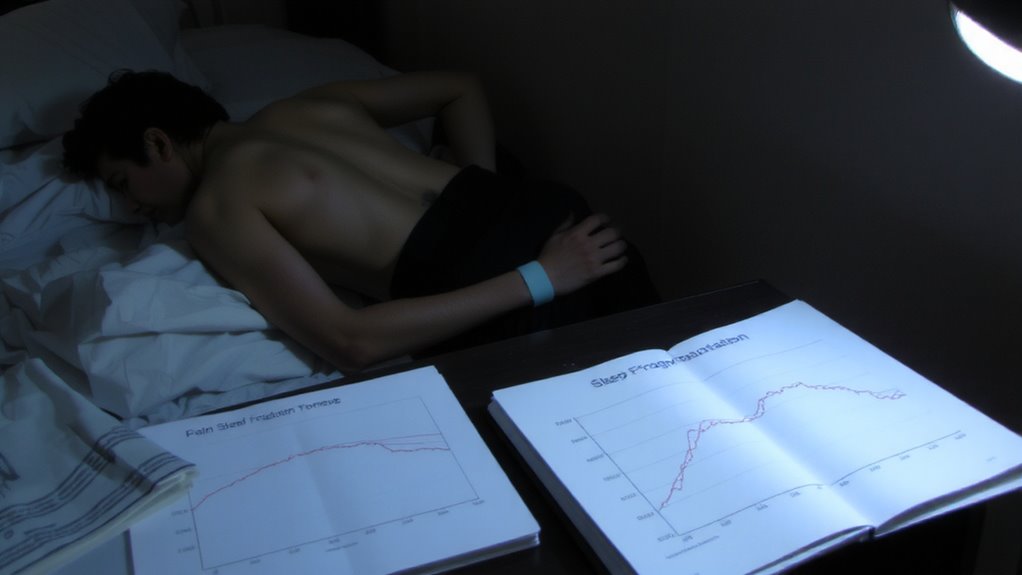
While chronic back pain doesn’t always cause sleep problems, it often makes falling and staying asleep much harder, especially when discomfort keeps you shifting through the night. You might not realize that this cycle worsens both pain and sleep quality over time. Persistent pain can activate neuroinflammation pathways, which may interfere with brain signals that regulate rest. At the same time, your body’s natural circadian rhythm disruptions make it harder to maintain consistent sleep patterns. These biological changes mean your rest becomes lighter and more fragmented. Over-the-counter aids or prescription options might help temporarily, but they don’t address root causes like inflammation or sleep timing. Consider tracking your sleep and pain patterns for two weeks-this data can help your doctor evaluate connections and suggest targeted treatments. Some devices and therapies offer trial periods, so test options carefully before committing. Choosing the right mattress can also make a significant difference, particularly one designed to reduce pressure points, such as the best mattresses for fibromyalgia.
Common Sleep Movement Disorders in Back Pain Patients

You’re more likely to experience certain sleep movement disorders when chronic back pain keeps you restless at night, and recognizing these patterns is the first step toward better rest. Nocturnal restlessness often shows up as frequent shifting, leg movements, or even sudden muscle jerks that disrupt sleep continuity. Conditions like restless legs syndrome and periodic limb movement disorder are common, worsening discomfort and delaying sleep onset. You might also notice an increase in parasomnia frequency, such as sleep-related groaning or limb twitching, which can further fragment rest. These disorders don’t just reflect poor sleep hygiene-they’re tied to pain signals interfering with motor control during sleep cycles. Monitoring symptoms over several nights helps clarify whether movements are occasional or persistent. Simple tools like sleep diaries or wearable trackers provide useful data. Discussing these patterns with a sleep specialist allows for targeted assessments, helping distinguish between primary movement disorders and those amplified by back pain.
How Often Sleep Disorders Occur in Back Pain Patients
Sleep disorders occur frequently among people with chronic back pain, often making rest hard to maintain night after night. You’re not alone-studies show over 60% of chronic back pain patients report disrupted sleep. This isn’t just about discomfort; your sleep architecture likely suffers, with reduced REM and deep sleep stages. Neural inflammation plays a key role, interfering with sleep signals and pain regulation. When your body’s nervous system stays in a heightened state, falling and staying asleep becomes harder. Devices like white noise machines or supportive mattresses may help stabilize your sleep environment. Some find relief with FDA-cleared wearable aids that use gentle vibration to support sleep cycles. Most come with a 30-day trial and one-year warranty. Tracking your sleep patterns for a few weeks can guide which tools might work best-focus on consistency, not quick fixes. Choosing the right pillow can also make a difference, especially one designed for neck pain relief.
How Night Movements Worsen Pain and Sleep
Why do you wake up with stiffer, sharper pain after a restless night? Frequent night movements disrupt your sleep architecture, preventing deep, restorative stages essential for recovery. When your body can’t cycle smoothly through sleep phases, healing slows, and muscle fatigue builds overnight. Those constant shifts strain already irritated back muscles, turning minor discomfort into heightened pain by morning. Poor sleep doesn’t just reflect pain-it worsens it. You’re caught in a cycle: pain triggers movement, and movement fragments sleep, reducing repair time. Monitoring your rest patterns helps identify whether movements align with sleep-related disorders. Consider discussing wearable trackers or sleep diaries with your provider to assess disruptions. Some find relief with supportive mattresses or positional therapy aids, which may reduce unintentional strain. Look for products with trial periods, so you can test comfort without risk. A well-designed mattress can significantly improve spinal alignment and reduce discomfort, especially when selecting one of the best mattresses for back pain relief.
Screening for Sleep Disorders in Chronic Back Pain
How well are your nighttime symptoms being assessed? Many people with chronic back pain aren’t routinely screened for sleep disorders, even though poor sleep can worsen pain. A proper evaluation includes questions about rest quality, movement during sleep, and habits that affect sleep hygiene. Your doctor might use questionnaires or sleep studies to check for conditions like restless legs syndrome or periodic limb movement disorder. Good sleep hygiene-like keeping a consistent bedtime, limiting screen time, and avoiding caffeine late in the day-supports better rest and can improve pain management. Screening helps identify treatable issues so you can make informed choices about care. It doesn’t commit you to treatment but gives you clarity. Early detection means you can adjust habits or consider options with more confidence, balancing benefits and lifestyle needs in your long-term health plan.
Treating Pain and Sleep Movements Together
When your back pain and sleep movements feed into each other, treating both at once often works better than focusing on just one. Improving sleep hygiene-like keeping a consistent bedtime, reducing screen time before bed, and creating a comfortable sleep environment-can reduce nighttime movements and ease pain flare-ups. Cognitive therapy helps you manage the stress and anxiety that worsen both pain and disrupted sleep, giving you tools to break the cycle. Simple changes, like adjusting your sleeping position or using supportive pillows, may lessen strain. Some find mild sleep aids helpful short-term, but they work best when combined with behavioral strategies. There’s no one-size-fits-all fix, so it’s smart to test adjustments gradually and track what works. Combining physical and mental health approaches offers a balanced way to improve rest and reduce pain together.
Why We Need Better Data on Pain and Sleep Disorders
Isn’t it surprising how little one understands about the real connection between chronic back pain and sleep-related movement disorders, despite how often they occur together? You’re likely aware that poor sleep worsens pain, but without accurate data collection, treatment stays guesswork. Current studies often overlook details like your sleep environment, bedding, or nighttime movements, missing key clues. Better data helps identify patterns, so interventions can target both pain and disrupted sleep. When researchers collect precise, real-world metrics-such as movement frequency, sleep position, and environmental factors-you get clearer options for care. Improved data collection doesn’t just advance science; it guides practical choices in sleep aids, positioning supports, or behavioral changes. You benefit from tailored solutions backed by evidence, not trial and error. With stronger data, both clinicians and patients make informed decisions-balancing comfort, safety, and long-term outcomes.
On a final note
You’re more likely to experience sleep-related movement disorders if you have chronic back pain, and these can worsen both rest and discomfort. Screening helps identify issues like restless legs or nighttime muscle spasms. Treating both pain and sleep disruptions together often improves outcomes. Consider devices or medications with proven track records, trial periods, and clear warranty terms. Review options with your doctor to balance effectiveness, side effects, and lifestyle needs.