Sleep and Cognitive Development in Infants: What the Research Shows
Your baby’s brain uses sleep to build connections that support learning, memory, and emotional control. During deep sleep, neural pathways strengthen, helping your infant process daily experiences like sounds and movements. Quality, uninterrupted sleep boosts cognitive milestones, while poor sleep may slow progress. Consistent routines and a calm environment improve sleep quality. Choosing the right sleep aids, like swaddles or white noise, can make a difference-see how small changes add up over time.
Notable Insights
- Sleep supports brain development by strengthening neural connections essential for learning and memory.
- Deep sleep stages enhance neural plasticity, improving brain connectivity and cognitive growth in infants.
- REM and non-REM sleep contribute to memory consolidation, stabilizing daily experiences into long-term skills.
- Poor sleep quality can delay cognitive milestones like problem-solving, language, and attention development.
- Consistent bedtime routines and a sleep-friendly environment promote the restorative sleep needed for optimal brain development.
Why Sleep Matters for Baby Brain Development
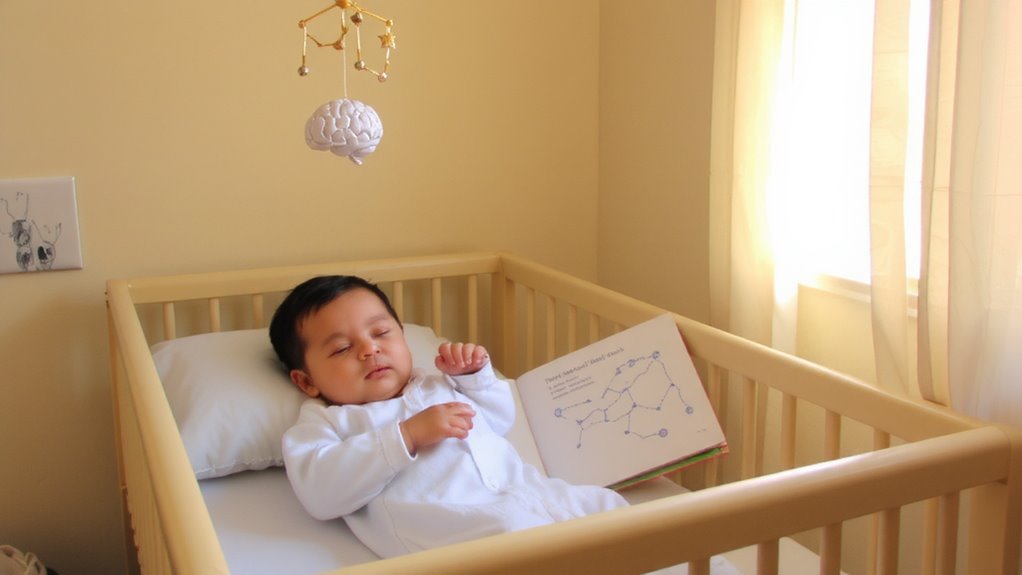
While your baby sleeps, their brain is actively building the foundation for cognitive growth, forming neural connections that support memory, learning, and emotional regulation. This process relies heavily on neural plasticity, the brain’s ability to adapt and reorganize itself, especially during deep sleep stages. Strong brain connectivity develops as regions communicate more efficiently, shaping how your child will process information later in life. Consistent, uninterrupted sleep supports these changes, giving the brain time to strengthen pathways critical for development. If sleep feels disrupted, consider checking the sleep environment-temperature, noise, and light can all affect quality. Sleep aids like white noise machines or swaddles may help, but consult a pediatrician if issues persist. You’re not just managing naps-you’re nurturing long-term brain health through steady routines and informed choices that support natural sleep cycles.
How Sleep Helps Babies Learn and Remember

How does your baby turn fleeting moments into lasting skills? During sleep, dream patterns support memory consolidation, helping your infant process daily experiences. When your baby sleeps, their brain replays and strengthens neural connections formed while awake. This process turns brief interactions-like hearing a new word or grasping a toy-into stable memories. Both REM and non-REM sleep play roles, with REM sleep showing active dream patterns linked to learning. Memory consolidation happens most effectively after rich, uninterrupted sleep cycles. You’ll notice better recognition and skill repetition when your baby maintains consistent sleep routines. Though sleep aids or monitors may help track rest, prioritize natural sleep environments first. Watch for signs of restlessness or frequent waking, which could suggest sleep disruptions affecting learning. Always consult a pediatric specialist if concerns arise. Well-timed naps and age-appropriate bedtimes support ideal cognitive processing without intervention.
How Sleep Quality Affects Cognitive Milestones

Why do some babies reach cognitive milestones faster than others? You might notice differences tied closely to sleep patterns. When your baby sleeps well, their brain strengthens neural connectivity, which supports learning and problem-solving. Quality sleep boosts memory consolidation, helping infants retain new skills like babbling or grasping objects. Deep, uninterrupted cycles enhance brain plasticity, making it easier for babies to adapt and grow. Irregular or fragmented sleep, though, can slow these processes. You’ll want to create a calm sleep environment-consistent bedtime, minimal noise, and proper room temperature-to support healthy development. While sleep aids exist, always check with a pediatrician before use. Reliable performance and safety matter most. Some monitors track breathing and movement, offering peace of mind. Warranties and ease of cleaning are practical features to evaluate when choosing tools. Small changes in sleep quality make noticeable differences over time. Using a high-quality white noise machine can help establish a soothing atmosphere for deeper sleep, with top models designed specifically for newborns providing consistent sound masking. Best White Noise Machines for Newborns
The Consequences of Poor Infant Sleep
If your baby isn’t getting enough restful sleep, it could affect more than just their mood-it may interfere with key areas of development. Poor sleep patterns increase sleep deprivation risks, which are linked to weakened attention, memory, and problem-solving skills over time. You might notice that your infant has trouble focusing during play or learning activities, signaling how cognitive delays impact early growth. These delays don’t mean permanent setbacks, but they do suggest a need for closer attention to sleep quality. Chronic disruptions in nighttime rest can hinder neural connections forming during critical windows. While every baby is different, understanding these risks helps guide smarter choices about routines or potential sleep aids. Monitoring patterns and consulting professionals early allows you to address concerns before they escalate.
Simple Ways to Help Your Baby Sleep Better
You’ve likely noticed how restless nights affect your baby’s alertness and engagement during the day, and those patterns can add up over time. Creating a consistent bedtime routine helps signal that it’s time to wind down-try steps like a warm bath, gentle massage, or quiet reading. Keep the routine short, predictable, and calming. Your baby’s sleep environment also plays a key role; choose a quiet, darkened room with a cool temperature. Use a firm mattress and avoid loose bedding or toys to reduce risks. White noise machines can improve sleep continuity by blocking household sounds. Blackout curtains and wearable sleep aids like swaddles may help some infants settle faster. The right swaddle can provide secure, snug comfort-consider trying one of the best stretchy swaddle blankets designed for newborns, such as those made from breathable, flexible fabric that allows for safe hip positioning. A good stretchy swaddle blanket can make a noticeable difference in helping your baby stay calm and sleep longer. Monitor how changes affect sleep quality, duration, and ease of settling. Most strategies require a few nights to show results, so give each option a fair trial. Small adjustments often yield meaningful improvements in sleep.
Tracking Sleep and Development in the First Year
How can you tell if your baby’s sleep patterns are supporting healthy growth? Tracking sleep and development in the first year gives you clear clues. You can start by noting changes in nap patterns-longer, more predictable naps often align with cognitive leaps. Consistent bedtime routines help signal when your baby is ready for sleep, making rest easier and more effective. Watch for signs like increased focus, responsiveness, and mood. If sleep seems disrupted, consider keeping a log to identify trends. Some parents find sleep aids useful, but check with your pediatrician first. Most recommended tools come with trial periods or warranties. A new best sleep aids for infants can make a meaningful difference when chosen carefully. Sleep disorders are rare but worth ruling out if problems persist. Simple adjustments to routines or environment may be enough. The key is steady observation and small, informed changes over time.
On a final note
You can support your baby’s cognitive growth by prioritizing consistent, high-quality sleep. Pay attention to sleep patterns and developmental milestones, and consult a pediatrician if disruptions persist. Most sleep aids and routines are safe when used as directed, but always review trial periods and warranties for products. Evidence suggests that small adjustments-like calming pre-bed rituals-often improve sleep outcomes without intervention. Track progress, stay informed, and make choices based on your baby’s unique needs.