How CBT-I Helps Patients Tolerate Temporary Sleep Loss Without Panic
You don’t have to panic when you can’t sleep-CBT-I helps you stay calm by teaching your brain to see lost sleep as temporary, not dangerous. It uses sleep tracking and consistent bedtimes to build trust in your body’s rhythm. Techniques like controlled breathing and leaving bed if restless reduce anxiety’s grip. Over time, you learn to respond without fear, letting sleep come naturally. There’s more to discover about rewiring your sleep habits.
Notable Insights
- CBT-I reduces fear of sleep loss by reshaping negative reactions to poor nights with cognitive restructuring.
- Sleep tracking helps patients see long-term patterns, minimizing overreactions to temporary sleep loss.
- Patients learn to stay calm during wakefulness using breathing and grounding techniques when panic arises.
- Sleep restriction increases sleep efficiency and builds confidence, reducing anxiety about occasional bad nights.
- Consistent bedtime routines strengthen the bed-sleep association, preventing panic from disrupting sleep cues.
Why Anxiety Turns One Bad Night Into Chronic Insomnia
Why does one restless night sometimes spiral into weeks or months of poor sleep? Because your brain starts forming unhelpful sleep associations. You might begin linking your bed with frustration, not rest. That triggers anxiety, which feeds cognitive distortions-like believing you’ll never sleep again or one bad night ruins your entire week. These distorted thoughts amplify stress, making it harder to fall asleep, which then reinforces the cycle. Your body learns to stay alert at bedtime, mistaking rest time for worry time. Over time, this turns temporary trouble into chronic insomnia. You don’t need stronger sleep aids; you need to retrain the mental connections around sleep. Recognizing these patterns early helps you respond calmly. You can adjust routines, weaken negative associations, and reduce distorted thinking before they deepen. The key is consistency, not quick fixes.
How CBT-I Helps You Stop Fearing Sleep Loss
You’re not alone if the thought of another sleepless night makes your chest tighten-CBT-I directly addresses that fear by reshaping how you respond to lost sleep. Instead of panicking over missed hours, you learn to trust your body’s ability to cope. Sleep tracking helps you see patterns over time, not just single nights, so one bad rest doesn’t signal failure. You’ll adjust bedtime rituals to strengthen the mental link between bed and sleep, like dimming lights or avoiding screens. These small changes reduce anxiety by creating predictability. Over time, you stop fearing lost sleep because you’ve built reliable habits and tools. CBT-I doesn’t erase occasional poor nights, but it gives you clear strategies to manage them. You gain confidence through experience and evidence, not hope. That shift makes all the difference.
What to Do When You Wake Up Panicking at 3 A.M.?
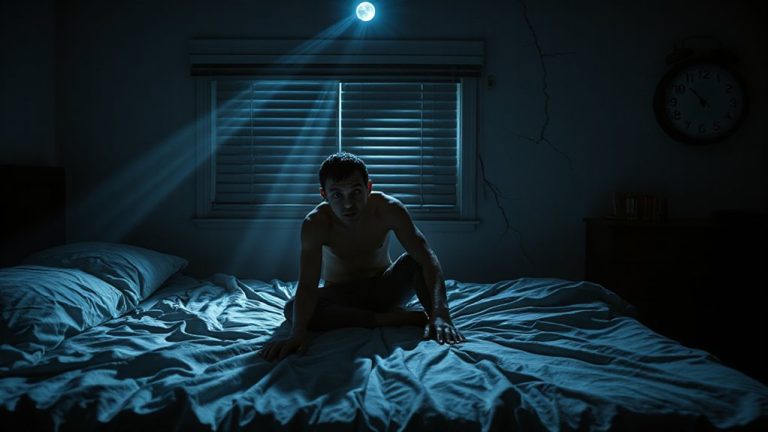
What can you do when your eyes snap open at 3 a.m., heart racing and mind spinning? First, remind yourself this is common and not dangerous. Instead of fighting it, use breathing techniques to slow your body’s alarm response. Try inhaling for four counts, holding for four, exhaling for four, then pausing again-that pattern helps reset your nervous system. Pair this with grounding exercises: name five things you see, four you feel, three you hear, two you smell, one you taste. This pulls your focus from panic to the present. Staying in bed is fine as long as you’re not struggling. If you’re restless after 20 minutes, get up, move to another room, and do something quiet. Avoid screens. These tools don’t fix everything overnight, but they build resilience each time you use them.
Why Sleeping Less on Purpose Can Calm Your Mind
How is it that cutting back on sleep-something you’d expect to make anxiety worse-might actually help quiet a racing mind? It’s because sleep restriction, a core part of CBT-I, increases sleep efficiency by limiting time in bed to match actual sleep. This builds sleep pressure, making it easier to fall and stay asleep. With consistent timing, your body learns a reliable rhythm, reducing the fear of not sleeping. More importantly, facing limited sleep on purpose creates cognitive defusion-you begin to see thoughts like “I’ll never sleep” as mental events, not facts. You’re not avoiding sleep worry; you’re changing your relationship to it. Over time, this reduces nighttime panic and strengthens control. It’s not about thriving on less sleep, but using temporary reduction to reset habits. Results vary, but many report calmer minds within weeks. Always consult a provider before adjusting sleep routines.
How to Handle Rough Sleep Nights Without Falling Apart
Even with the best routines, some nights will still feel like an uphill battle-tossing, turning, or lying wide awake despite your efforts. When that happens, remind yourself it’s normal and temporary. Don’t panic or check the clock; reacting with stress only fuels insomnia. Instead, stay in bed quietly, practicing slow breathing or mental relaxation. If you’re awake for more than 20 minutes, get up and do something calm and dimly lit-like reading-then return to bed when sleepy. Keep your response consistent to avoid reinforcing anxiety. Stick to your usual wake time to protect your sleep drive. Maintain your bedtime rituals, whether it’s brushing your teeth or listening to soft music, to signal your brain it’s time to wind down. Use sleep tracking to notice trends over time, not nightly perfection. These tools help you see progress and make informed choices about when to adjust habits or consider professional support.
On a final note
You can learn to handle short sleep without panic by using CBT-I strategies that reframe your thoughts and reactions. It teaches you to accept occasional poor sleep calmly, reducing the fear that worsens insomnia. Instead of reaching for quick fixes, you build skills through practice, often with guidance and structured sessions backed by research. Results vary, trials may take weeks, but many find better sleep without relying on aids.