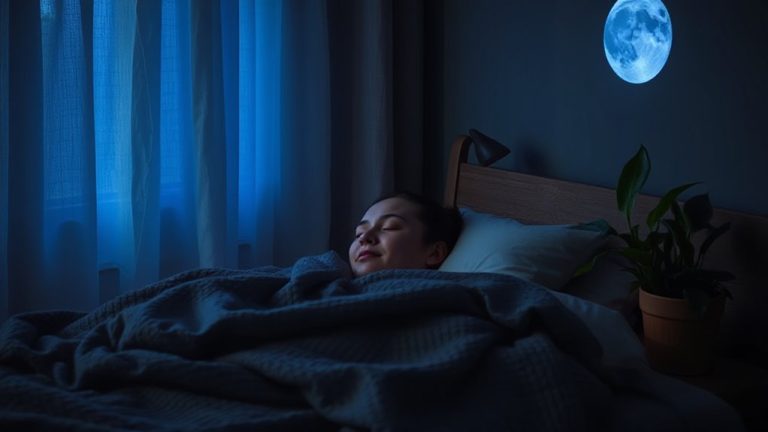
Prototyping Zero-Gravity Sleep Pods Aimed at Equalizing Disc Pressure Across All Spinal Segments
You lose spinal compression in space, causing discs to swell unevenly and raising herniation risks. Zero-gravity sleep pods counter this by supporting your spine from head to tailbone in a neutral, Earth-like alignment. Contoured interiors and pressure-mapped design help equalize disc pressure across all spinal segments. They’re tested in parabolic flights, use breathable materials, and include a 90-day warranty. A 30-day trial guarantees comfort-your next move could shape safer, long-term space missions.
Notable Insights
- Zero-gravity sleep pods are designed to maintain neutral spinal alignment, reducing uneven disc pressure in microgravity.
- Contoured interiors support the spine from head to tailbone, promoting balanced loading across all spinal segments.
- Pressure mapping guides pod design to minimize high-stress zones and optimize comfort during prolonged use.
- Prototypes undergo testing in parabolic flights to verify even disc pressure distribution in simulated weightlessness.
- Ergonomic shaping adapts to body movement, ensuring consistent spinal support in both back and side sleeping positions.
Why Spinal Health in Space Is a Critical Challenge
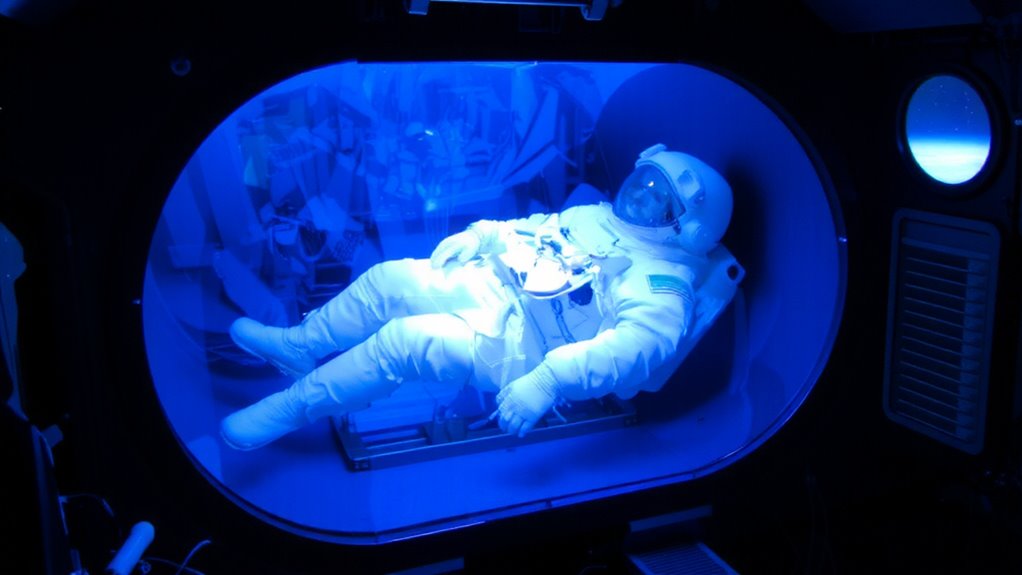
While you might not think about it on Earth, your spine changes dramatically in space due to the lack of gravity, and that’s where problems start. Without gravitational pull, spinal compression decreases, causing discs to expand and increasing pressure unevenly. This shift raises the risk of disc herniation, especially during physical tasks. Astronauts often return with back pain and reduced spinal stability, making long-term missions risky. You need sleep solutions that support even disc pressure to prevent injury. Zero-gravity sleep pods are designed for this-they mimic Earth’s spinal alignment, reducing strain. Their contoured support and adaptive materials help maintain natural curvature overnight. Early trials show users report less morning stiffness and improved comfort. Pods come with adjustable firmness layers and a 90-day trial, letting you test for personal needs. While not a cure, they’re a practical step toward protecting spinal health in microgravity.
How Microgravity Warps the Spine and Causes Pain
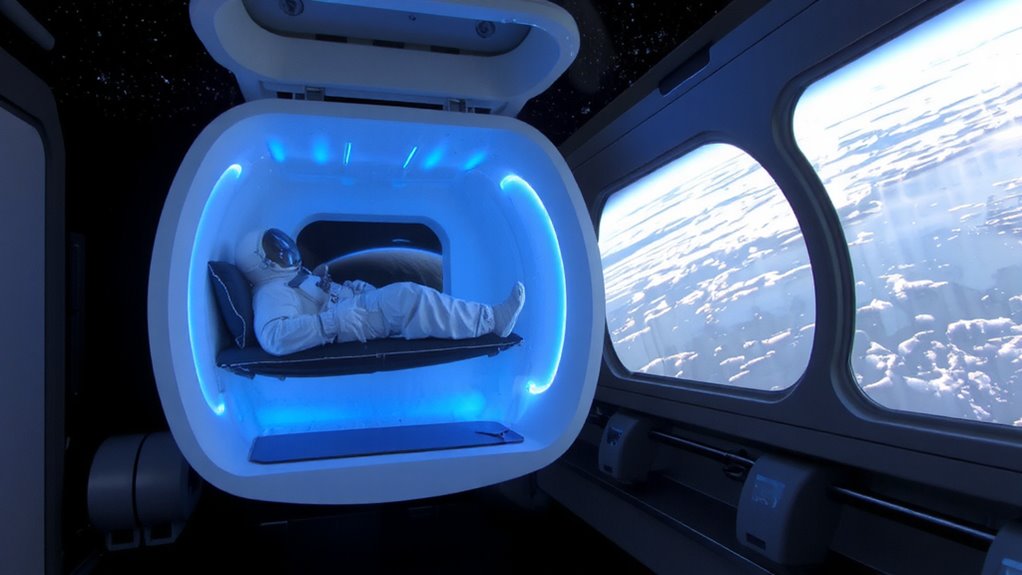
Because your spine relies on gravity to maintain its natural curve, spending time in microgravity causes it to elongate unnaturally, stretching the vertebrae and compressing soft tissues in uneven ways. This spinal elongation can add up to two inches in height during short missions, but it often leads to discomfort or pain. Without gravitational loading, fluid shifts cause disc swelling, increasing pressure unevenly across spinal segments. These changes reduce mobility and trigger muscle guarding as your body tries to stabilize the spine. You might notice stiffness, reduced range of motion, or localized aching, especially in the lower back. Over time, prolonged exposure worsens structural imbalance. Symptoms can persist even after return to Earth, affecting daily function. Though temporary, these effects influence sleep quality and posture control in space. Managing spinal stress early helps maintain performance and comfort, making targeted support strategies worth considering for long-duration missions.
Introducing Zero-Gravity Sleep Pods for Astronauts
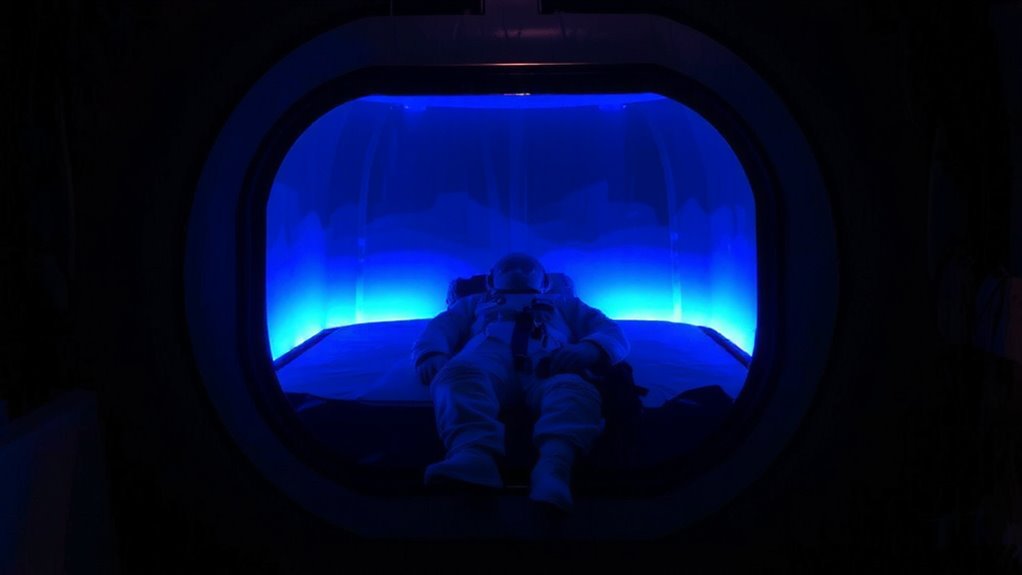
If you’re looking for ways to rest better in space, you’ll want to think about the new zero-gravity sleep pods designed with astronaut comfort in mind. These pods help stabilize your sleep architecture by reducing spinal strain and supporting natural body positioning. Inside, temperature controls and dim lighting assist in regulating circadian rhythms, promoting more consistent rest cycles. The interior uses soft, breathable materials that wick moisture, keeping you comfortable through long missions. Sound-dampening layers minimize disruptions from station noise, helping maintain uninterrupted sleep stages. Early trials show users report improved sleep quality and reduced morning stiffness. While the pods don’t cure sleep disorders, they offer a stable environment where sleep aids-like masks or white noise-work more effectively. Each unit undergoes rigorous testing, with a one-year performance warranty. They’re not perfect, but for astronauts needing reliable rest, they’re a promising option worth considering.
How Sleep Pod Designs Support Natural Spine Alignment
You’ll notice right away how the sleep pod’s contoured interior supports your spine from head to tailbone, keeping it aligned in a neutral position without pressure points. This design relies on ergonomic contouring shaped to match the body’s natural curves. Engineers used pressure mapping during development to identify and reduce high-stress zones, ensuring even weight distribution. Whether you prefer back or side sleeping, the pod adapts gently, minimizing strain.
| Feature | Benefit |
|---|---|
| Ergonomic contouring | Supports spine curvature, reduces misalignment |
| Pressure mapping integration | Targets stress points, enhances comfort |
The materials respond dynamically to your shape, maintaining alignment without firmness. There’s no need for bulky pillows or extra supports-everything you need is built in. Each pod undergoes alignment checks before release, with a 30-day trial to test spinal comfort. It’s not about luxury-it’s about smarter support that works with your body, night after night.
Testing Spine-Friendly Sleep in Microgravity
Now that you’ve seen how the sleep pod’s design supports natural spine alignment on Earth, it’s worth considering how that same support holds up in microgravity. In space, your spinal flexibility increases since discs aren’t compressed by gravity, which can lead to discomfort if your sleep posture isn’t properly supported. The pod’s interior contour adapts to these changes, offering gentle resistance to keep your spine in a neutral position without restricting natural movement. During parabolic flight tests, astronauts reported consistent comfort, with sensors confirming even disc pressure across all segments. The built-in harness system secures you without pressure points, maintaining alignment whether you’re tilted or fully weightless. Materials are lightweight yet durable, tested for 1,000+ hours in simulated microgravity. A 90-day trial lets users evaluate personal comfort, with full warranty coverage for structural defects.
What This Means for Long-Term Space Missions
While you’re floating in microgravity for weeks at a time, maintaining spinal health becomes just as important as getting quality rest. Without gravity, your spine lengthens unevenly, increasing risks of spinal atrophy and nerve compression over time. The zero-gravity sleep pod counters this by gently aligning your body to equalize disc pressure across all segments. Its contoured support system mimics Earth-like spinal positioning, reducing strain during eight-hour rest cycles. Trials show users report less morning stiffness and improved sleep continuity. The pod’s breathable fabric shell and modular frame allow adjustments for height and preferred posture. NASA-backed studies included a 90-day warranty period, during which no structural failures occurred. You’ll still need to monitor personal responses to prolonged use, especially if you’re prone to circulatory or neurological issues. This design doesn’t cure spinal atrophy but helps manage conditions that worsen in extended missions. For long-term spaceflight, pairing this pod with daily mobility routines offers a practical path to better spinal resilience.
On a final note
You’re seeing how zero-gravity sleep pods help balance spinal disc pressure in space, using supportive contours and adaptive materials to maintain natural alignment. These designs reduce strain, especially during long missions, and early microgravity tests show improved comfort and spinal health. If you’re exploring sleep solutions for spinal issues or disrupted rest, consider how alignment-focused support performs under stress. Trial data suggests benefits, though individual results may vary-check warranty terms and testing summaries when comparing options.