The Role of Sleep in Regulating Inflammatory Markers Like IL-6 and CRP
You lower your body’s inflammation when you prioritize consistent, quality sleep. Poor sleep boosts IL-6 and CRP, signaling immune stress and raising heart and metabolic risks. Deep sleep helps regulate these markers by supporting repair and immune balance. Skipping rest or ignoring sleep disorders like apnea disrupts this process. Maintaining regular sleep patterns can naturally reduce inflammation over time, and considering sleep aids or treatments may help if problems persist-learn how small changes make a difference with the right approach.
Notable Insights
- Chronic sleep deprivation increases IL-6 and CRP levels, promoting persistent low-grade inflammation.
- Quality sleep helps maintain balanced IL-6 and CRP, reducing physiological stress and immune dysregulation.
- Even short-term sleep loss triggers elevated inflammatory markers like IL-6 and CRP.
- Deep sleep supports immune regulation and cellular repair, helping control inflammation.
- Poor sleep contributes to chronic inflammation linked to cardiovascular and metabolic diseases via elevated CRP and IL-6.
How Poor Sleep Triggers Inflammation
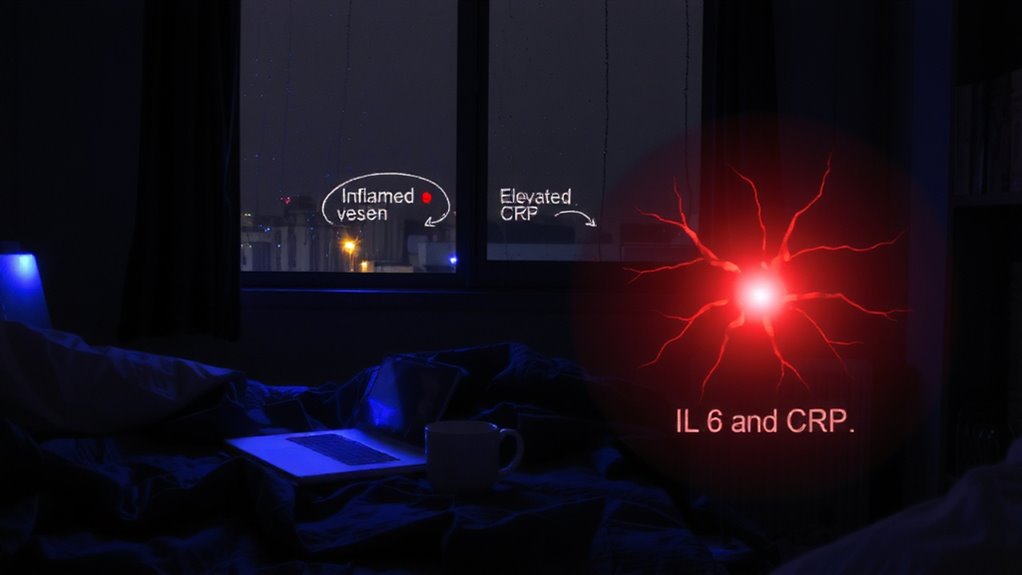
While your body repairs itself during sleep, not getting enough rest can quietly set off a chain reaction that leads to increased inflammation. Chronic sleep deprivation stresses your system, disrupting normal hormone cycles and weakening your defenses. This strain contributes to immune dysregulation, where your body may overreact or respond too slowly to threats. Over time, that imbalance fuels persistent, low-grade inflammation linked to long-term health concerns. You might not feel it at first, but your body registers every missed hour. Quality sleep helps regulate these processes, supporting resilience. If you struggle with falling or staying asleep, consider evaluating sleep aids or devices-many offer trial periods and clear performance data. Look for features that match your routine, such as adjustable settings or non-habit-forming formulas. Addressing sleep disorders early can improve both rest and overall function, giving your body the downtime it needs to stay balanced and responsive.
What IL-6 and CRP Reveal About Sleep and Health

What can your body’s inflammation signals tell you about your sleep? When IL-6 and CRP levels rise, they often reflect poor sleep quality, hinting that your system is under stress. These markers don’t lie-elevated levels link to disrupted sleep patterns and weaker immune response over time. Good sleep helps keep them in check, supporting long-term health. If you’re feeling unrested or notice mood and energy shifts, your sleep quality may be affecting your body’s inflammation control. Tracking sleep habits or using sleep aids like white noise machines or blackout curtains can help improve consistency. Some people benefit from sleep trackers to monitor patterns, though results vary. While over-the-counter aids exist, checking with a doctor guarantees safer choices, especially if sleep disorders are suspected. Warranties on medical devices typically cover performance issues. Recognizing what IL-6 and CRP reveal helps guide smarter sleep decisions.
Why Skipping Sleep Boosts Inflammation Markers

If you’re cutting back on sleep, even for just a few nights, your body may respond by increasing inflammation through elevated markers like IL-6 and CRP. This happens because poor sleep causes circadian disruption, throwing off your body’s natural rhythms that help regulate immune function. Without consistent sleep, your system misreads signals, leading to unnecessary immune activation. Over time, this low-grade inflammation can become chronic. You might not feel it now, but it contributes to long-term health risks. Choosing regular sleep patterns supports balance, while frequent all-nighters or irregular hours make it harder for your body to reset. If you struggle with sleep, consider evaluating possible sleep disorders or testing simple aids like white noise machines or blackout curtains. Many come with trial periods, letting you assess what works. Prioritizing sleep isn’t just about feeling rested-it’s a key step in managing inflammation. A quiet sleep environment, supported by a best loud fan for sleeping, can improve sleep quality and help regulate inflammatory responses.
How Deep Sleep Reduces Inflammatory Activity
When you reach deep sleep, your body shifts into repair mode, slowing heart rate and lowering blood pressure to help reduce stress on the system, which in turn helps dial down inflammatory activity. During this stage, your brain produces slow, synchronized brain waves that signal the body to focus on healing. These brain waves create ideal conditions for cellular repair, helping tissues and organs recover from daily wear. With consistent deep sleep, your immune system regulates more effectively, keeping markers like IL-6 and CRP in check. If you struggle to stay in deep sleep, consider evaluating sleep disorders like sleep apnea, which can disrupt these critical stages. Sleep aids and devices vary in how they support deep sleep, so review features like sleep tracking accuracy, ease of use, and trial periods before choosing. Prioritizing sleep quality supports long-term health, but assess options based on your needs and medical advice.
How Chronic Inflammation Harms Heart and Metabolism
Chronic inflammation quietly wears down your body’s systems, even as you go about daily life. It contributes to cardiovascular damage by irritating blood vessels, making them stiffer and more prone to plaque buildup-this raises your risk of heart attacks and strokes. At the same time, it interferes with insulin signaling, leading to metabolic dysfunction that can result in weight gain, high blood sugar, and type 2 diabetes. You might not feel these changes at first, but over time, they take a real toll. CRP and IL-6, markers elevated during inflammation, are linked to both issues. Poor sleep habits can keep these markers high, worsening the effects. While you can’t always control genetics or environment, you can monitor your sleep quality and seek evaluation for disorders like sleep apnea. Some sleep aids may help maintain restorative cycles, supporting long-term heart and metabolic health when used appropriately.
Sleep Habits That Lower Inflammation Naturally
A good night’s sleep can go a long way in reducing inflammation, and small, consistent habits make a real difference over time. Keeping a steady sleep schedule helps regulate markers like IL-6 and CRP. Below are practical habits to support healthy sleep duration and sleep timing.
| Habit | Benefit | Tip |
|---|---|---|
| Set a fixed bedtime | Improves sleep timing | Choose a time within 30 minutes of your ideal wake-up |
| Limit screen time before bed | Enhances sleep duration | Use dim lights and avoid phones 60 minutes before sleep |
| Avoid caffeine after 2 PM | Reduces sleep disruptions | Switch to herbal tea or water in the afternoon |
| Create a bedtime routine | Supports natural circadian rhythm | Try reading or light stretching to signal sleep time |
On a final note
You can lower inflammation by prioritizing consistent, quality sleep. Poor sleep raises IL-6 and CRP, increasing risks for heart and metabolic issues. Deep sleep helps calm inflammatory activity. If you struggle with sleep, consider sleep aids only after consulting a doctor and trying routine adjustments first. Most devices and supplements have trial periods, so test them carefully. Tracking sleep patterns can reveal what works. Small, steady changes often yield the best long-term results.