Avoiding Tight-Fitting Sheet Elastic That Increases Localized Skin Pressure
Tight sheet elastics press into your skin, restricting blood flow and raising the risk of irritation or pressure sores overnight. Switch to alternatives like adjustable straps, zippered encasements, or flat-knit corners that stay secure without compression. Choose breathable, low-shear fabrics such as bamboo or TENCEL™ to reduce friction and manage moisture. Smooth tucking and wrinkle-free layers further protect sensitive skin. You’ll find better options as you explore these solutions.
Notable Insights
- Use adjustable straps or suspenders under the mattress instead of elastic to eliminate skin pressure.
- Choose zippered mattress encasements for a secure fit without constrictive elasticity.
- Opt for flat sheets with elastic-free corners that tuck smoothly under the mattress.
- Select breathable, low-shear fabrics like bamboo or TENCEL™ to reduce friction and improve airflow.
- Smooth wrinkles and avoid tight tucking to minimize shear forces and skin irritation.
How Tight Sheet Elastics Damage Skin
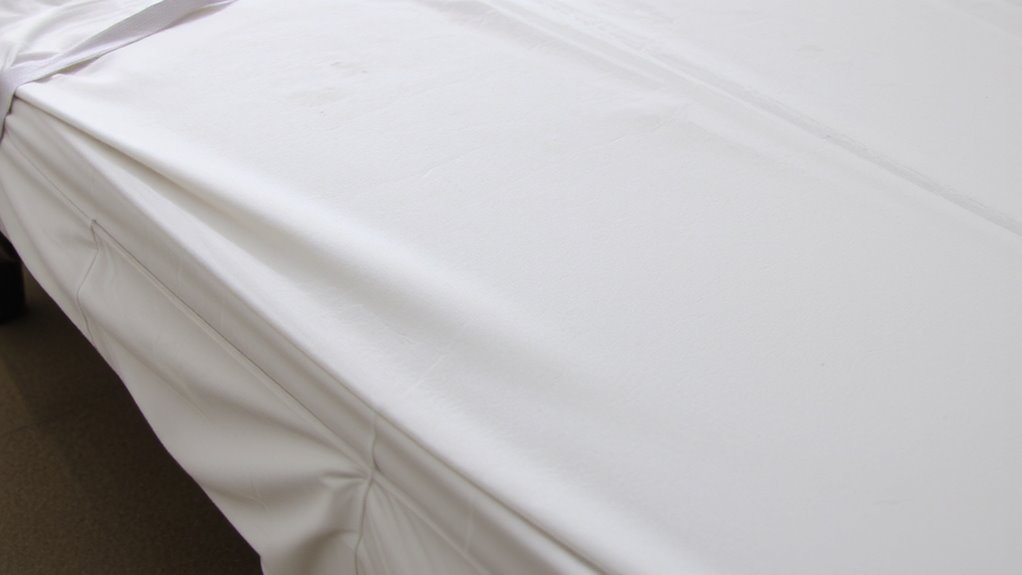
Why do some bedsheets leave red marks or feel uncomfortably snug? The answer often lies in overly tight elastic. When sheet edges pull too hard against your skin, they compress delicate tissues, leading to microcirculation impairment-meaning blood flow slows in those areas. Without steady oxygen delivery, skin can’t regenerate effectively overnight. You’re also more likely to experience epidermal stress, where the outermost layer faces tension that weakens its barrier. This isn’t just uncomfortable; it may worsen existing skin sensitivities or sleep disruptions. Sheets designed with broader, softer elastic bands reduce pressure while staying secure. Look for models with adjustable corners and breathable fabric blends. Many come with trial periods, so you can test comfort risk-free. Consider performance over snugness-your skin repairs most during rest, and restricting it can silently hinder recovery. Choosing wisely supports both sleep quality and skin health, without sacrificing fit.
How Tight Sheets Create Pressure Sores
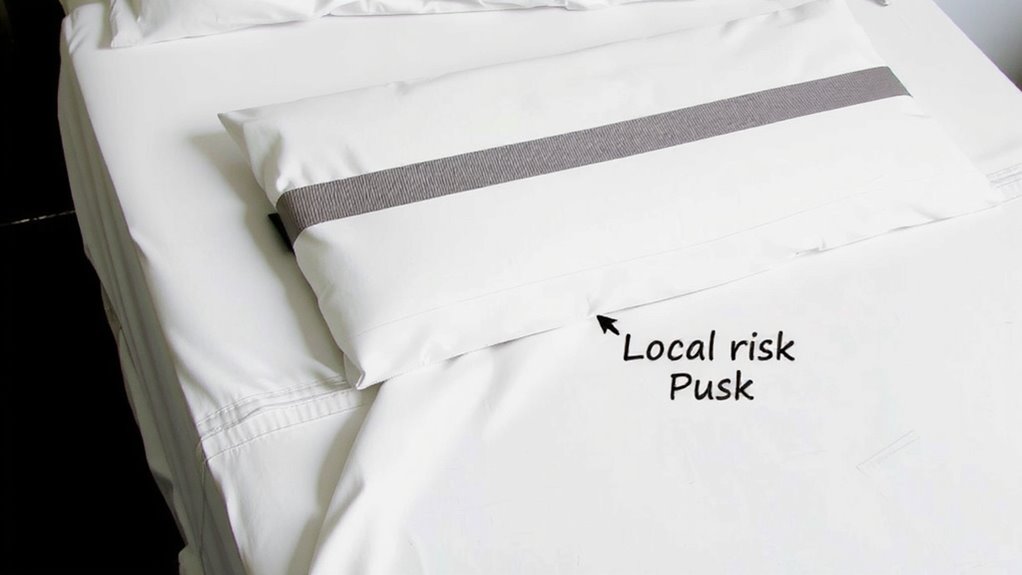
While you might think a snug fit means better sleep, overly tight sheet elastics can actually increase the risk of pressure sores, especially if you’re sensitive or stay in one position for long stretches. Tight sheets press fabric firmly against your skin, creating persistent friction points that wear down tissue over time. This constant pressure restricts blood flow, raising the chance of sores forming on hips, heels, or shoulders. Combined with moisture retention from sweat or incontinence, the damp, compressed environment worsens skin breakdown.
| Condition | Effect on You |
|---|---|
| Tight fabric | Causes discomfort and restricts movement |
| Friction points | Lead to skin irritation and sores |
| Moisture retention | Softens skin, increasing vulnerability |
| Limited airflow | Delays healing and promotes infection |
Choose breathable, properly fitted bedding to reduce risk and support healthy sleep.
Safe Substitutes for Sheet Elastics
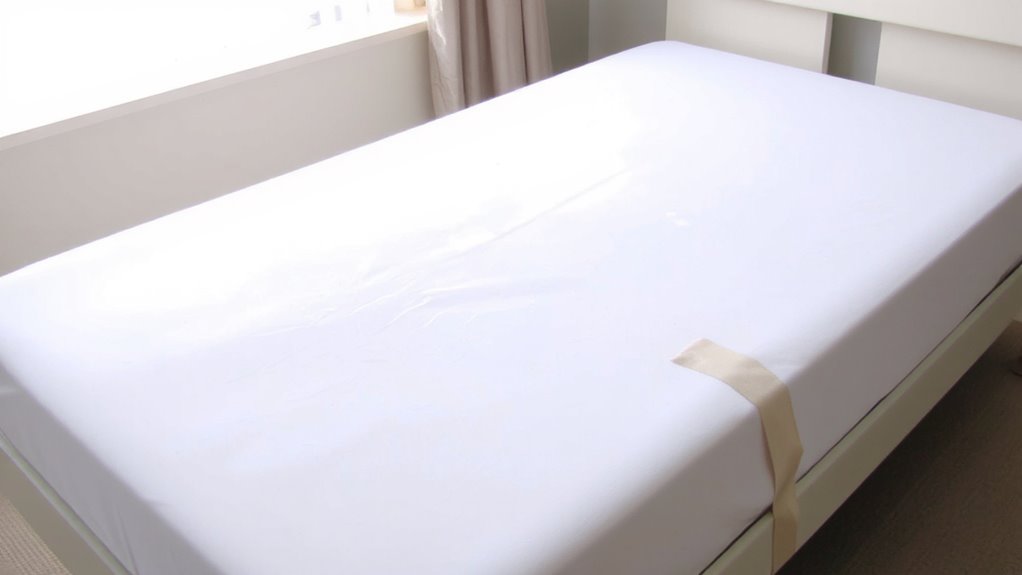
A well-fitted bed doesn’t have to rely on tight elastics to stay in place. You can use loose alternatives like fitted sheets with adjustable straps or suspenders that attach under the mattress, reducing direct pressure on your skin. These comfort solutions keep fabric secure without constriction, which helps prevent pressure points, especially if you’re immobile or have sensitive skin. Other options include zippered mattress encasements or flat sheets with elastic-free corners that tuck under the mattress for stability. Look for models with easy-release buckles or soft, stretchable corners made of breathable fabric-features that enhance fit without tightness. Many brands offer trial periods, so you can test how well they stay put during restless sleep. Check warranty coverage for stitching or strap durability. These designs support safer, more stable bedding without compromising comfort or safety. For reliable options, consider checking reviews of the best top picks available on the market.
Choose Breathable, Low-Shear Bed Linens
You’ve already explored ways to secure your bedding without tight elastics, and now it’s worth considering the fabric itself-how it feels against your skin and how it handles moisture and friction. Choose breathable, low-shear bed linens made from natural or performance fibers that support moisture wicking and temperature regulation. Fabrics like bamboo, TENCEL™, or finely woven cotton reduce skin drag and help keep the sleeping surface dry and cool. These materials allow air to circulate, minimizing overheating and moisture buildup that can weaken skin. Many options are machine washable and retain softness over time, with some brands offering trial periods to test comfort. Look for flat-knit construction, which stretches gently without pressure points. Since breathability and shear resistance vary by blend and weave, reviewing product specifications and care instructions helps you make informed comparisons. Prioritizing these features supports better sleep and skin health without sacrificing comfort.
Bed-Making Tips That Protect Fragile Skin
If done with care, making your bed can reduce strain on delicate skin while maintaining a comfortable sleep environment. Smooth out wrinkles in sheets to minimize friction, and avoid tight-fitting elastic that bunches fabric. Use soft mattress padding to cushion pressure points, especially over hips and heels. Adjust pillow placement to keep your spine aligned and reduce skin shear when shifting during sleep. Choose fabrics that breathe and stretch slightly without snapping back too tightly. Always tuck bedding loosely to allow easy movement. Test different layers to see what reduces discomfort over time. Check return policies if trying new padding or pillows.
| Feature | Benefit |
|---|---|
| Mattress padding | Reduces pressure on sensitive areas |
| Smooth linens | Lowers risk of skin abrasion |
| Proper pillow placement | Supports neck and spine alignment |
| Loose tucking | Prevents constriction and shear |
On a final note
You can protect your skin by choosing soft, breathable bedding that reduces pressure and friction. Loose-fitting or elastic-free sheets help prevent sores, especially if you have sensitive or fragile skin. Look for moisture-wicking, low-shear fabrics that stay in place without tight elastics. Try hypoallergenic options with a deep-pocket fit or adjustable straps. Many come with trial periods, so test comfort and performance before deciding.