The Connection Between Sleep Efficiency and Rate of Muscle Protein Synthesis
You need efficient sleep to boost muscle protein synthesis, since deep, uninterrupted cycles let your body repair tissue and release growth hormone. Even if you sleep long hours, interruptions from poor sleep quality can cut protein synthesis nearly in half. Aim for 7–9 hours with minimal disruptions to maximize recovery. Sleep disorders like apnea reduce efficiency, so getting evaluated helps. High sleep efficiency means better repair and gains over time. Keep optimizing your routine and see how much stronger your progress can get.
Notable Insights
- Sleep efficiency directly impacts deep sleep duration, where muscle protein synthesis peaks.
- High sleep efficiency supports uninterrupted slow-wave sleep, enhancing growth hormone release for muscle repair.
- Fragmented sleep reduces sleep efficiency, impairing protein synthesis and recovery processes.
- Even with sufficient sleep duration, low efficiency limits the restorative benefits needed for optimal muscle growth.
- Maximizing sleep efficiency through consistent timing and environment boosts overnight muscle protein synthesis rates.
How Deep Sleep Fuels Muscle Growth

While you’re in deep sleep, your body ramps up growth hormone release, which plays a key role in repairing and building muscle tissue. This is when muscle protein synthesis peaks, helping your muscles recover and grow stronger after workouts. Though REM cycles are shorter during this stage, they still contribute to memory consolidation and neural repair, supporting motor learning and coordination. You need consistent, uninterrupted deep sleep to maximize these benefits. Sleep disorders like apnea can fragment your sleep cycles, limiting time spent in this restorative phase. If you’re considering sleep aids, look for options that don’t suppress REM cycles or disrupt sleep architecture. Some over-the-counter supplements may help, but check for clinical backing, clear labeling, and third-party testing. Devices with sleep-tracking features can help you monitor deep sleep patterns over time. Prioritizing sleep quality means better recovery-without overstating benefits or pushing quick fixes.
Why Growth Hormone Needs Quality Sleep
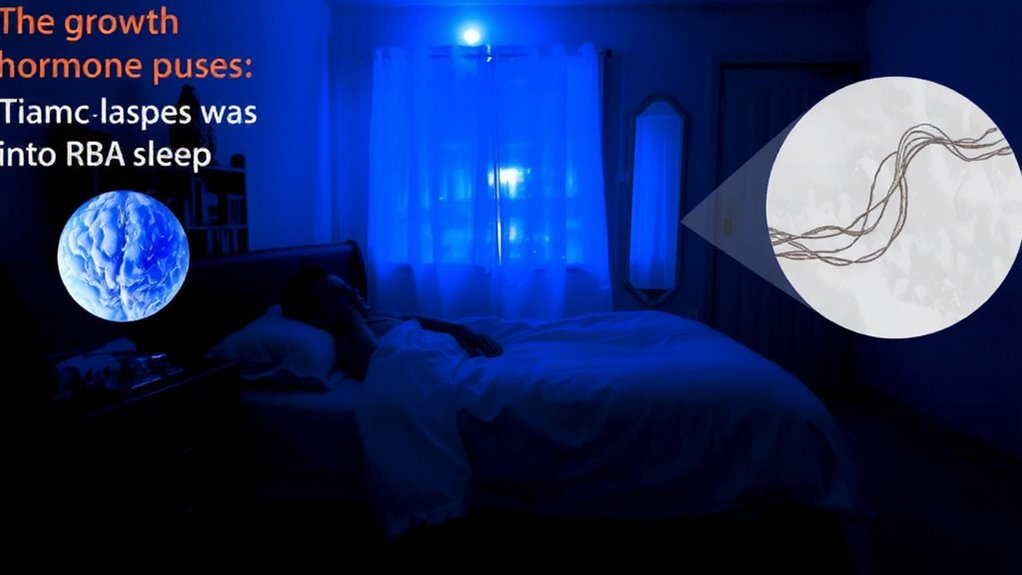
Why does your body seem to heal more when you’re in deep, undisturbed sleep? Because that’s when growth hormone peaks, helping drive hormonal balance and muscle recovery. You need quality sleep for your pituitary gland to release enough of this hormone-most secretion happens during slow-wave sleep. Without consistent, restful cycles, your body struggles to maintain this balance, limiting gains in muscle protein synthesis. Quality sleep supports cellular repair, letting your muscles rebuild stronger overnight. If you’re skimping on sleep or dealing with disruptions, you’re unknowingly blocking a key repair window. To improve sleep efficiency, consider evaluating your sleep environment, routines, or potential sleep disorders. Some find mild aids helpful, but check with a specialist to match solutions to your needs. Prioritizing deep, restorative rest isn’t excessive-it’s necessary for lasting recovery and performance gains. Supplements like nighttime muscle recovery supplements can further support this process by enhancing nutrient delivery during sleep.
What Happens When Poor Sleep Slows Recovery?
You’re not imagining it if your workouts feel harder or your muscles stay sore longer-poor sleep directly slows your body’s ability to recover. When you cut sleep short, muscle fatigue builds up because your body can’t clear metabolic waste efficiently. This leads to a metabolic imbalance, disrupting hormones that regulate repair and appetite, which undermines protein synthesis. Over time, this weakens gains and increases injury risk. Sleep disorders like apnea magnify these effects, so getting evaluated makes sense if you snore or wake often. While sleep aids may help short-term, they don’t replace consistent, efficient rest. Look for options with clear dosing, minimal next-day drowsiness, and solid trial periods. Prioritizing sleep efficiency-not just time in bed-supports faster recovery and better long-term results.
Sleep Quality vs. Quantity: What Builds Muscle Better?
Is more sleep always better for muscle growth, or does how well you sleep matter more? Sleep duration matters, but poor sleep quality can leave you feeling drained, worsening muscle fatigue even after eight hours. You need deep, uninterrupted cycles to maximize muscle protein synthesis. Think of sleep as a repair session-junked up by interruptions, and the gains slip.
| Factor | Effect on Muscle |
|---|---|
| Long sleep duration, low quality | High muscle fatigue, low recovery |
| Short sleep duration, high quality | Moderate fatigue, fair synthesis |
| Long sleep duration, high quality | Low fatigue, peak repair |
You’ll want consistent, efficient rest-not just time in bed. Consider tracking sleep stages or consulting a professional if fatigue persists. Some find mild sleep aids help, but check with a doctor first. A good night isn’t just long-it’s deep and smooth.
Time Your Workouts and Sleep for Faster Gains
Ever wonder when the best time to work out actually is-for your muscles and your sleep? Aligning workout timing with your natural energy peaks can boost muscle protein synthesis, especially if you train in the late afternoon when strength and endurance are high. But don’t overlook sleep scheduling-finishing intense workouts too late may disrupt sleep onset, reducing recovery efficiency. Aim to finish training at least 1–2 hours before bed to allow your body temperature and heart rate to settle. Consistency matters: regular workout timing helps regulate circadian rhythms, improving sleep quality over time. If you struggle with sleep onset or suspect a disorder, consider adjusting workout timing before turning to aids. Track your sleep and recovery for a few weeks to see what combination supports better performance. Small adjustments in when you train and sleep can make a measurable difference in gains.
6 Science-Backed Tips to Sleep for Muscle Growth
Why do some people seem to build muscle faster, even on similar routines? It often comes down to sleep quality and recovery habits. To support muscle growth, optimize your sleep environment-keep the room dark, cool, and quiet, and remove distractions like screens or loud devices. This helps you fall asleep faster and stay in deep sleep longer. Pair this with proper nutrient timing: consuming protein and carbs within 1–2 hours before bed can fuel muscle repair overnight. If you struggle with sleep, consider whether a sleep disorder might be present-tracking or consulting a professional can help. Sleep aids may offer short-term relief, but look for ones backed by research and check warranty or trial periods if purchasing devices. Small, consistent changes in sleep habits and nutrient timing can make a measurable difference over time.
How Sleep Efficiency Maximizes Protein Synthesis
While you’re asleep, your body isn’t just resting-it’s actively rebuilding muscle, and how efficiently you sleep directly influences how well this process works. High sleep efficiency means more time in deep, restorative stages where growth hormone peaks, boosting muscle repair and amino utilization. When your sleep is fragmented or too short, protein synthesis drops, slowing recovery. Consistent, uninterrupted sleep helps your body use amino acids more effectively, especially after workouts. If you struggle with sleep disorders like apnea, seeking treatment can preserve these benefits. Some find sleep aids helpful short-term, but long-term use may alter natural repair cycles. Aim for 7–9 hours nightly, with minimal interruptions, to maximize results. Prioritizing sleep quality supports stronger muscle growth without added supplements or drastic diet changes. It’s a proven, low-cost way to enhance recovery and overall performance over time.
On a final note
You need deep, efficient sleep to boost muscle protein synthesis, not just more hours in bed. Poor sleep slows recovery and limits growth hormone release. If you suspect a sleep disorder, seek evaluation-untreated issues undermine gains. While some sleep aids may help short-term, focus first on consistent schedules and dark, cool rooms. Devices tracking sleep efficiency can guide improvements. Trial changes for at least two weeks, and remember, no supplement replaces quality rest.