The Role of Melatonin in Treating Delayed Sleep Phase Disorder
Melatonin helps reset your internal clock if you have delayed sleep phase disorder. Taken at the right time-usually 5 to 7 hours before your usual bedtime-it shifts your sleep schedule earlier. Low doses (0.3–0.5 mg) often work well, especially in fast-absorbing forms like sublingual tablets. Pair it with morning light exposure and consistent sleep habits for best results. It takes several days to see changes, and timing matters to avoid making the delay worse. There’s more to evaluate about fine-tuning your approach effectively.
Notable Insights
- Melatonin helps reset the circadian clock in DSPD by signaling sleep onset earlier than the delayed natural rhythm.
- For DSPD, melatonin should be taken 5 to 7 hours before current bedtime to effectively shift sleep timing.
- Low doses (0.3–0.5 mg) of melatonin are often sufficient and minimize side effects during long-term use.
- Fast-absorbing forms like sublingual or liquid melatonin may enhance effectiveness when taken in the evening.
- Combining melatonin with morning light exposure and consistent sleep schedules improves treatment outcomes in DSPD.
What Is Delayed Sleep Phase Disorder (And Do You Have It)?

Have you ever felt like your sleep schedule is out of sync with the world around you, no matter how hard you try to change it? You might have delayed sleep phase disorder (DSPD), a condition where your circadian rhythm runs later than typical. Your body naturally pushes sleep onset to much later at night-often past midnight-making it hard to wake up in time for work or school. Even if you’re tired, falling asleep earlier feels nearly impossible. This isn’t just a preference; it’s a biological shift in your internal clock. People with DSPD usually sleep well once they start, but their timing clashes with daily demands. Diagnosis involves tracking sleep patterns, often through logs or wearable devices, to confirm a delayed rhythm. Recognizing the signs helps you decide whether to explore treatment options. It’s a real sleep disorder, not poor habits, and affects how you plan your days and consider supports like light therapy or timed supplements. Research into the best melatonin sleep aids shows that timed melatonin supplementation can help shift the circadian rhythm earlier in individuals with DSPD.
How Melatonin Helps Reset Your Delayed Sleep Clock
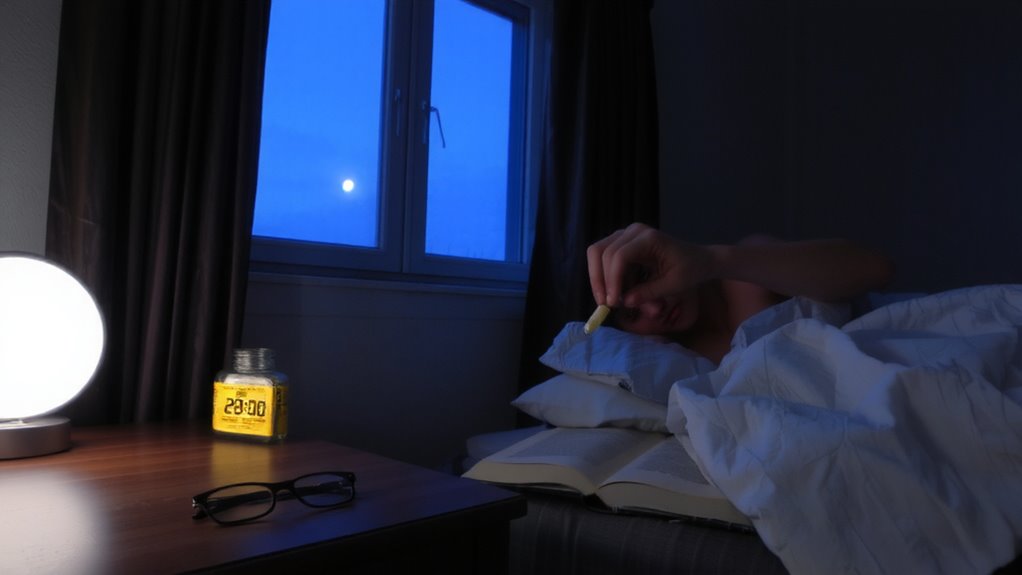
A well-timed melatonin supplement can help shift your internal clock earlier by signaling to your body that it’s time to prepare for sleep. This supports circadian entrainment, the process of aligning your natural sleep-wake cycle with desired bed and wake times. When you take melatonin consistently, it can gradually reduce your sleep onset latency, meaning you fall asleep faster once in bed. Melatonin doesn’t force sleep, but rather nudges your system into readiness, mimicking the body’s own evening rise in the hormone. Over days or weeks, this small daily shift adds up, helping you feel tired at earlier hours. It works best when combined with stable sleep routines and proper light exposure. Think of it as a guide for your rhythm, not a knockout pill. With patience, melatonin can make real differences in sleep timing and quality-no hype, just steady support.
Best Time to Take Melatonin for DSPD

When should you take melatonin to shift your sleep schedule if you have Delayed Sleep Phase Disorder? Taking it 5 to 7 hours before your current bedtime can help ease your internal clock earlier over time. For example, if you usually fall asleep at 2 a.m., try melatonin around 7 or 9 p.m. This aligns with your body’s natural rise in melatonin and supports gradual adjustment. Timing considerations are critical-taking it too early or too late might not work or could worsen your delay. There’s also individual variability; some people respond quickly, while others need fine-tuning. You may need to adjust the timing over several days, tracking sleep changes carefully. Consistency matters-take it at the same time each night. Results build over weeks, so patience is key. Pairing melatonin with light therapy can improve effectiveness.
Recommended Melatonin Doses and Types
Though melatonin can help reset your sleep schedule, picking the right dose and type matters just as much as timing. For DSPD, low doses (0.3–0.5 mg) are often effective and support melatonin safety by reducing the risk of grogginess or hormone disruption. Higher doses, like 3–5 mg, may be used short-term but can lead to side effects. You’ll find several dosage forms-tablets, liquids, patches, and dissolving strips-each affecting absorption speed. Fast-absorbing forms, like sublingual tablets or liquids, may work better when taken earlier in the evening. Extended-release versions mimic natural release but are usually for maintenance, not phase shifting. Always check labels for purity and third-party testing to guarantee product reliability. Start low, monitor your response, and adjust carefully. Discussing options with your doctor helps balance effectiveness with melatonin safety.
Add Light Therapy and Sleep Habits for Better Results
Getting your melatonin use right sets a solid foundation, but pairing it with light exposure and consistent sleep habits often brings clearer improvements, especially for delayed sleep phase disorder. Morning light exposure helps reset your internal clock by signaling wakefulness, making it easier to fall asleep earlier at night. Try using a light therapy box for 30 minutes soon after waking, or get outside in natural sunlight when possible. At the same time, building a steady bedtime routine strengthens your body’s sleep signals. This might include dimming lights, avoiding screens, and doing calm activities like reading. Consistency matters-going to bed and waking up at the same time daily boosts effectiveness. Together, melatonin, light exposure, and a reliable bedtime routine offer a more complete approach, helping shift your sleep schedule gradually and sustainably, with better results than melatonin alone. For optimal evening relaxation, consider using sleep-friendly lighting that minimizes blue light and supports natural melatonin production.
How Long Before Melatonin Works for DSPD?
How soon can you expect melatonin to shift your sleep schedule if you have delayed sleep phase disorder? It depends on onset timing and your body’s absorption rate. Most people start noticing small shifts within 3–5 days, but meaningful changes usually take 1–2 weeks of consistent use. Taking melatonin 2–3 hours before your current bedtime helps align your internal clock.
| Factor | What to Expect |
|---|---|
| Onset Timing | 30–60 minutes after dosing |
| Absorption Rate | Peaks in blood within 20–40 minutes |
| Full Effect | Sleep phase shifts in 7–14 days |
For best results, take the same dose at the same time every night and pair it with good sleep habits. Be patient-your body needs time to adjust.
On a final note
You can use melatonin to help shift your sleep schedule earlier, especially when taken 1–2 hours before your desired bedtime. Low doses (0.5–3 mg) of immediate-release forms often work best. Pairing melatonin with morning light exposure and consistent sleep habits improves results. It may take days to weeks to notice changes. Talk to your doctor to confirm DSPD and rule out other issues, ensuring safe, informed use.