How to Use Aromatherapy to Calm Night Terrors in Sensitive Children
Use a diffuser with 1–2 drops of pure lavender or chamomile oil about 30 minutes before bedtime to gently support calm sleep in sensitive children. Always dilute oils and avoid skin contact. Pair aromatherapy with a consistent routine, blackout curtains, and white noise for best results. Try one oil at a time and watch for any reactions over several nights-results may vary, and you might find certain blends work better with time.
Notable Insights
- Use a diffuser with 1–2 drops of pure lavender oil 30–60 minutes before bedtime to promote calm sleep onset.
- Dilute essential oils properly-1–2 drops per tablespoon of carrier oil-before any topical use on sensitive children.
- Introduce one calming oil at a time, such as chamomile or cedarwood, to monitor individual responses and avoid overstimulation.
- Follow age guidelines: avoid cedarwood under age 2 and consult a pediatrician before using oils on children under 6 months.
- Combine aromatherapy with a consistent bedtime routine, including dim lights and white noise, for best results.
What Causes Night Terrors in Sensitive Children?
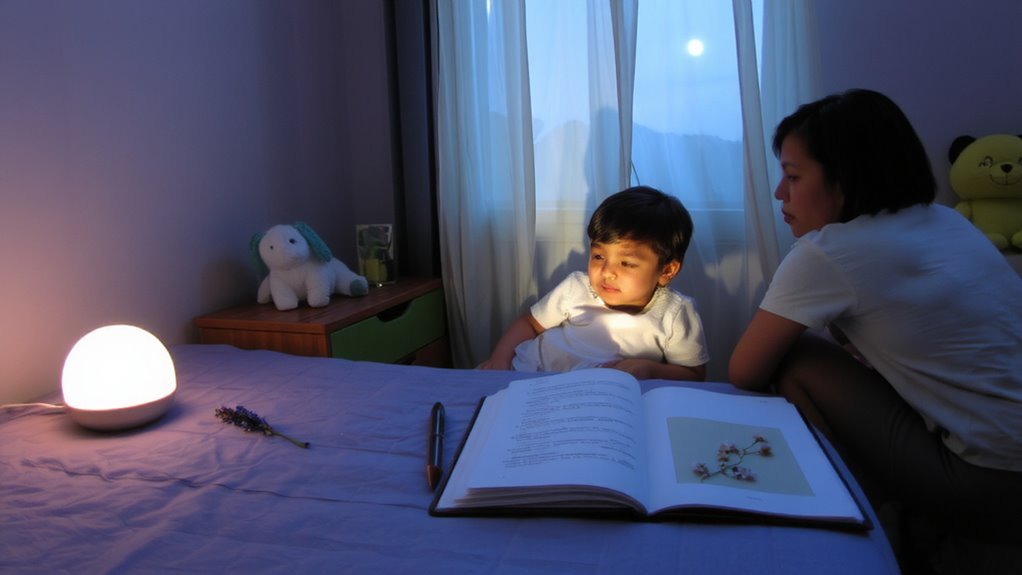
Why do some children seem more prone to night terrors than others? You might notice your child suddenly sitting up, screaming, or appearing terrified-yet not fully awake. These episodes often link to brain chemistry, especially how the nervous system regulates sleep cycles. In sensitive children, slight imbalances in neurotransmitters can make shifts between deep sleep and lighter stages more abrupt, triggering episodes. Emotional triggers like stress, fatigue, or changes in routine also play a role. Even excitement or late naps might set the stage. While not dangerous, these events disrupt sleep quality for both child and caregiver. Understanding the root causes helps you decide whether to adjust bedtime routines, track patterns, or seek professional advice. Recognizing brain chemistry and emotional triggers gives you clearer insight into choosing gentle, evidence-backed support strategies for more restful nights. Using safe and effective baby sleep aromatherapy products can further support a calming bedtime environment for sensitive children.
Which Essential Oils Help Calm Night Terrors?

How can certain scents make a real difference when your child struggles with night terrors? Research suggests specific essential oils may support relaxation, helping ease nighttime distress. Lavender benefits include promoting calmness and improving sleep quality, making it a well-studied option for sleep support. When inhaled, its compounds interact with the nervous system, possibly reducing arousal during sleep shifts. Other oils like chamomile and cedarwood also show soothing properties, though evidence is more limited. Using oil diffusion in your child’s room before bedtime allows consistent, low-level exposure. A diffuser disperses microscopic oil particles into the air, creating a gentle, ongoing scent environment. Start with short diffusion periods-15 to 30 minutes-to observe responses. Choose 100% pure oils without additives, and consider trying one oil at a time to assess effectiveness. With patience, aromatherapy could become part of a balanced nighttime routine. The best essential oils for better sleep often include those with proven calming and sedative effects.
How to Use Aromatherapy Safely for Kids
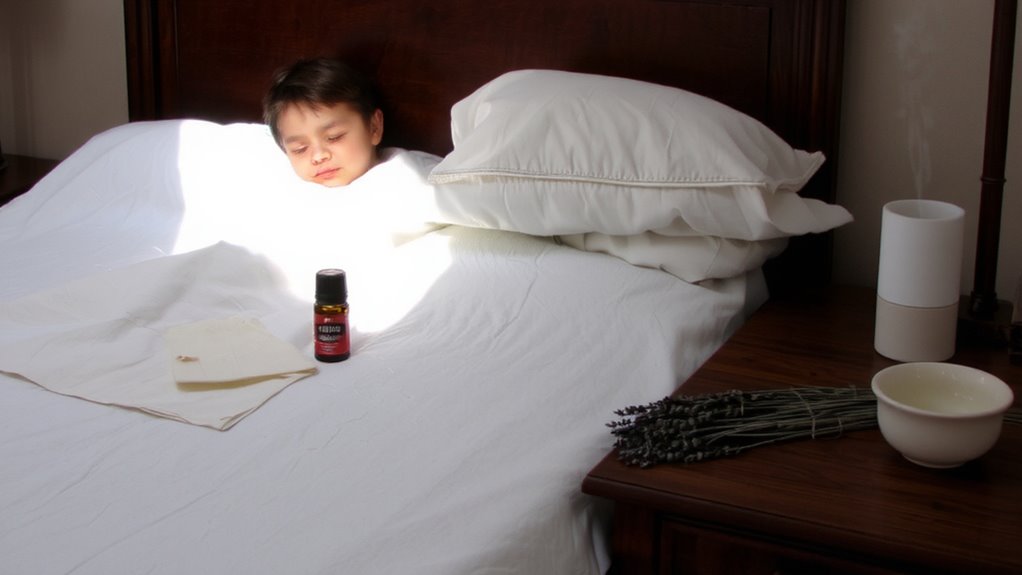
You’ve likely found that certain scents can quietly influence your child’s nighttime calm, with oils like lavender, chamomile, and cedarwood offering a gentle step toward more peaceful sleep. But to use aromatherapy safely, you need clear safety guidelines and awareness of age restrictions. Always dilute essential oils properly-typically 1–2 drops per tablespoon of carrier oil. For children under 2, consult a pediatrician first, as many oils aren’t recommended. Avoid direct skin application unless diluted, and perform a patch test to check for reactions.
| Oil Type | Age Restriction |
|---|---|
| Lavender | 6+ months |
| Chamomile | 6+ months |
| Cedarwood | 2+ years |
Follow safety guidelines like using only high-quality, pure oils and opting for diffusion over ingestion. Trial use for a few nights helps assess response. Performance varies, so monitor sleep patterns and adjust carefully. Choosing the right aromatherapy diffuser oils can enhance both safety and effectiveness for sensitive children.
How to Add Calming Scents to a Bedtime Routine
What if the key to a quieter night starts not with medication, but with a few drops of scent? You can weave calming aromas into your child’s bedtime routine simply and safely. Try adding two or three drops of lavender essential oil to a diffuser an hour before bed, letting the scent blend with quiet time. Pair this with soft lighting and gentle bedtime stories to signal the brain that sleep is near. For a more personal touch, lightly scent a cotton ball and tuck it into a breathable sleep mask-just make certain it’s not in direct contact with skin. This method offers consistent exposure without overwhelming sensitivity. Use only high-quality, pure oils, and observe your child’s response over several nights. If they respond well, this small addition may support restful shifts to sleep without side effects.
When to Combine Aromatherapy With Other Sleep Supports
Isn’t it worth considering when scent alone might not be enough to ease your child’s night terrors? Aromatherapy can support relaxation, but some children need more structured help with emotional regulation and sensory integration. If your child remains anxious, wakes frequently, or struggles to reconnect with sleep, it may be time to add gentle, evidence-based supports. Weighted blankets can improve sensory integration by providing calming deep pressure, while white noise machines help maintain sleep continuity. Establishing a consistent bedtime routine that includes predictable cues also strengthens emotional regulation over time. Consider pairing aromatherapy with blackout curtains or a nightlight to reduce environmental disruptions. These combinations aren’t about fixing your child-they’re about creating a sleep-conducive environment that meets their unique needs. Monitor changes over two to three weeks before adjusting. It’s not about choosing one solution, but finding what works together.
On a final note
You can try aromatherapy as a gentle support for night terrors, using oils like lavender or chamomile, which some studies link to improved sleep quality. Always dilute properly and do a patch test first. Introduce scents through a diffuser or pillow spray as part of a calm bedtime routine. Keep diffusers out of reach and use intermittently. If sleep disruptions continue, consider pairing aromatherapy with behavioral strategies or consult a pediatric sleep specialist.