Innerspring Mattress Breathability in Coastal Environments
Your innerspring mattress struggles with coastal humidity because steel coils trap moisture instead of releasing it, leading to rust, musty odors, and weakened support over time. Ventilation in coils helps slightly but can’t prevent dampness buildup, especially near your body. Breathable covers and elevated frames improve airflow, while moisture-wicking layers help manage humidity. Look for models with corrosion-resistant coils and antimicrobial fabrics. You’ll find better long-term performance by considering how each material handles moisture and salt air exposure.
Notable Insights
- Steel coils in innerspring mattresses trap moisture in humid coastal air, reducing breathability and promoting rust.
- Ventilated coils offer limited airflow but often fail to prevent moisture buildup under body contact zones.
- High humidity causes fabric layers to absorb dampness, increasing mildew risk despite some coil ventilation.
- Breathable, moisture-wicking covers and elevated bed frames improve air circulation and reduce humidity damage.
- Regular rotation and protective, salt-resistant mattress covers help maintain breathability and extend mattress life in coastal climates.
Why Innerspring Mattresses Fail in Coastal Humidity
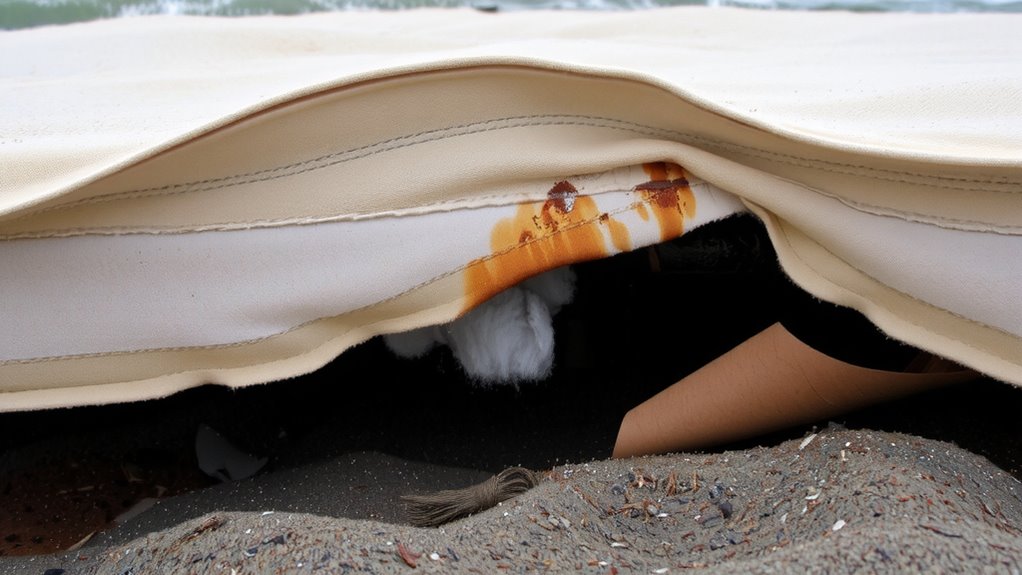
Have you ever woken up feeling sticky or stuffy while sleeping near the coast? High humidity can make your innerspring mattress struggle to stay breathable. The steel coils inside trap moisture instead of releasing it, creating conditions for coil oxidation over time. That rust not only weakens support but can also introduce a musty smell. Meanwhile, the fabric layers absorb damp air, encouraging fabric mildew-especially if the mattress sits close to the floor or lacks a protective cover. These issues may worsen allergies or disrupt sleep quality, particularly if you’re sensitive to allergens or prefer a cool sleep surface. While innerspring beds offer good airflow in dry climates, coastal environments expose their weaknesses. Consider trying models with moisture-resistant wraps or extended warranties covering oxidation and mildew damage. Test options with trial periods to assess comfort and performance in your specific setting.
Can Ventilated Coils Stop Rust and Musty Smells?
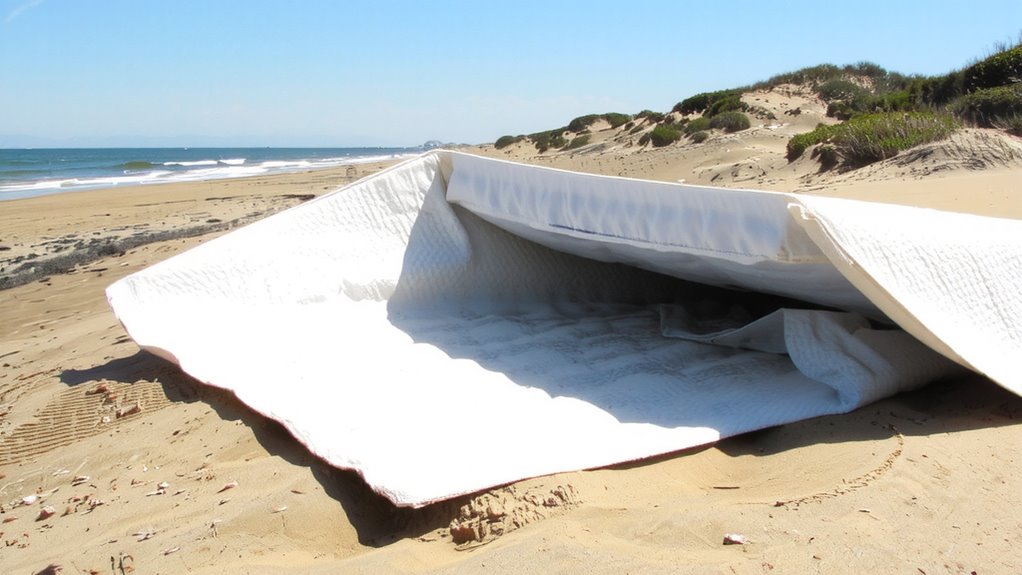
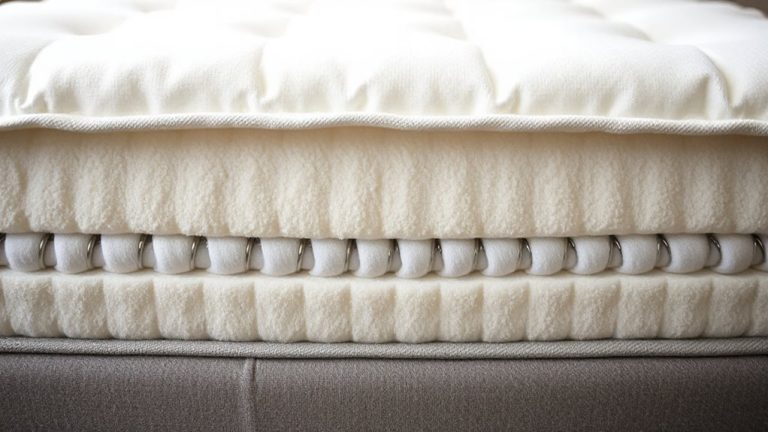
While some manufacturers promote ventilated coils as a solution, they only partially address the core issues of rust and musty smells in humid environments. You might think coil ventilation helps air flow, and it does-but it’s not enough to stop moisture from building up over time. Even with improved airflow, innerspring coils can still trap humidity underneath your body, especially in coastal areas where dampness lingers. Rust prevention isn’t guaranteed, since most coils aren’t fully sealed or coated against corrosion. Over time, trapped moisture leads to rust, which weakens support and can contribute to musty odors. While some models use antimicrobial fabrics or zinc coatings to slow rust, these features vary by brand. Check warranty terms-some cover coil defects, others don’t. Coil ventilation helps a little, but it’s not a complete fix. You’ll still need proper room ventilation and mattress protection to stay comfortable and extend your mattress’s life.
How Mattress Design Lets Moisture In: Or Keeps It Out
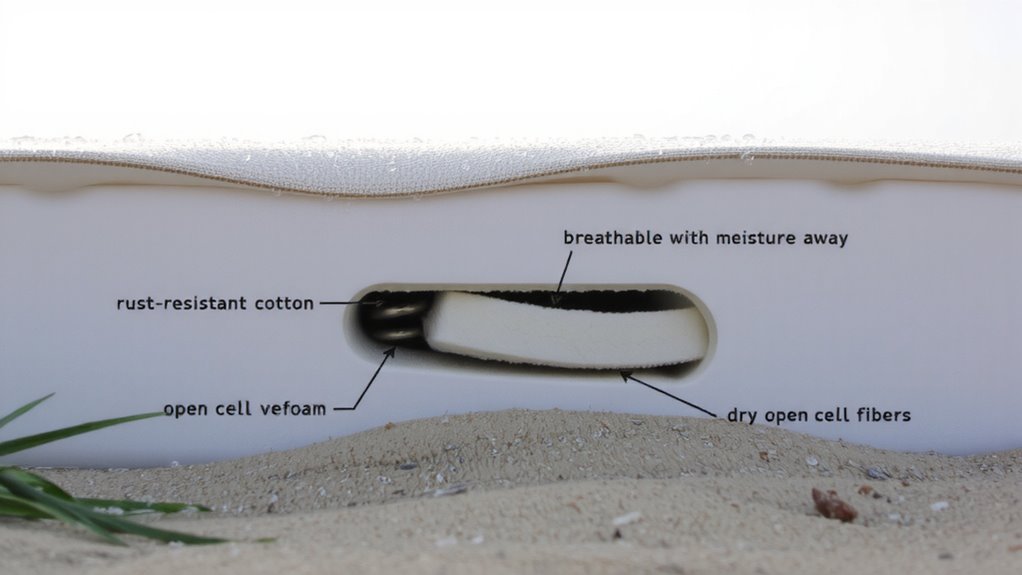
When you’re choosing a mattress, the way it handles moisture isn’t always obvious, but it plays a big role in how long it lasts and how comfortable you feel. Your mattress’s pore structure determines how easily air and moisture move through it-larger, open pores let humidity escape, while tight ones trap it. Fiber density also matters: lower density allows better airflow but may wear faster, while high-density layers resist sagging but can retain heat and moisture if not engineered well. Innerspring designs with breathable covers and layered foams often balance support and ventilation. Look for materials labeled as moisture-wicking or with open-cell technology to help manage humidity. A well-constructed mattress lets moisture out without letting it in, maintaining breathability over time. Trial periods and warranties can protect your choice, giving you time to assess performance in your coastal environment.
Is Your Mattress Failing From Humidity? Look for These Signs
Could that musty smell or restless night be more than just bad luck? Humidity could be weakening your innerspring mattress. Watch for visible signs like mattress discoloration, especially yellow or brown spots, which suggest trapped moisture and mildew. Another red flag is persistent edge sagging, where the border feels soft or collapsed-this often happens faster in humid climates due to accelerated wear. You might also notice stiffness in movement during the night or a lack of support where it once felt firm.
| Sign | What It Means |
|---|---|
| Musty odor | Moisture buildup, possible mildew |
| Mattress discoloration | Exposure to humidity over time |
| Edge sagging | Structural breakdown from dampness |
| Bouncy feel | Weakened coils due to corrosion |
These changes affect sleep quality, possibly worsening discomfort or disorders. Consider breathable designs and check warranty terms covering humidity-related wear.
Cool, Breathable Cover Fabrics That Beat Coastal Humidity
What if your mattress cover could actually fight humidity instead of trapping it? You’re not stuck with fabric that holds onto dampness-modern covers use cool, breathable materials designed for places like the coast. Bamboo blends are ideal; they’re soft, naturally antimicrobial, and help regulate temperature. These fibers let air move through, so heat and sweat don’t build up overnight. Pair that with moisture wicking textiles, and you’ve got a cover that pulls dampness away from your skin, letting it evaporate fast. That means less clamminess, fewer allergens, and better sleep when humidity spikes. Look for tightly knit, lightweight weaves that balance durability with airflow. Many brands offer trial periods, so you can test how the fabric feels over time. Check warranty terms too-some protect against fabric degradation from moisture. Choosing the right cover isn’t just comfort-it’s a smart move for healthier rest in humid climates.
Top-Rated Innerspring Mattresses for High Humidity
How do you find an innerspring mattress that won’t trap heat and moisture when the air feels thick with humidity? Look for models with high coil density-typically 300–400 coils in a queen-as they improve airflow and reduce heat retention. More coils usually mean better support and less motion transfer, which matters if you share the bed. Strong edge support helps you sit or sleep near the edge without sagging, a real perk in compact coastal bedrooms. Many top-rated options combine reinforced perimeter coils with breathable covers discussed earlier, enhancing durability and comfort. Pair that with a 10-year warranty and at least a 90-night sleep trial, and you’ve got room to adjust without risk. These features don’t eliminate humidity, but they help you stay cooler and asleep longer. You’ll notice the difference in both support and breathability night after night.
Daily and Seasonal Habits to Protect Your Mattress From Salt Air
Even if you live near the coast, you don’t have to sacrifice your mattress to salt air damage-simple daily and seasonal habits go a long way in preserving its structure and comfort. Because of beach proximity, salt particles can enter your home and settle into your mattress, especially if you rely on nighttime cooling with open windows. To reduce exposure, close windows during high wind or after beach visits. Use a breathable, protective mattress cover that resists moisture and salt without trapping heat. Rotate your mattress seasonally to guarantee even wear and help airflow beneath it. Elevate the bed frame slightly to improve ventilation and reduce moisture buildup. Wash bedding weekly to remove salt residue. Choose innerspring models with coated coils if you prioritize breathability and durability. These habits support better sleep hygiene and extend the life of your mattress without sacrificing comfort or air circulation.
On a final note
You’ll want a mattress that handles moisture without trapping heat, especially near the coast. Innerspring models with ventilated coils and breathable covers, like cotton or TENCEL™, help manage humidity and reduce mildew risks. Look for designs with antimicrobial layers and durable edge support, plus at least a 10-year warranty. Try mattresses with sleep trials to test comfort and breathability. Choose construction that supports airflow and resists corrosion over time.