Jet Lag Solutions for Parents Traveling With Young Children: Managing Sleep Disruptions on Family Trips
Start shifting your child’s bedtime and wake time by 15–20 minutes a day, 3–4 days before travel, to ease into the destination’s schedule. Pick flights that align with their natural sleep times, especially overnight or late evening departures. Use morning light exposure to reset their internal clock, and keep naps short and well-timed to avoid nighttime disruptions. Stick to familiar bedtime routines, and if meltdowns happen, respond with calm, consistent rituals-small changes now make a big difference later on.
Notable Insights
- Gradually shift your child’s sleep schedule by 15–20 minutes daily, starting 3–4 days before travel, to align with the destination’s time zone.
- Choose flights that match your child’s natural sleep rhythm, ideally overnight or with arrival near bedtime to preserve nighttime sleep.
- Expose your child to morning natural light for 20–30 minutes after arrival to reset their internal clock and speed up circadian adjustment.
- Schedule naps between 9–10 AM and 12–1 PM, avoid napping after 3 PM, and limit flight naps to 1–1.5 hours to prevent sleep disruptions.
- Maintain consistent bedtime routines, comfort objects, and calming rituals to support sleep and manage jet lag meltdowns in new time zones.
Shift Your Child’s Sleep Schedule Before Travel

If you’re flying across time zones, starting to adjust your child’s sleep schedule a few days before departure can ease the change. You can use bedtime fading, a method where you shift sleep times in small steps, to support a gradual adjustment. Each night, move bedtime or wake time by 15 to 20 minutes toward the target schedule. This slow shift helps your child’s internal clock adapt with less disruption. Morning light exposure reinforces the new rhythm, while evening dim lighting supports melatonin release. Avoid screens close to bedtime, as they may interfere with sleep onset. Consistency matters, so stick to calming routines. This approach works best when started three to four days pre-travel. Though not a fix for existing sleep disorders, it’s a practical, evidence-backed strategy. Some families may trial the method on short stays first. No sleep aids are needed, reducing reliance on supplements or medications.
Pick Flights That Fit Your Child’s Sleep Rhythm
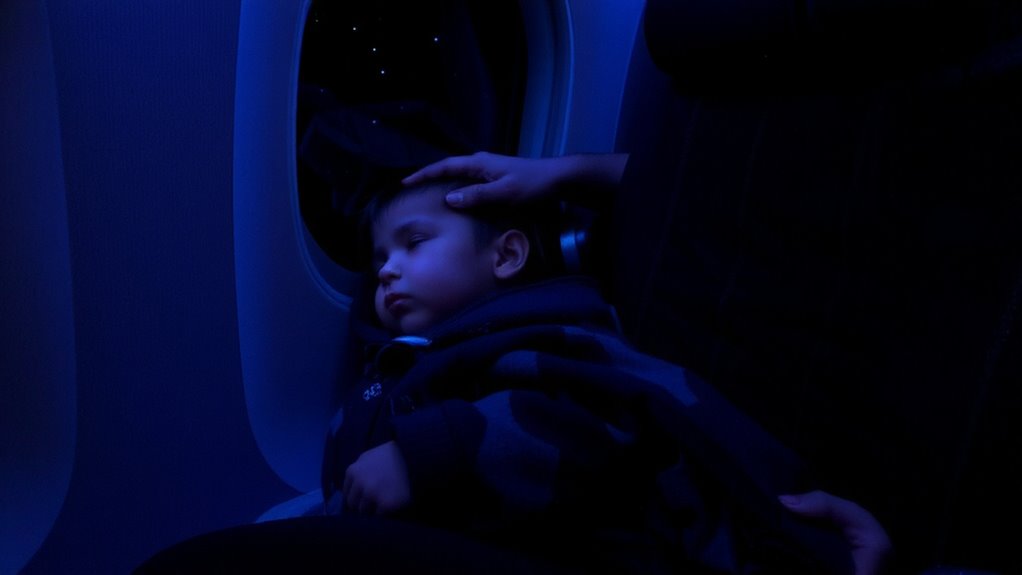
You’ve already started aligning your child’s internal clock with the destination time by adjusting their sleep schedule gradually in the days leading up to the trip, and now it’s time to build on that effort when choosing flights. Selecting flight timing that supports your child’s natural rhythm makes a big difference in maintaining sleep alignment. If your child usually sleeps from 7 p.m. to 7 a.m., a late evening departure might work well-especially if it lands near bedtime at the destination. Overnight flights can help preserve nighttime sleep, while midday flights may disrupt rest unless your child naps easily. Consider your child’s usual sleep patterns and pick flights that let them rest comfortably. Matching flight timing with their internal clock supports smoother shifts and reduces fatigue. This approach doesn’t rely on sleep aids but instead uses smart planning to support healthy sleep during travel.
Reset Their Body Clock With Morning Light

Why does sunlight in the morning make such a difference for your child’s adjustment to a new time zone? Morning light exposure signals the brain to start the day, helping reset their internal clock. When you get your child outside within an hour of local sunrise, even on cloudy days, natural light strengthens circadian alignment and reduces jet lag symptoms. Aim for 20–30 minutes of outdoor time-walking, playing, or eating breakfast outside works well. Avoid sunglasses when possible, since light needs to reach the retina to be effective. Consistent timing across days improves results. If natural light isn’t accessible, consider a light box that emits 10,000 lux, designed for circadian support. These devices often come with adjustable settings and carry warranty coverage for one to two years, offering a practical backup. Use them early in the morning for best performance. For reliable options, explore the best sleep therapy lights designed specifically for circadian rhythm regulation. best sleep therapy lights
Nap Strategically to Avoid Sleep Chaos
Getting morning light helps set your child’s internal clock, and pairing that with well-timed naps keeps their sleep schedule on track without tipping them into nighttime wakefulness. Smart nap timing is key-naps that are too long or too late can disrupt nighttime sleep. Use consistent sleep anchors like a favorite blanket or lullaby to signal rest time, even on the go. These cues help children relax and fall asleep more easily, wherever you are. For maximum comfort during travel naps, consider packing a lightweight, breathable best fitted sheets option to maintain a familiar sleep environment.
| Nap Window | Ideal Duration | Best For |
|---|---|---|
| 9–10 AM | 30–60 min | Resetting rhythm |
| 12–1 PM | 1.5–2 hrs | Main daytime rest |
| After 3 PM | Avoid | Preventing night delays |
| On flights | 1–1.5 hrs | Reducing travel fatigue |
Keep Key Routines: Even in a New Time Zone
Even when crossing time zones, keeping a few core routines can make the shift feel less jarring for young children. Stick to familiar habits like reading bedtime stories, even if the timing adjusts slightly to match the new time zone. This consistency signals to your child that it’s time to wind down, helping regulate their internal clock over several days. Bring along comfort objects-such as a favorite stuffed animal or blanket-since their presence provides emotional stability amid change. These items are especially useful in unfamiliar rooms or hotels where surroundings feel less secure. Maintain calming pre-sleep rituals, including dimmed lights and quiet talk, to support natural sleep onset. Avoid introducing new sleep aids unless already part of your routine, as changes can complicate adjustment. With patience and repetition, small anchors like bedtime stories and comfort objects help ease the shift without overwhelming your child’s system. A trusted kids’ sleeping bags can also provide a consistent, cozy sleep environment wherever you travel.
Calm Meltdowns Caused by Jet Lag Fast
How do you respond when your child suddenly bursts into tears at bedtime, overtired but fighting sleep? Stay close and calm-your presence helps. Try deep breathing together: inhale slowly, exhale longer, letting tension ease. It’s simple, but it works. Pair that with gentle distraction techniques, like whispering about a favorite animal or tracing shapes on their arm. These quiet, focused actions shift focus from frustration to connection. Don’t push sleep directly-let it come through calm. Dim lights and soft sounds support the shift, but your steady rhythm matters most. You’re not fixing everything at once, just guiding them through the wave. With practice, these responses become instinctive, reducing meltdown length and intensity. It’s not about perfection, just progress. You’re building resilience, one quiet moment at a time.
Why Kids Struggle More With Jet Lag (And How to Fix It)
Why do young children seem to hit a wall harder than adults when crossing time zones? It comes down to biological sensitivity and incomplete circadian flexibility. Kids’ internal clocks are still developing, making shifts in sleep schedules harder to adjust. Their bodies react more intensely to changes in light, meal times, and bedtime cues. While adults may adapt within a few days, children often need more support due to this heightened sensitivity. You can help by gradually shifting sleep times a few days before travel, exposing your child to natural light at destination-appropriate times. Maintain consistent bedtime routines, even on the plane. Avoid sleep aids unless advised by a pediatrician. Most kids show improved circadian flexibility by age 6–8, but until then, patience and routine make a meaningful difference in adjusting smoothly.
On a final note
You can help your child adjust by shifting their sleep schedule a few days before the trip and choosing flights that align with their natural rhythm. Use morning light to reset their body clock, take mindful naps, and keep bedtime routines consistent. Recognize signs of fatigue early, and allow a few days to adapt. These strategies support smoother shifts without relying on sleep aids, giving your family better rest while traveling across time zones.