Reinforcing Pillow Seam Strength for Long-Term Durability Testing
You rely on your pillow nightly, so strong seams matter. Reinforced stitching like double seams and bonded polyester threads resist stress at corners and edges. Opt for pillows with balanced stitch density-it prevents tearing without puckering fabric. Compression and seam slippage tests guarantee performance over time. High-quality designs often include extended warranties, reflecting confidence in durability. Choosing well-constructed seams means better long-term support for your sleep routine. Smart construction choices now lead to fewer replacements later.
Notable Insights
- Use double stitching and reinforced borders to enhance seam strength and resist long-term wear from compression.
- Apply bonded or core-spun polyester threads for higher elasticity, strength, and resistance to thread slippage.
- Maintain optimal stitch density to balance seam strength without causing fabric puckering or stress points.
- Reinforce edges and corners with binding techniques to protect high-stress areas from seam failure.
- Conduct compression and seam slippage tests to simulate real-world use and verify long-term durability.
Why Weak Seams Ruin Pillows Over Time
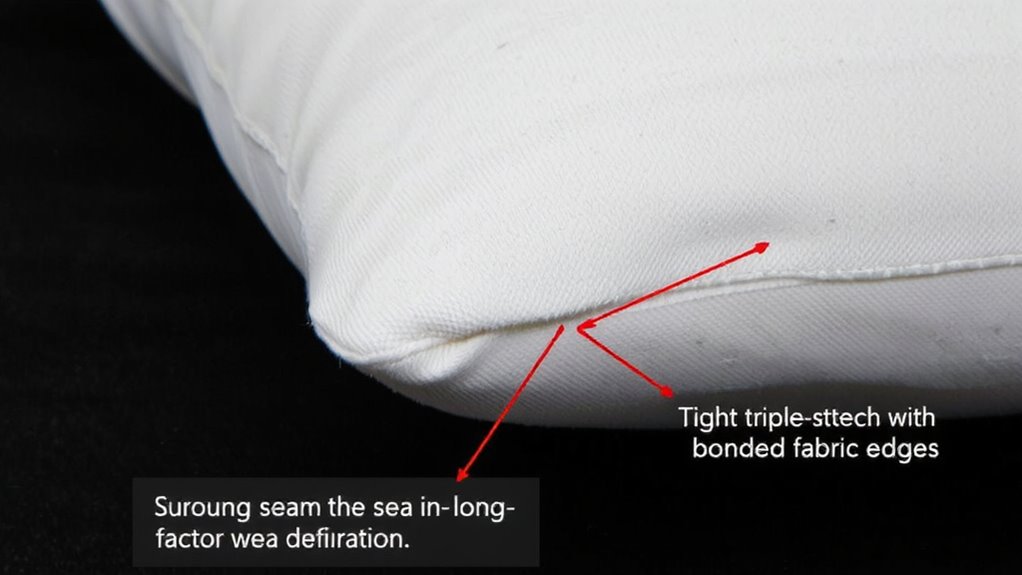
While you might not think much about stitching when buying a pillow, weak seams can quietly undermine its lifespan and support. Over time, repeated pillow compression during sleep strains the seams, especially if the thread is thin or poorly secured. This constant pressure leads to fabric fatigue, where the material stretches and fibers break down, even if you can’t see it at first. You may notice the pillow feeling lumpy or less supportive, a sign the interior is shifting through tiny gaps. High-quality pillows often use double stitching or reinforced borders to resist this wear, helping maintain shape and comfort through hundreds of uses. Some brands even back their construction with extended warranties, letting you test durability risk-free. These features matter most if you sleep hot, move frequently, or rely on consistent support to manage discomfort. Choosing strong seams means preserving performance longer.
How Stress Points Break Pillow Seams
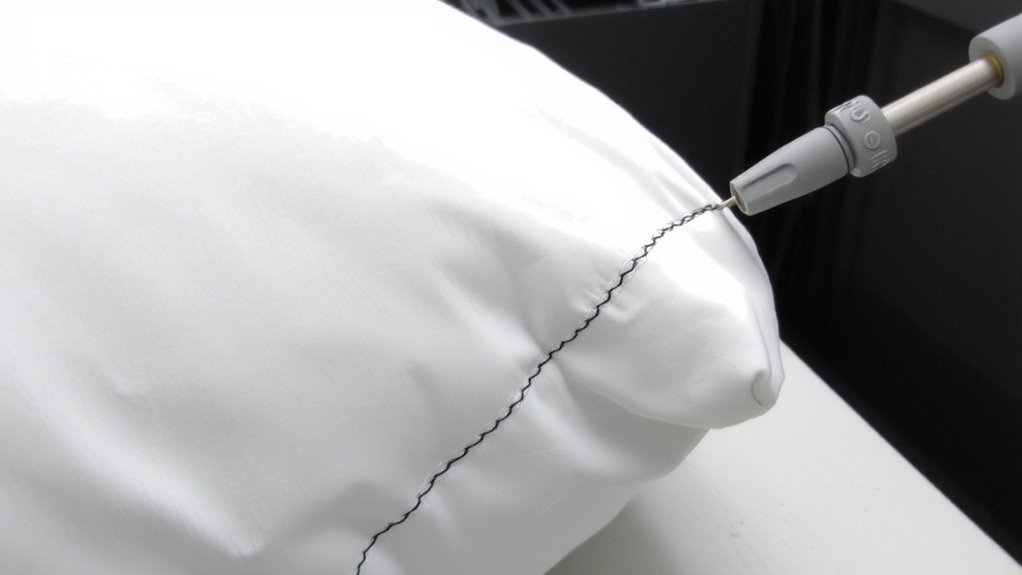
When you toss and turn at night, your pillow takes more abuse than you might realize, especially at key stress points like the edges and corners. These areas bear repeated pressure, leading to fabric fatigue over time. The constant folding and stretching weaken the fibers, making seams more vulnerable. You might not notice it at first, but tiny shifts add up, especially where stitching meets motion. Thread slippage often follows-individual strands loosen and pull away from the fabric, creating weak spots. Once the thread starts migrating, the seam loses integrity, and filling can escape. This breakdown is gradual, but it affects support and comfort. High-stress zones fail first because they handle the most movement. Recognizing early signs helps you decide when to replace or reinforce a pillow. Choosing better construction matters, but understanding wear patterns guides smarter, longer-lasting sleep choices.
Choosing Durable Threads for Pillow Seams
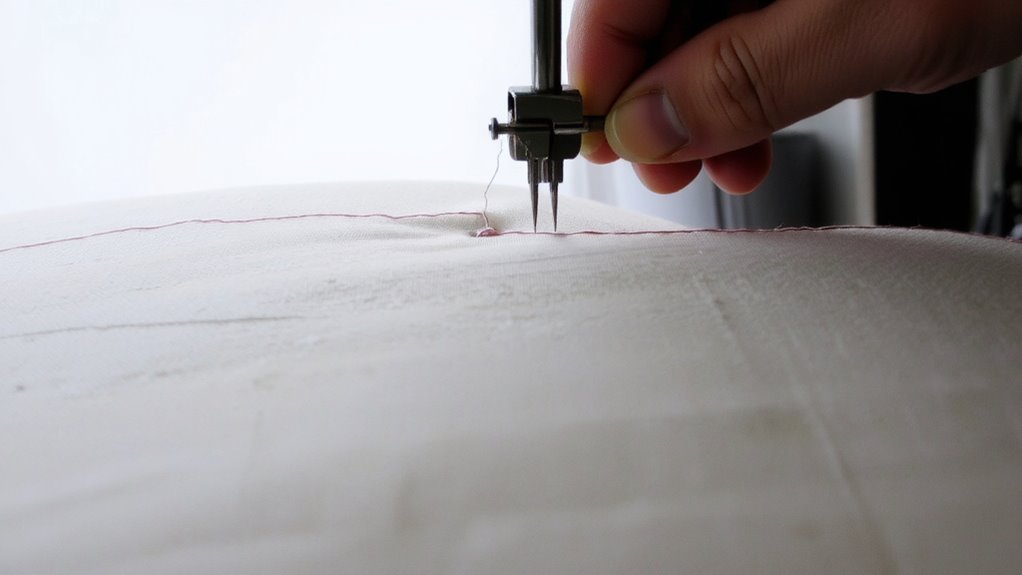
If you’re looking to extend your pillow’s lifespan, picking the right thread matters just as much as the fabric or filling. You’ll want a thread with high fiber elasticity so it can stretch slightly and return to shape, resisting breakage at stress points. Polyester threads often outperform cotton because they’re stronger and more resilient over time, especially with regular use and washing. Don’t overlook thread color-matching it closely to your fabric helps hide minor imperfections and fading, maintaining a clean look even after repeated use. Some manufacturers use bonded or core-spun threads for added strength, which you might see listed in product specs or warranty details. When comparing pillows, check whether the seams use heavy-duty threads; this info might be in care guides or durability claims. A well-stitched seam with quality thread contributes to long-term support, something worth considering if you rely on your pillow for consistent sleep comfort.
How Stitch Density Affects Seam Strength?
You’ve already picked a strong thread to hold your pillow together, but how tightly those threads are stitched matters just as much. Stitch density-the number of stitches per inch-directly impacts seam strength and longevity. Too few stitches, and the seam may tear under stress; too many, and the fabric could pucker, reducing seam flexibility. A balanced density guarantees even load distribution, minimizing weak spots during long-term use. You’ll want consistent stitch consistency to prevent uneven tension, which can lead to premature wear. Denser stitching often enhances strength, but only when paired with quality fabric and thread. For pillows meant for nightly use, especially by those with movement during sleep, this balance is key. Test samples under tension to see how seams hold up. Look for brands that disclose stitch counts and offer trial periods, so you can assess durability in real sleep conditions.
Seam Reinforcement Techniques That Last
Though strong thread and proper stitch density lay the foundation, adding structural support through seam reinforcement guarantees your pillow stands up to nightly use over time. You’ll want to take into account techniques like double stitching or binding, which enhance seam integrity without adding bulk. Proper edge finishing prevents fraying, maintaining the pillow’s shape and fabric integrity after repeated use. It also contributes to a cleaner, more durable seam. Tension balancing during sewing makes certain stitches remain even and secure, reducing stress points that could lead to premature wear. These methods work together to support long-term performance, especially for users relying on consistent pillow structure for comfort or sleep aid needs. Pillows built with reinforced seams often come with extended trial periods or warranties, reflecting confidence in durability. Choosing one with these features means investing in lasting support-ideal for those prioritizing longevity in their sleep products.
How Pillow Seams Are Tested for Durability?
Pillow seams aren’t just stitched and set-they’re put through consistent testing to guarantee they hold up over time. You can expect manufacturers to simulate real-world use by repeatedly applying pillow compression, mimicking the weight and movement your body exerts during sleep. This stress tests the fabric and stitching, revealing how well the seam resists wear. Another key check is seam slippage, where fabric pulls away from the stitch without breaking it. Labs measure how much the threads shift under tension, ensuring gaps don’t form after repeated use. These tests help you judge long-term performance, especially if you shift positions often or rely on your pillow for support. Models that pass rigorous compression and slippage trials often come with longer warranties, giving you confidence in durability. Knowing this helps you choose wisely for sustained comfort and structural integrity night after night.
Design Upgrades That Improve Seam Durability
A stronger seam starts with smarter design, and manufacturers are using updated techniques to make sure your pillow holds up over time. You’ll notice improvements when ergonomic design guides the shape and stitching patterns, reducing stress on the seams during regular use. Proper fabric alignment guarantees fibers run evenly along high-tension zones, which helps prevent fraying and separation. Many brands now use precision cutting and reinforced box-stitching, especially in adjustable or cooling pillows that undergo more movement. These upgrades don’t just extend lifespan-they maintain support, which matters if you’re managing neck or back discomfort. Look for models that offer trial periods and clear warranty terms, so you can test durability firsthand. While no pillow lasts forever, well-constructed seams mean fewer compromises between comfort and longevity. Paying attention to these details helps you choose wisely based on how you sleep and what support you need.
On a final note
You’ll want strong seams to keep your pillow supportive through years of use. Reinforced stitching, durable threads, and higher stitch density help seams resist wear where stress is highest. These features improve longevity without changing comfort. Look for pillows with warranty coverage or trial periods so you can test durability risk-free. Choosing well-constructed seams means fewer replacements and more consistent support over time, which matters if you rely on your pillow for better sleep posture.