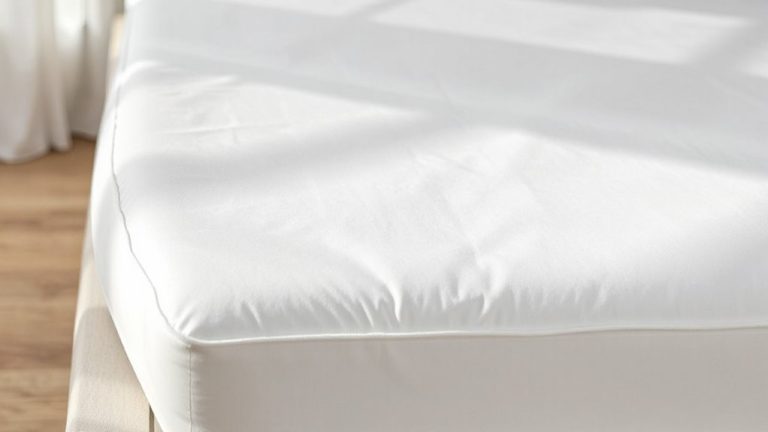
Why Innerspring Mattresses Are Often Paired With Pillow Tops
You get responsive support from the innerspring coils, which help keep your spine aligned, while the pillow top adds a soft, cushioning layer that relieves pressure on hips and shoulders. This combo balances firmness and comfort, making it ideal if you want plushness without sinking too deeply. Quality models use durable foams and maintain airflow, often backed by trial periods and warranties-helping you choose with confidence. More details follow on what makes each feature matter for your sleep.
Notable Insights
- Innerspring coils provide firm support and spinal alignment, while pillow tops add soft comfort for pressure relief.
- Pillow tops use foam or fiberfill layers to enhance cushioning without sacrificing the coil base’s durability.
- The combination balances responsive coil support with plush surface comfort for side and combo sleepers.
- Coil airflow helps regulate temperature, offsetting potential heat retention from thicker pillow top materials.
- Quality models offer better motion isolation and edge support, making the mattress more stable and comfortable.
Why Innerspring Mattresses Work Best With Pillow Tops
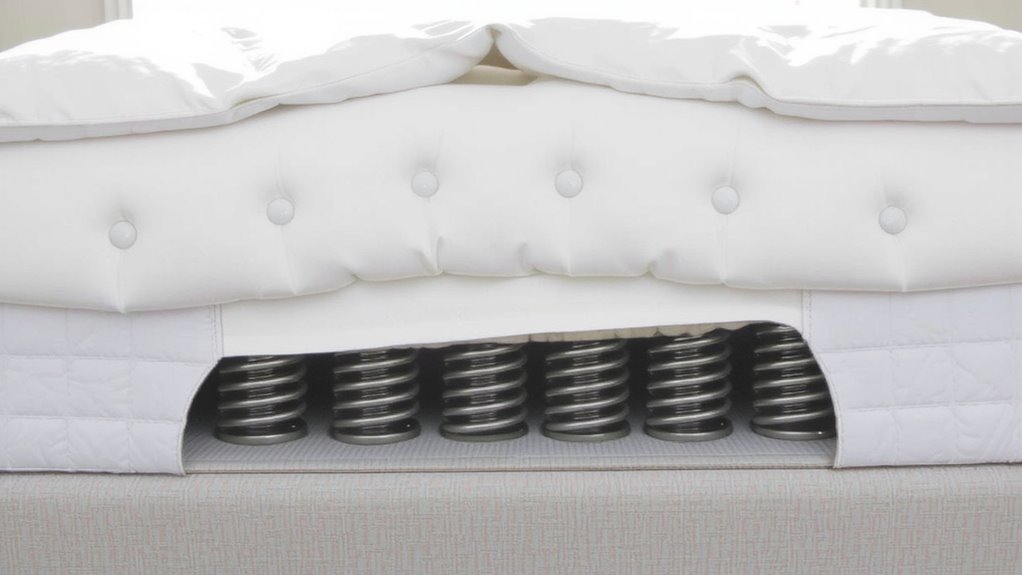
Comfort matters most when aligning support and pressure relief in your sleep setup. Innerspring mattresses rely on coil synergy to maintain spinal alignment while offering responsive support. When you add a pillow top, it creates material fusion-blending soft comfort layers with the firm, durable base. This combination helps distribute your body weight evenly, reducing pressure points without sacrificing stability. You’ll notice less motion transfer and improved contouring, especially if you sleep on your side or switch positions. The pillow top cushions joints, while the coils provide targeted pushback where you need it. Many models include breathable fabrics and gel infusions, helping regulate temperature. Look for dual-layer edge support and a minimum 10-year warranty to guarantee long-term performance. Trial periods often last 100 nights, letting you test how well the coil synergy and material fusion suit your sleep habits.
How Pillow Tops Add Plush Comfort to Coil Bases
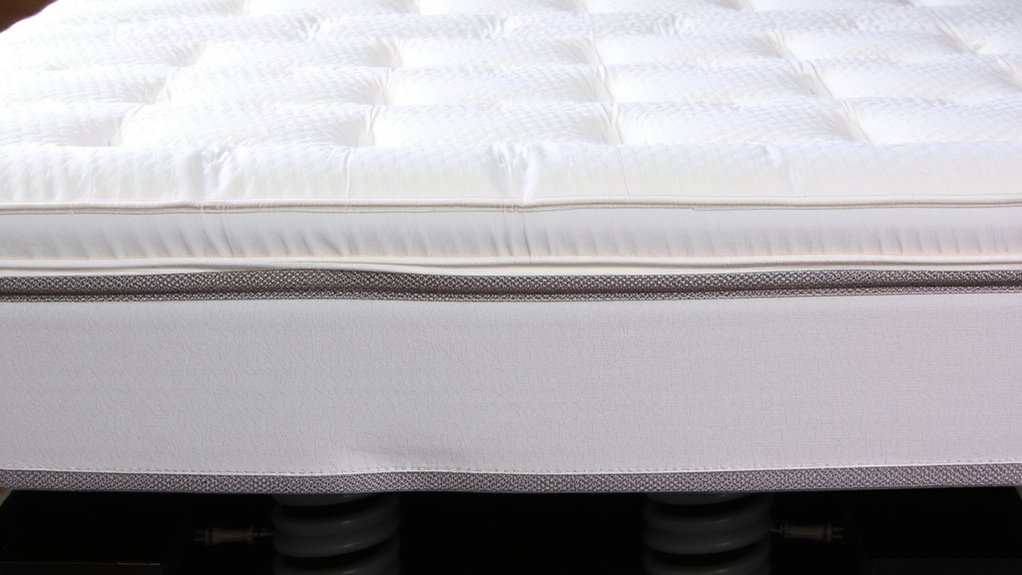
You already know innerspring mattresses deliver solid support through coil systems that keep your spine aligned, but adding a pillow top takes the feel to a whole new level of softness without undermining that foundation. The pillow top, typically 2 to 4 inches thick, provides a cushioned surface that enhances comfort and creates a luxury feel right from the first touch. This added layer uses custom layering-foam, fiberfill, or memory foam-to tailor softness while maintaining breathability. You’ll notice less surface pressure and a more inviting sleep surface, especially if you prefer a plush mattress. The coil base still performs its role, ensuring long-term durability and airflow, while the pillow top adjusts the feel to suit your comfort needs. Many models include trial periods and extended warranties, letting you test the blend of support and plushness risk-free.
Pressure Relief in Pillow-Top Innersprings: How It Works
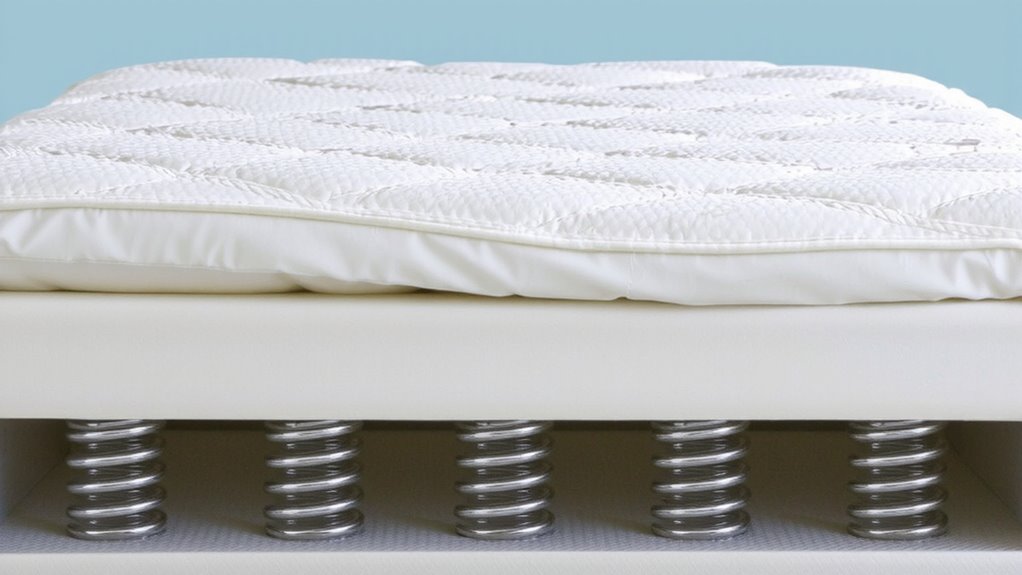
While the coil system in an innerspring mattress supports your spine, the pillow top is what helps spread your body weight more evenly across the surface. You’ll feel less pressure on your hips, shoulders, and back because the top layer compresses just enough to cushion sensitive points. Many pillow tops use memory foam, which responds to your warmth and shape for better body contouring. This means the foam molds gently around you, reducing strain during sleep. The combination of coils and foam balances responsiveness with soft support. You’re more likely to stay aligned and comfortable through the night, which can help if you tend to toss or wake stiff. It’s not about total softness-it’s targeted relief. Look for models with removable covers and trial periods so you can test the feel risk-free. Check warranty details, too, since foam can settle over time.
Support vs. Softness: Finding the Right Balance
A mattress that feels too soft might cradle your body but leave your spine misaligned, while one that’s overly firm can create pressure points instead of relieving them. You need a balance-support from the innerspring core keeps your spine in line, while the pillow top adds softness where you need it. Good edge support helps you sit or sleep near the perimeter without sagging, improving usable surface and stability. Motion isolation matters if you share the bed; the pillow top dampens movement so your partner’s shifts won’t wake you. These features work together to support healthy sleep posture and reduce disturbances. Many models offer trial periods, so you can test comfort and support risk-free. Check warranty terms, as some cover sagging or loss of support over time. Finding the right mix means matching your sleep style to the right blend of firmness, edge support, and motion isolation. Top models often feature reinforced pillow-top construction for enhanced durability and comfort.
Do Pillow Tops Hurt Durability or Airflow?
Could a plush pillow top compromise how long your mattress lasts or how well it breathes? It depends on materials and construction. Cheaper foams increase heat retention and speed up material degradation, shortening lifespan. Higher-density foams or fiberfill hold up better but may still trap heat. Innerspring cores help airflow, but thick pillow tops can limit it. Consider breathable covers or gel-infused layers to improve ventilation.
| Factor | Impact |
|---|---|
| Heat retention | Can increase, especially with memory foam |
| Material degradation | Faster in low-density foams |
| Airflow | Reduced slightly by added top layer |
| Durability | Varies by material quality |
| Comfort lifespan | May decrease if top compresses early |
Who Should (and Shouldn’t) Choose a Pillow-Top Innerspring
Why might a pillow-top innerspring be right-or not right-for your sleep setup? If you crave a luxury feel without sacrificing support, this mattress could suit you. The pillow top adds plush cushioning, making it ideal if you enjoy softness but still want the bouncy responsiveness of coils. Side sleepers often benefit from the extra padding, which can ease pressure on shoulders and hips. However, if you share the bed, consider motion isolation-traditional innersprings don’t absorb movement well, so your partner’s tossing might disturb you. Couples may want enhanced edge support or pocketed coils for better performance. Heavier individuals might find durability concerns over time, especially with lower-density foams. Always check trial periods and warranties; they let you test comfort risk-free. Lighter sleepers or those who sleep hot may prefer simpler innersprings without added layers.
Top Features of a Quality Pillow-Top Innerspring
Comfort, support, and durability-those are the pillars of a well-built pillow-top innerspring mattress. You’ll want to check material quality, especially in the comfort layers; high-density foams or quality fibers resist sagging and hold their feel longer. The stitching technique matters just as much-reinforced, double-stitched seams prevent edge raveling and keep the pillow top securely attached over time. Look for models with pocketed coils for better motion isolation and targeted support. A solid base guarantees the innerspring unit won’t break down too soon. Most top-tier models include generous trial periods and non-prorated warranties, so you’re covered if it doesn’t suit your sleep needs. Consider your sleep position and weight-these influence how softness, support, and material quality perform. Don’t skip testing return policies; comfort is personal, and a good warranty reduces long-term risk.
On a final note
You get plush comfort and support when combining an innerspring base with a pillow top, helping relieve pressure without sacrificing coil strength. These mattresses balance softness and spinal alignment, though airflow may decrease slightly. Look for reinforced edges and quality quilting. A solid warranty and sleep trial let you test durability and comfort safely. They often suit combination sleepers or those needing mild cushioning, but hot sleepers or back sleepers preferring firmness may want alternatives.