How to Use Chamomile for Sleep in People With Allergies to Ragweed
If you’re allergic to ragweed, chamomile might trigger a reaction because both are in the Asteraceae family. Start with a skin patch test and try a small sip of weak tea to check for symptoms like itching or congestion. Watch for any rash, swelling, or breathing issues. Even past tolerance doesn’t guarantee safety. Consider starting with non-chamomile options like lavender or passionflower. You’ll find safer, effective choices that work without the risk.
Notable Insights
- Chamomile may trigger allergic reactions in people with ragweed allergies due to shared plant family proteins.
- Perform a patch test before using chamomile to check for skin sensitivity or allergic reaction.
- Start with a small amount of weak chamomile tea and monitor for symptoms like sneezing or itching.
- Discontinue chamomile immediately if any allergic symptoms occur, even if previous use was safe.
- Consider ragweed-safe alternatives like lavender or passionflower tea for sleep support without the risk.
Why Chamomile Can Trigger Ragweed Allergies

While you might turn to chamomile for a calmer night’s sleep, it’s worth knowing that this herb can sometimes cause problems if you have a ragweed allergy. Chamomile belongs to the Asteraceae family, the same plant group as ragweed, which increases cross reactivity risks. Your immune system may confuse proteins in chamomile with those in ragweed pollen, triggering symptoms like itching or swelling. This botanical sensitivity isn’t universal, but it’s more common in people with existing pollen allergies. Reactions can range from mild to severe, especially with frequent use. Before making chamomile a sleep aid, consider a patch test or consult your doctor. If you’re prone to allergic responses, alternatives like valerian root or magnesium supplements might offer safer support for sleep. Always review ingredient labels and talk to a healthcare provider to balance sleep needs and allergy risks wisely.
Could Your Ragweed Allergy React to Chamomile Tea?
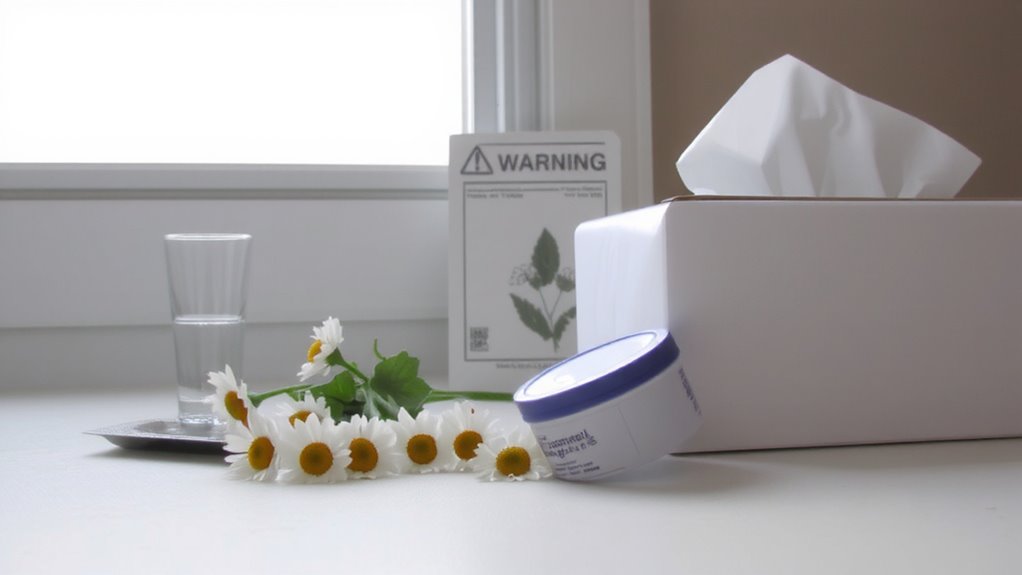
You’re likely familiar with chamomile tea as a go-to nighttime drink for relaxation, but if you have a ragweed allergy, it’s smart to pause and consider how your body might respond. Due to cross reactivity risks, your immune system may mistake chamomile for ragweed because they’re related plants. This doesn’t mean you’ll react, but the chance exists, especially if your allergy is strong. For safer sleep support, exploring herbal alternatives like passionflower or lemon balm may help. These herbs don’t share the same plant family and generally carry lower allergy concerns. Start with small servings to test tolerance, and check labels for purity and sourcing. While chamomile is gentle for many, your health history makes testing important. Talk to your doctor if you’re unsure. Consider these trade-offs when choosing sleep aids-comfort and safety matter just as much as results. For those still interested in trying chamomile, selecting from the best chamomile tea picks can help ensure quality and minimize potential contaminants.
Signs You Might Be Allergic to Chamomile

Could your evening cup of chamomile be causing more than drowsiness? If you have ragweed allergies, you might experience cross reactivity symptoms, since chamomile is in the same plant family. Watch for signs like sneezing, itchy eyes, or a runny nose shortly after drinking the tea. Some people develop a chamomile rash, especially if they have sensitive skin or apply creams containing chamomile. In more severe cases, swelling or breathing difficulties can occur. These reactions usually appear quickly, within minutes to hours. Even if you’ve used chamomile before, symptoms can start later. Paying attention helps you decide whether to keep using it as a sleep aid or explore alternatives. Tracking your body’s response guarantees your search for better sleep doesn’t compromise your comfort or health.
How to Test for Chamomile Sensitivity Safely
How can you tell if chamomile affects you without risking a reaction? Start with patch testing, a simple way to check for a skin reaction before using chamomile more broadly. Clean a small area on your forearm and apply a dab of diluted chamomile extract or tea. Cover it with a bandage and leave it for 24 hours. Watch for redness, itching, or swelling-these signs suggest sensitivity. If you see a skin reaction, skip chamomile entirely. No reaction? You might tolerate it, but stay cautious, especially if you have ragweed allergies. Patch testing doesn’t guarantee safety, but it reduces risk. Always use pure, reputable products to lower contamination chances. Since sleep aids affect people differently, a cautious trial matters. This method gives you clear feedback without rushing into nightly use. For reliable options, consider trying one of the best chamomile tea picks known for purity and quality.
Using Chamomile for Sleep? 3 Key Safety Tips
Even after a clean patch test, using chamomile for sleep still requires care-especially if ragweed allergies are part of your health history. Start with a low dose, like half a cup of weak chamomile tea, and monitor for symptoms like nasal congestion or itching. If reactions occur, discontinue use and consider chamomile-free alternative blends, such as lemon balm or magnolia bark, which support relaxation without cross-reactivity risks. Always check product labels for contamination warnings-some herbal products are processed in facilities with ragweed-family plants. Pair any herbal aid with solid sleep hygiene: consistent bedtimes, screen reduction, and a cool, dark room. This boosts effectiveness and reduces reliance on supplements. While chamomile works for many, its similarity to ragweed means caution is necessary. When in doubt, consult your allergist before making it a nightly habit.
Best Chamomile-Free Herbal Teas for Allergy-Safe Sleep
What if you could unwind at bedtime without risking an allergic reaction? You can-by choosing chamomile-free herbal teas that promote sleep safely. Lavender benefits include calming the nervous system, helping ease restlessness and support deeper sleep, making lavender tea a well-tolerated choice. Passionflower tea works similarly, often combined with lemon balm for enhanced relaxation. If stress-related tension keeps you up, magnesium sources like magnolia bark or blended sleepy-time teas with added magnesium citrate may help relax muscles and quiet the mind. Look for non-GMO, caffeine-free blends from trusted brands offering clear ingredient labels and satisfaction guarantees. Steep one cup 30 minutes before bed, and allow a few nights to assess effectiveness. These herbal options provide gentle support, letting you compare what works without relying on chamomile or risking allergy flare-ups. A well-formulated blend can make a noticeable difference in sleep quality, especially when it includes best sleep-inducing teas known for their calming properties.
When to Talk to Your Doctor About Sleep Aids and Allergies
Could your sleep struggles be tangled with allergy concerns in a way that over-the-counter remedies aren’t safely addressing? If ragweed allergies limit your options, it’s wise to talk with your doctor before trying new sleep aids. Poor sleep quality over time can affect your health, and hidden medication interactions might worsen symptoms. A doctor can review your history, suggest allergy-safe options, and help balance benefits and risks.
| Consider This | When It’s Time to Talk |
|---|---|
| Persistent insomnia | More than two weeks of poor sleep quality |
| Known allergies | Risk of reaction to herbal ingredients |
| Taking other meds | Possible medication interactions |
| Daytime fatigue | Impacts daily function |
| Tried OTC solutions | No improvement with standard remedies |
On a final note
You might find chamomile helps sleep, but if you’re allergic to ragweed, it could trigger symptoms. Always confirm your tolerance first, possibly with a patch test or doctor’s advice. If chamomile is off-limits, safe alternatives like passionflower, lemon balm, or magnolia bark tea may support rest. Weigh benefits against risks and consider non-herbal options if needed. Talk to your doctor before starting any new sleep aid, especially with known allergies.