Best Sleep Inducing Teas That Actually Help You Drift Off
You’ll find effective sleep support in teas with valerian root, chamomile, and passionflower, which work together to ease your mind and help you fall asleep faster. Look for organic, caffeine-free blends like those with melatonin, lavender, or ashwagandha to match your needs. Compostable bags and recyclable packaging add sustainability. Some may take consistent use to notice effects, so try one regularly for best results-your ideal blend could be just a few nights away.
We are supported by our audience. When you purchase through links on our site, we may earn an affiliate commission, at no extra cost for you. Learn more. Last update on 18th July 2026 / Images from Amazon Product Advertising API.
Notable Insights
- Look for teas with valerian root, passionflower, and chamomile, as they enhance GABA activity to promote faster sleep onset.
- Choose certified organic, caffeine-free blends to ensure purity and avoid stimulants that could disrupt sleep.
- Melatonin-infused herbal teas, like those from Twinings or Celestial, help regulate sleep cycles with 1 mg per serving.
- Opt for compostable or staple-free tea bags to reduce environmental impact without sacrificing ingredient quality.
- Herbal combinations with lemon balm, lavender, or ashwagandha prolong calmness and support stress-related sleep issues.
Organic Nighty Night Extra Tea (16 Bags)

If you’re someone who lies awake waiting for sleep to come, Organic Nighty Night Extra Tea might be your best ally - especially when nighttime restlessness feels relentless. I’ve found its blend of valerian root, passionflower, lemon balm, and peppermint works together to gently ease tension. The earthy, minty flavor is herbal but smooth, with no aftertaste. Each of the 16 compostable, caffeine-free bags is USDA Certified Organic and Kosher, formulated by herbalists you can trust. It’s part of Traditional Medicinals’ “There’s a Tea for That” line, so it’s made for real support, not just comfort. I recommend trying it for a few nights to see how your body responds.
Best For: Individuals seeking a natural, herbal solution to support sleep and relaxation, especially those dealing with nighttime restlessness.
Pros:
- Formulated with organic, caffeine-free ingredients like valerian root, passionflower, lemon balm, and peppermint for effective sleep support
- USDA Certified Organic and Kosher, with compostable tea bags that align with eco-conscious values
- Trusted blend developed by herbalists and part of a wellness-focused brand known for targeted herbal remedies
Cons:
- Earthy, herbal flavor may not appeal to those who prefer milder or sweeter teas
- Contains valerian root, which can have a strong aroma some users find unpleasant
- Only 16 tea bags per pack, which may require frequent reordering for nightly use
Twinings Sleep+ Herbal Tea with Melatonin
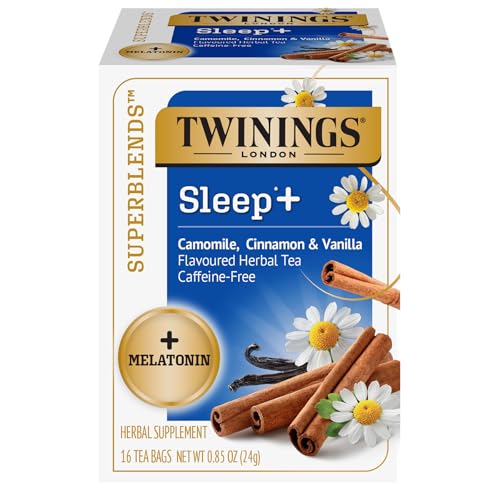
You might find Twinings Sleep+ Herbal Tea especially helpful if you’re looking for a gentle, plant-based way to support your sleep routine, since it combines 1 mg of melatonin with calming herbs like chamomile, cinnamon, and vanilla. I’ve tried it before bed, and it delivers a smooth, slightly sweet, floral taste without caffeine. Each box gives me 16 cups, which makes it easy to test over a few weeks. It’s part of Twinings’ Superblends line, so the mix feels balanced-not too strong, not too weak. While melatonin helps regulate sleep cycles, the herbs add a soothing touch. I appreciate that Twinings focuses on ethical sourcing, too.
Best For: Individuals seeking a natural, plant-based supplement to support relaxation and improve sleep quality with a blend of melatonin and calming herbs.
Pros:
- Contains 1mg of melatonin per serving to help regulate sleep cycles
- Combines soothing herbs like chamomile, cinnamon, and vanilla for a pleasant, caffeine-free evening tea
- Ethically sourced ingredients with a commitment to community wellness and sustainability
Cons:
- Contains melatonin, which may not be suitable for everyone or for long-term use without medical advice
- Flavor may be too mild or subtle for those preferring stronger herbal teas
- Limited to 16 tea bags per box, which may require frequent repurchasing
Celestial Sleepytime Tea with Melatonin (18 Bags)

One of the best choices for people who struggle with falling asleep is Celestial Seasonings Sleepytime Tea Plus Melatonin, a caffeine-free herbal blend crafted to support a calm shift into rest. I like that it combines chamomile, spearmint, and other soothing herbs with added melatonin to help regulate sleep cycles. Just steep one bag in hot water for 4 to 6 minutes. The tea bags have no strings, tags, or staples, reducing waste, and the box is made from 100% recycled paperboard with 35% post-consumer content. I source my herbs directly from global farmers, ensuring quality and purity, with no artificial flavors or colors-making it a thoughtful, eco-conscious option worth trying.
Best For: People seeking a natural, caffeine-free herbal tea to help ease into sleep, especially those looking for added melatonin support.
Pros:
- Combines soothing herbs like chamomile and spearmint with melatonin to promote restful sleep
- Eco-friendly packaging with tea bags free of strings, tags, or staples and a recycled paperboard box
- Made with high-quality, carefully sourced ingredients and no artificial flavors or colors
Cons:
- Melatonin may cause grogginess or drowsiness the next morning in some individuals
- Limited to 18 tea bags per box, which may not last long for daily users
- Some users may find the herbal flavor too mild or subtle for their preference
Nighty Night Organic Sleep Tea (16 Bags)

Nighty Night Organic Sleep Tea stands out for those seeking a natural, purpose-built herbal blend to ease into restful sleep. I rely on its chamomile, passionflower, and valerian root combo to help quiet my mind after a long day. The earthy, minty flavor is satisfying, thanks to spearmint and linden flower, without any caffeine. It’s USDA Organic, Non-GMO, and Kosher, with compostable bags-important if you value clean sourcing. Crafted by herbalists, it fits Traditional Medicinals’ “There’s a Tea for That” promise, targeting sleep support specifically. I find it works best as part of a consistent wind-down routine.
Best For: Individuals seeking a natural, organic herbal tea to support relaxation and promote restful sleep as part of a nightly wind-down routine.
Pros:
- USDA Organic, Non-GMO, and Kosher certified with compostable tea bags for eco-conscious consumers
- Specially formulated with sleep-supporting herbs like chamomile, passionflower, and valerian root
- Caffeine-free with a pleasant earthy-minty flavor that enhances the calming experience
Cons:
- Contains valerian root, which some may find has an earthy or unpleasant aftertaste
- Only 16 tea bags per box, which may require frequent reordering for daily use
- May not be effective for individuals with severe or chronic sleep disorders
Celestial Seasonings Sleepytime Extra Herbal Tea, 20 Tea Bags Box

A single ingredient often makes the difference for those struggling to unwind, and in this tea, valerian root takes center stage. I’ve found it works best when paired with chamomile and spearmint, both of which ease tension without overpowering the senses. This blend is caffeine-free and gluten-free, so it fits easily into restricted diets. I appreciate that there are no artificial additives-just clean, simple ingredients. Each box holds 20 tea bags, conveniently packaged without strings, tags, or staples, and the box itself uses 100% recycled paperboard. It’s a practical, eco-conscious choice for consistent nighttime use.
Best For: Individuals seeking a natural, caffeine-free herbal tea to support relaxation and improve sleep quality.
Pros:
- Features a well-balanced blend of valerian root, chamomile, and spearmint known for promoting calmness and sleep
- Free from caffeine, gluten, and artificial additives, making it suitable for sensitive diets
- Eco-friendly packaging with waste-reducing tea bags and a recycled paperboard box
Cons:
- Valerian root may have a strong, earthy taste that some find unpleasant
- Limited quantity with only 20 tea bags per box for frequent users
- May not provide immediate effects for those expecting fast-acting sleep aid results
Luxmi Estates Valerian Dream Tea 50g

Since I struggle with winding down after a long day, I find Luxmi Estates Valerian Dream Tea especially helpful if I’m looking for a natural way to ease into restful sleep. This organic blend of valerian root, chamomile, lavender, rose petals, and peppermint works together to support relaxation and improve sleep quality. I use one teaspoon per cup, steeping it 3–5 minutes in hot water. The taste is earthy with a floral hint, calming without being overpowering. Sourced from 23 estates and crafted since 1912, each 50g bag makes about 25 servings.
Best For: Individuals seeking a natural, herbal solution to unwind and improve sleep quality after stressful days.
Pros:
- Organic blend of valerian root, chamomile, and lavender known for calming and sleep-supportive properties
- Thoughtfully sourced from company-owned estates with a heritage dating back to 1912
- Offers both hot and cold brewing options for flexibility in consumption
Cons:
- Earthy flavor may not appeal to those preferring sweeter or more traditional tea tastes
- Contains valerian root, which can have a strong aroma some find unpleasant
- Limited to 25 servings per 50g bag, potentially requiring frequent repurchases for daily use
Traditional Medicinals Nighty Night Tea (48 Bags)

If you’re looking for a sleep tea that combines science-backed herbs with strong ethical standards, this 48-bag version of Traditional Medicinals Nighty Night Extra Tea stands out. I’ve tried it when stress kept me up, and the blend of valerian root, passionflower, lemon balm, and peppermint helped calm my mind without grogginess. It’s USDA Organic, Non-GMO, and caffeine-free, so it fits clean-label preferences. The compostable bags align with eco-values, especially since it’s made in a solar-powered, zero-waste facility. As a B Corp, the company balances purpose and product. You’ll notice its earthy, minty taste isn’t sweet, but it’s smooth. It’s reliable, especially if ethics matter to you.
Best For: Individuals seeking a certified organic, eco-conscious sleep tea with clinically recognized herbs to support relaxation and restful sleep.
Pros:
- USDA Organic, Non-GMO, caffeine-free, and made with compostable tea bags
- Contains science-backed ingredients like valerian root, passionflower, and lemon balm for sleep support
- Produced in a solar-powered, zero-waste facility by a Certified B Corporation
Cons:
- Earthy, minty flavor may be too strong or unsweetened for some palates
- Contains valerian root, which can have a strong aroma some find unpleasant
- Not suitable for those seeking a flavored or sweetened nighttime tea
Organic Sleep Blend Herbal Tea (50-Pack)

When you’re looking for a reliable, natural way to ease into sleep without the grogginess of supplements, this Organic Sleep Blend Herbal Tea stands out-especially if you value certified quality and thoughtful packaging. I’ve found its blend of organic chamomile, peppermint, fennel, and tulsi works gently to support relaxation. Each of the 50 teabags is caffeine-free, dye-free, and housed in a breathable, stapleless mesh sachet that preserves purity. The USDA Certified Organic ingredients come from sustainable farms, so you know they’re grown without synthetic pesticides. I’ve brewed it hot or cold, and it steeps cleanly, with no bitter aftertaste. The resealable gift tin keeps flavors fresh and makes it easy to try regularly or share with others.
Best For: Individuals seeking a natural, certified organic tea to support relaxation and restful sleep in a convenient, gift-ready format.
Pros:
- USDA Certified Organic with sustainably sourced, non-GMO ingredients free from synthetic pesticides
- Caffeine-free and dye-free formula with a clean-tasting blend of chamomile, peppermint, fennel, and tulsi
- Individually packaged teabags in a resealable gift tin maintain freshness and offer versatility for hot or cold brewing
Cons:
- Limited to herbal flavor preferences, which may not appeal to those who prefer traditional tea tastes like black or green tea
- Mesh sachets, while natural and staple-free, may contain microplastics depending on material used
- Higher price point compared to non-organic or bulk herbal teas without premium packaging
Hyleys Calm Tea with Ashwagandha (25 Bags)

I find Hyleys Calm Tea especially helpful if you’re looking for a natural, caffeine-free way to ease into sleep without added sugars or artificial flavors. It blends chamomile, lavender, and ashwagandha-herbs I’ve seen support relaxation-along with sweet blackberry leaf and natural manuka honey essence for a gentle, soothing taste. The 25 tea bags come individually foil-wrapped, which keeps each one fresh and flavorful. It’s GMO-free, gluten-free, dairy-free, and sugar-free, fitting many dietary needs. I’ve noticed it works best when sipped 30 minutes before bed, helping me unwind without grogginess. There’s no official trial, but the packaging locks in quality, making it a reliable choice worth testing.
Best For: Individuals seeking a natural, caffeine-free bedtime tea to support relaxation and restful sleep without added sugars or artificial ingredients.
Pros:
- Combines well-known calming herbs like chamomile, lavender, and ashwagandha for effective evening relaxation
- Individually foil-wrapped tea bags preserve freshness, aroma, and flavor integrity
- Free from GMOs, gluten, dairy, and sugar, making it suitable for a wide range of dietary preferences
Cons:
- Contains natural manuka honey essence, which may not be suitable for strict vegans
- Effects may vary by individual, with some possibly experiencing mild or delayed results
- Higher price point compared to conventional herbal teas due to premium packaging and ingredients
Celestial Seasonings Sleepytime Herbal Tea (6-Pack)

Celestial Seasonings Sleepytime Herbal Tea (6-Pack) works best for people who want a caffeine-free, readily available option to support a consistent nighttime routine, especially if they prefer familiar flavors like mint and chamomile. I find it helpful when winding down since the blend of spearmint, chamomile, and peppermint leaves tastes gentle and calming. Each of the 120 tea bags steeps well in hot water for 4 to 6 minutes, releasing a soothing aroma without strings, tags, or staples-great for minimizing waste. The boxes are made from 100% recycled paperboard, with 35% post-consumer content, so I feel good about the environmental impact.
Best For: People seeking a caffeine-free, eco-friendly herbal tea to support a calming nighttime routine with familiar mint and chamomile flavors.
Pros:
- Caffeine-free and gluten-free, ideal for those avoiding stimulants or with dietary restrictions
- Made with 100% recycled paperboard (35% post-consumer content) and waste-reducing tea bags without strings or staples
- Pleasant, gentle blend of spearmint, chamomile, and peppermint that brews quickly and consistently
Cons:
- Flavor may be too mild for those preferring stronger herbal or medicinal tasting teas
- Contains multiple ingredients which could be a concern for individuals sensitive to specific herbs
- Larger volume of tea bags (120 total) may be more than needed for individuals who don’t drink tea nightly
Factors to Consider When Choosing Sleep Inducing Teas
You’ll want to check the active ingredients, since things like valerian root or chamomile work differently for everyone. Make sure the tea is caffeine-free, and look for blends that combine herbs known to support relaxation through synergy. Certifications like organic or non-GMO can signal quality, and don’t overlook packaging-it might affect freshness and convenience over time.
Active Ingredients
When choosing a sleep-inducing tea, the active ingredients play a key role in how well it supports relaxation and sleep onset. You’ll often find valerian root, which studies show can improve sleep quality and help you fall asleep faster. Chamomile contains apigenin, a compound that binds to brain receptors involved in sleep regulation, gently promoting drowsiness. Passionflower works by increasing GABA levels, reducing nerve activity so your mind can unwind. Some blends add melatonin-just 1mg per serving-to support your natural sleep-wake cycle. Others combine calming herbs like lemon balm, lavender, and peppermint, each contributing unique compounds that enhance relaxation. These ingredients work together through different pathways, which may improve overall effectiveness. When comparing options, look at the specific active components and consider how they align with your sleep needs. Trying different blends helps you find what works best for your body.
Caffeine Content
Choosing a sleep-inducing tea means paying close attention to what’s not in it as much as what is-specifically, caffeine. You’ll want naturally caffeine-free options since even small amounts can delay sleep or shorten its duration. Herbal teas made from chamomile, valerian root, or passionflower don’t contain caffeine and are safer choices at night. Be cautious with decaf versions of black or green tea-they might still have trace caffeine that adds up. Always check labels for terms like “naturally caffeine-free” or “herbal,” which usually mean no stimulants are present. If you’re sensitive to caffeine, avoiding Camellia sinensis-based teas altogether is a smarter move. Reading ingredient lists helps you avoid hidden sources. A truly caffeine-free blend supports your body’s natural wind-down process, making it easier to fall and stay asleep. Your best bet? Stick to certified herbal blends when choosing a nighttime tea.
Herbal Synergy
What makes certain herbal teas more effective at easing you into sleep? It’s often the blend. Combining sedative herbs like valerian root and passionflower boosts GABA activity more than either alone, helping you relax faster. Chamomile and lavender work together, binding to benzodiazepine receptors to reduce how long it takes to fall asleep. When you add peppermint or spearmint, digestion improves and physical tension eases, making your body more ready for rest. Lemon balm helps, too-it slows the breakdown of GABA, so the calming effect lasts longer. Even better, pairing adaptogens like ashwagandha with these herbs supports your stress response, increasing the blend’s overall impact. You’ll want to check ingredient lists for these combinations. Not all teas use synergistic ratios, so trial and consistency matter when finding what truly works for your sleep routine.
Certifications Matter
Quality starts with verification, and that’s where certifications make a difference in your choice of sleep-inducing teas. When you see USDA Certified Organic, you know the ingredients were grown without synthetic pesticides or fertilizers, meeting strict federal standards. The Non-GMO Project verification guarantees the plants haven’t been genetically altered, which matters if you prefer natural ingredients. If your diet follows religious guidelines, Kosher certification confirms the tea complies with Jewish dietary laws. You’ll want third-party-verified caffeine-free labels-these guarantee no hidden stimulants that might disrupt your sleep. Some teas also carry compostable tea bag certification, meaning the bags break down in compost, reducing waste. These labels aren’t just marketing; they give you clear, reliable information about what you’re consuming and how it’s made. Choosing certified teas helps you align your sleep routine with your health, ethical, and environmental priorities.
Packaging Impact
While you focus on finding a tea that supports restful sleep, don’t overlook how packaging affects both freshness and the environment. Opt for brands using recycled paperboard with post-consumer content to reduce waste and support sustainable disposal. If you compost, choose compostable tea bags made from plant-based materials-they break down easier and cut plastic pollution. Some tea bags skip strings, tags, and staples, boosting compostability and cutting landfill waste. For lasting potency, pick foil-wrapped bags; they seal in freshness and protect delicate herbal compounds. Tins or resealable outer packages also help by shielding tea from light, moisture, and air, extending shelf life. While convenient, foil and tins may require extra recycling steps. Consider your routine: if you value convenience and long-term storage, sealed options work well. If eco-impact matters most, prioritize minimal, compostable, or widely recyclable materials. Each choice balances freshness, function, and environmental care.
Frequently Asked Questions
Can I Drink Sleep Tea Every Night?
You can drink sleep tea every night, but you should monitor how your body reacts over time. Most herbal blends are safe, yet some ingredients, like valerian root, might cause drowsiness or upset stomach with prolonged use. Tolerance can build, reducing effectiveness. Check labels for quality and avoid additives. If you have health conditions or take medications, consult a doctor first. A short trial helps assess benefits without risk.
Does Sleep Tea Interact With Medications?
Yes, sleep tea can interact with medications, so you should check with your doctor before using it nightly. Herbal ingredients like valerian or chamomile may affect how your body processes certain drugs, including blood thinners or sedatives. You might not realize the risk until you see changes in how you feel. Always read labels, consider your health history, and consult a professional to avoid unwanted effects.
Is It Safe to Drink During Pregnancy?
you shouldn’t drink sleep tea during pregnancy without talking to your doctor first. many herbal ingredients haven’t been studied enough in pregnant women, so risks aren’t fully known. some herbs may affect hormones or uterine activity, which could cause complications. if you’re pregnant and struggling with sleep, your doctor can help you find safer, evidence-based options. always check labels and avoid blends with valerian, chamomile, or passionflower unless approved.
How Long Before Bed Should I Drink Sleep Tea?
You should drink sleep tea about 30 to 60 minutes before bed to allow enough time for it to take effect. This gives your body time to absorb the active compounds while letting digestion settle. Choose caffeine-free blends, like chamomile or valerian root, to avoid interference with sleep. Start with a 30-minute window and adjust based on how you feel. Consistency matters more than timing, so track your results over a few nights to find what works best for your routine.
Can Children Drink Sleep-Inducing Herbal Teas?
you shouldn’t give sleep-inducing herbal teas to children without consulting a pediatrician first. their developing bodies may react differently to calming herbs like valerian, chamomile, or passionflower. even natural ingredients can cause side effects or interact with medications. start with proven sleep habits instead-consistent bedtime, reduced screen time, and a quiet environment. if you consider tea, choose a child-safe option with simple ingredients and try one under medical guidance.