The Role of Temperature Regulation in Irregular Sleep-Wake Rhythm Disorder
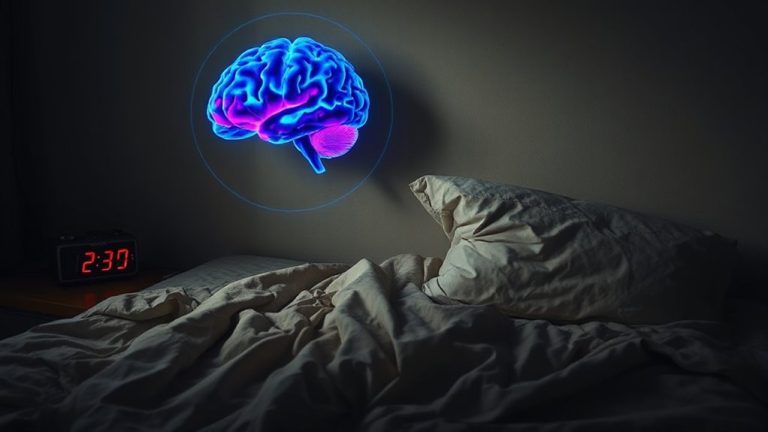
Your body relies on a natural drop in core temperature to signal sleep, but in Irregular Sleep-Wake Rhythm Disorder, this rhythm breaks down. Without a clear thermal cue, sleep starts at random times, leaving you unrested. Brain changes or neurological conditions can weaken this system, reducing response to light and temperature cues. Timed cooling at night and warming in the morning helps realign your cycle. Devices like programmable mattress pads support this reset, offering measurable improvements over 4–6 weeks. Consistent thermal cues may stabilize sleep patterns, especially when combined with light therapy and sleep monitoring. You’re likely to see gradual improvements by aligning environmental temperatures with your body’s expected rhythm.
Notable Insights
- Irregular Sleep-Wake Rhythm Disorder disrupts the normal nocturnal drop in core body temperature, impairing sleep onset.
- Circadian misalignment in ISWRD leads to erratic sleep patterns and weakened thermal regulation across 24 hours.
- Body temperature rhythms are critical for sleep timing, with cooling promoting sleep and warming supporting wakefulness.
- Brain damage, especially in the hypothalamus, can impair thermoregulation and worsen circadian disruption in ISWRD.
- Timed thermal interventions, like cooling at bedtime, can help realign circadian rhythms and improve sleep consolidation.
What Is Irregular Sleep-Wake Rhythm Disorder?
Ever wonder why some people feel alert at odd hours, struggling to follow a typical sleep schedule? You might be dealing with irregular sleep-wake rhythm disorder, a condition marked by circadian misalignment. Instead of one major sleep period, you experience at least three separate bouts of sleep within 24 hours. This scattered pattern leads to sleep fragmentation, making rest feel light and unrefreshing. Your internal clock isn’t syncing with external day-night cues, which often occurs in people with limited exposure to light or irregular routines. It’s common in those with neurological conditions or irregular lifestyles. Diagnosis usually involves sleep logs or actigraphy over one to two weeks. Treatment focuses on reinforcing circadian cues-timed light exposure, consistent meals, and structured activity. While sleep aids may help short-term, they don’t fix the root cause. Discuss options with a provider to weigh benefits and risks.
How Body Temperature Sets Your Sleep Schedule
Your body’s internal clock doesn’t just rely on light and routine-it also uses temperature changes to guide your sleep schedule. As evening approaches, your core temperature drops, signaling it’s time to wind down. This natural dip supports circadian alignment, helping you fall asleep at roughly the same time each night. The cooling process works with thermal inertia, meaning your body resists rapid temperature shifts, which stabilizes sleep cycles. You might notice you sleep better in cooler rooms-usually between 60–67°F-because it matches your body’s thermal rhythm. Using breathable bedding or temperature-regulating sleepwear can enhance this effect. Some people test cooling mattress pads or programmable thermostats to maintain ideal conditions. These tools don’t fix disorders but can improve sleep quality when used consistently. Monitoring your environment helps identify patterns that support or disrupt your natural cycle. Heated mattress pads can also influence thermal comfort, especially in colder environments, with models offering adjustable heat settings for personalized regulation.
Why ISWRD Breaks the Body’s Temperature Rhythm
How does a disrupted internal clock affect your body’s natural cooling cycle at night? With Irregular Sleep-Wake Rhythm Disorder (ISWRD), your circadian misalignment throws off the usual dip in core temperature that helps you fall asleep. Instead of cooling down at night, your body might stay warm when it should cool, confusing your sleep signals. This mismatch leads to fragmented sleep and daytime fatigue. Metabolic disruption often follows, affecting energy use and hormone release tied to temperature. Your body doesn’t follow the predictable rhythm it needs.
| Normal Rhythm | ISWRD Pattern |
|---|---|
| Temp drops at night | No clear drop |
| Sleep onset is smooth | Sleep starts randomly |
| Wake time is consistent | Wake times vary widely |
| Metabolism aligns with light | Metabolic disruption occurs |
| Restorative sleep | Poor sleep quality |
How Brain Damage Disables the Body’s Sleep-Thermometer
Damage to brain regions that regulate circadian timing can severely impair the body’s ability to control temperature during sleep, much like what’s seen in ISWRD but often more persistent. When neural degeneration affects the hypothalamus, your brain’s internal thermostat falters, disrupting the normal nightly dip in core temperature. This circadian disruption weakens sleep quality, making rest feel less restorative. You may notice sleep becoming fragmented or shifting unpredictably across the 24-hour day. Unlike typical ISWRD, brain injury-related cases often show less response to light-based cues, requiring more structured environmental controls. Monitoring your body’s temperature patterns can help identify the extent of dysfunction and guide treatment choices. Though repair isn’t always possible, understanding the role of neural degeneration helps you weigh options like timed behavioral routines or supportive sleep aids. This knowledge supports practical steps toward managing sleep despite lasting circadian disruption.
Resetting Sleep With Timed Cooling and Warming
Why does a cool room at bedtime help you fall asleep faster? Because your body uses thermal cues to signal sleep onset. As evening approaches, your core temperature naturally drops, and a cooler room supports this shift, making it easier to drift off. Timed cooling and warming mimic these internal rhythms, reinforcing circadian alignment. You might use a mattress pad that cools slightly at bedtime and warms before wake time, helping regulate your sleep-wake cycle. These devices typically connect to a control unit, allowing you to adjust timing and intensity. Look for models with adjustable settings, quiet operation, and a trial period of at least 30 nights. They’re safe for most people and may improve sleep quality when used consistently. While results vary, many find these systems helpful for maintaining stable sleep patterns over time.
Using Thermal Therapy in Dementia and Brain Injury
A growing number of clinicians are exploring thermal therapythermal therapyas a non-invasive toolnon-invasive toolto support sleep and cognitive function in people with dementia or brain injury. You might consider using regulated warming or cooling blankets, which gently shift body temperature to support circadian rhythmscircadian rhythms These devices promote thermal adaptation, helping the body adjust to daily temperature cycles that often go awry in neurological conditions. Improved thermal cues can strengthen neuronal resilienceneuronal resilience potentially slowing cognitive decline and stabilizing sleep patterns. Trials show some users experience longer nighttime sleep and fewer nighttime awakeningsfewer nighttime awakenings Most devices offer adjustable settings, allowing personalized treatment based on individual comfort and response. Look for models with safety cutoffssafety cutoffs washable covers, and clinical backing. Warranties typically cover one to two years. While results vary, thermal therapy may offer a practical supplement to existing care plans when used consistently under professional guidance.
The Future of Temperature-Driven ISWRD Treatments
How might adjusting your body’s temperature help reset your sleep when insomnia or circadian disruption won’t respond to usual treatments? Emerging research points to wearable thermoregulation and circadian engineering as promising tools. These methods work by gently guiding your internal clock using timed thermal cues, especially helpful in Irregular Sleep-Wake Rhythm Disorder (ISWRD). Devices are designed to fit into nightly routines, offering non-invasive, drug-free support.
| Feature | Benefit |
|---|---|
| Wearable thermoregulation | Targets skin temperature to influence core rhythms |
| Circadian engineering | Uses precise timing to align sleep cycles |
| Lightweight design | Worn comfortably all night |
| Clinical testing | Studies show improved sleep consolidation over 4–6 weeks |
Many come with trial periods, letting you assess effectiveness. Performance varies, but consistency and proper use increase success chances.
On a final note
You can manage irregular sleep patterns by aligning temperature cues with natural rhythms. Timed cooling at night and warming in the morning may improve sleep timing, especially if brain injury or dementia affects your internal clock. These therapies are non-invasive and often have few side effects. Wearable devices or climate-controlled bedding offer practical options. Many include trial periods, so test what fits your routine. Results vary, but consistency matters most for long-term improvement.