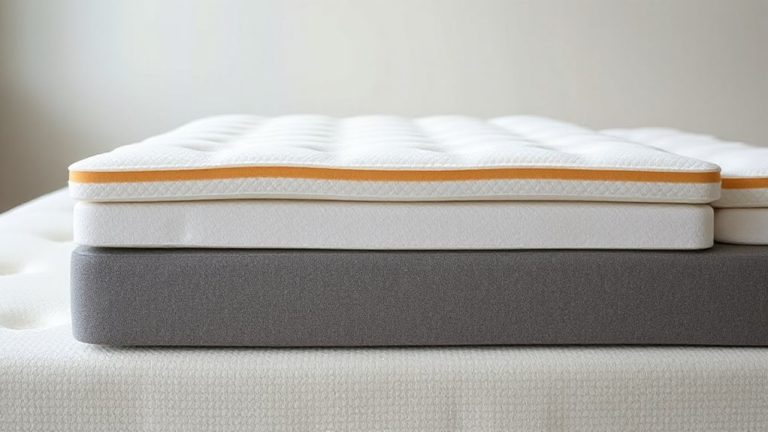
How to Spot High-Density Foam in Innerspring Mattress Comfort Layers
Look for foam labeled 1.8 PCF or higher-it’s denser, more supportive, and resists sagging over time. Press the comfort layer; high-density foam sinks slowly and recovers gradually, unlike low-density foam that flattens quickly and bounces right back. Check the ILD rating: 15–18 offers a balance of cushion and support, especially if you shift positions. Paired with innersprings, it reduces motion transfer and boosts durability. A longer warranty often signals confidence in quality-there’s more to learn about matching foam specs to your sleep needs.
Notable Insights
- Check foam density ratings; 1.8 pounds per cubic foot (PCF) or higher indicates high-density, durable foam.
- Look for slow recovery when pressed-high-density foam molds gradually and sinks slowly under pressure.
- Avoid foam that bounces back quickly, as fast rebound usually signals low density and poor durability.
- Review ILD (Indentation Load Deflection) ratings; values of 15–18 with density ≥1.8 PCF balance support and comfort.
- Examine warranty length-longer warranties often reflect manufacturer confidence in high-density foam durability.
Understand How High-Density Foam Boosts Support
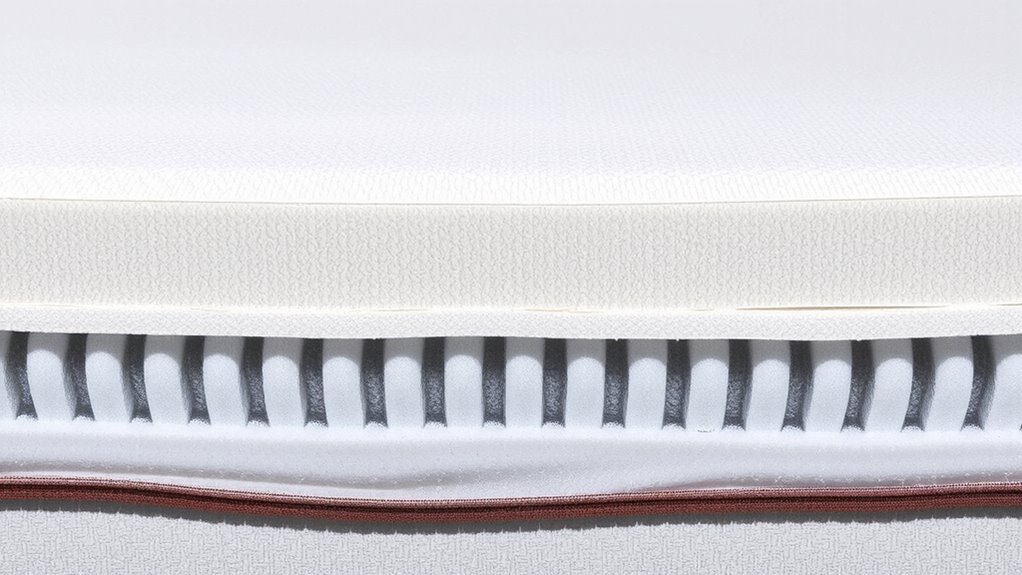
You’ve probably heard that high-density foam makes a mattress more supportive, and for good reason-it’s all about how tightly the material is packed. When foam is denser, it better maintains its shape under pressure, offering stronger structural integrity over time. That means less sagging, especially in comfort layers above innersprings where support matters most. You’ll notice this when you lie down-your body stays aligned instead of sinking too deeply. High-density foam also improves foam resilience, so it bounces back quickly after pressure is removed. This helps the mattress feel consistent, night after night. Better resilience and structural integrity mean the foam supports spinal alignment, which can ease discomfort for some sleepers, particularly those with mild back issues. While not a medical sleep aid, this support may improve sleep quality. Check the warranty, too-many manufacturers back high-density foams longer, reflecting confidence in durability. Consider how these features match your sleep needs.
Look for Foam Density of 1.8 PCF or Higher
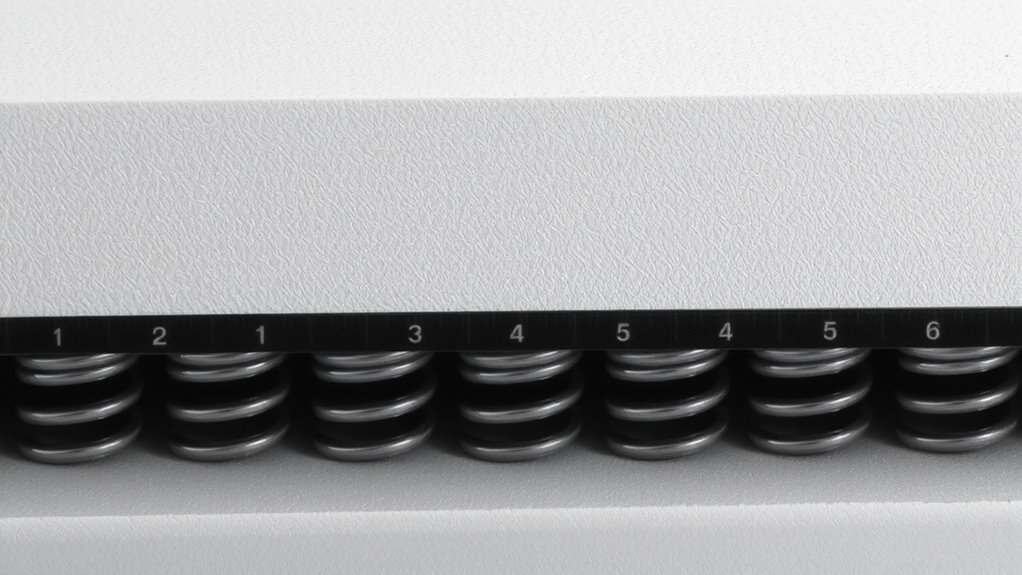
A density of 1.8 pounds per cubic foot (PCF) or higher is a reliable baseline when evaluating foam for durability and support. When you choose foam at this density, you’re more likely to get consistent comfort over time, especially in innerspring mattress comfort layers. Higher-density foam resists sagging better, which helps maintain spinal alignment during sleep-important if you’re managing discomfort or sleep disruptions. This standard also signals stronger foam composition, meaning fewer fillers and better resilience. You’ll notice improved core integration, as dense foam bonds more effectively with the innerspring unit, reducing motion transfer and layer separation. While it may feel slightly firmer at first, it molds to your body without collapsing. Look for density specs on labels or ask for details before buying. Many brands offer trial periods, so test how it feels over time. A solid warranty often backs better materials.
Use ILD to Test Firmness and Durability
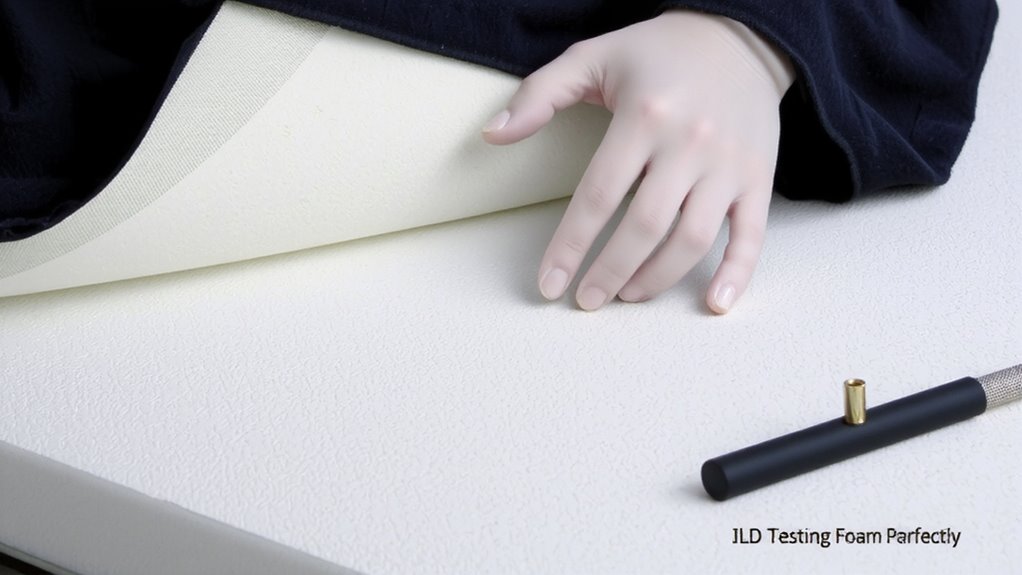
Firmness and durability go hand in hand when choosing a foam mattress, and the Indentation Load Deflection (ILD) rating gives you a clear picture of both. You’ll want to check the ILD measurement, which tells you how much force (in pounds) is needed to compress the foam by 25%. A higher ILD means firmer foam, usually between 10 and 40 for comfort layers. There’s a direct firmness correlation-foam with an ILD below 15 feels soft, while 20+ offers more support. Medium ratings, like 15–18, balance cushioning and structure, which may help if you shift positions or have mild joint concerns. Look for ILD specs in product details; they’re a reliable indicator of long-term performance. Paired with high density (1.8 PCF or more), a suitable ILD helps maintain shape and support over time, contributing to consistent sleep quality. Warranties often reflect confidence in these traits.
Press the Mattress for Slow-Recovery Foam
After checking the ILD to gauge firmness and long-term resilience, pressing the mattress in person helps you sense how the foam responds to weight, especially when looking for slow-recovery types. You’ll notice high-density foams sink slowly under pressure, molding to your hand with a firm yet cushioned foam texture. When you lift your hand, the impression lingers briefly-this delayed recovery speed is a hallmark of quality viscoelastic foam. Slower recovery suggests better support and motion isolation, which can help if you shift often or share the bed. It also means the layer likely resists sagging over time. A quick bounce-back usually means lower density, while a gradual return offers more contouring. Test several areas to check for even response. This hands-on feel, combined with ILD data, gives a clearer picture of how the comfort layer may perform night after night.
Spot These Signs of Low-Density Foam
While high-density foam molds slowly and holds its shape, you’ll notice low-density foam gives way too quickly when you press into it, losing structure with minimal pressure. It often feels flat under your hand and bounces back fast, showing it’s made with cheap materials that can’t support your body well. This kind of foam usually lacks resilience, meaning it won’t recover over time, leading to sagging and uneven surfaces. You might find yourself sinking into the mattress instead of resting on a supportive layer, which could affect spinal alignment. Low-density foam also has poor durability-many users report noticeable wear within a year. Mattresses using this foam may feel softer at first but lose comfort quickly. Check manufacturer specs for foam density numbers, and prioritize models with trial periods so you can assess long-term performance. Top-rated foam mattresses often highlight high-density foams for better support and longevity.
Choose Hybrid Mattresses With Verified Foam
A good number of hybrid mattresses on the market today combine innerspring support with foam layers, but not all foams are created equal-choosing one with verified, high-density foam makes a clear difference in support and longevity. High-density foam offers better memory retention and targeted pressure relief, which can help reduce tossing and turning. For those managing discomfort or sleep disruptions, these traits support more consistent rest. Look for models that specify foam density and layer thickness so you can compare performance. Based on expert evaluations, the best queen hybrid mattresses often feature layers of premium high-density foam for enhanced durability and spinal alignment.
Demand Certifications for Foam Quality
Many high-density foams meet basic quality standards, but not all deliver the performance or safety you expect-so it’s worth checking for third-party certifications. When you demand certifications like CertiPUR-US or OEKO-TEX, you’re getting assurance about low emissions, minimal harmful chemicals, and better foam sourcing. These labels support material transparency, so you know what’s inside the comfort layer. Certifications also back claims about durability and support, which matter if you’re managing back pain or sleep disruptions. A certified foam doesn’t guarantee comfort, but it reduces risks tied to off-gassing or poor ingredient quality. Look for certification details on product tags or brand websites-brands that highlight material transparency often stand behind their build quality. Pair this with a solid warranty and sleep trial, and you’ve got a clearer path to a safer, longer-lasting mattress.
On a final note
You’ll sleep better knowing your mattress has durable support. High-density foam, at 1.8 PCF or higher, resists sagging and pairs well with innersprings for lasting comfort. Check ILD ratings between 25 and 35 for firmness that balances softness and support. Press the surface-slow recovery means better quality. Look for CertiPUR-US® certification and generous trial periods to test feel and performance risk-free.