The Connection Between Sleep and Growth Hormone in Infants
Your baby releases growth hormone mainly during deep sleep, especially in the first few hours after falling asleep. Both nighttime sleep and naps contribute, with the biggest hormone surges tied to non-REM stages. This hormone supports physical growth, tissue repair, and brain development, including neural connections tied to memory and motor skills. Consistent bedtimes, a calm environment, and uninterrupted sleep help maximize these benefits. Watch for disruptions like apnea or frequent wakings, as they can reduce hormone release. Long-term patterns matter most for healthy development, and small changes now can make a lasting difference. You’ll find practical strategies ahead to support your baby’s sleep and growth.
Notable Insights
- Growth hormone is primarily released in pulses during deep non-REM sleep in infants.
- The largest hormone surges occur in the first few hours after infants fall asleep.
- Both nighttime sleep and naps contribute to growth hormone release and development.
- Deep sleep stages are crucial for physical growth and neural connectivity in infants.
- Consistent routines and a calm sleep environment support optimal hormone release and sleep quality.
Why Infant Sleep Drives Growth Hormone Release
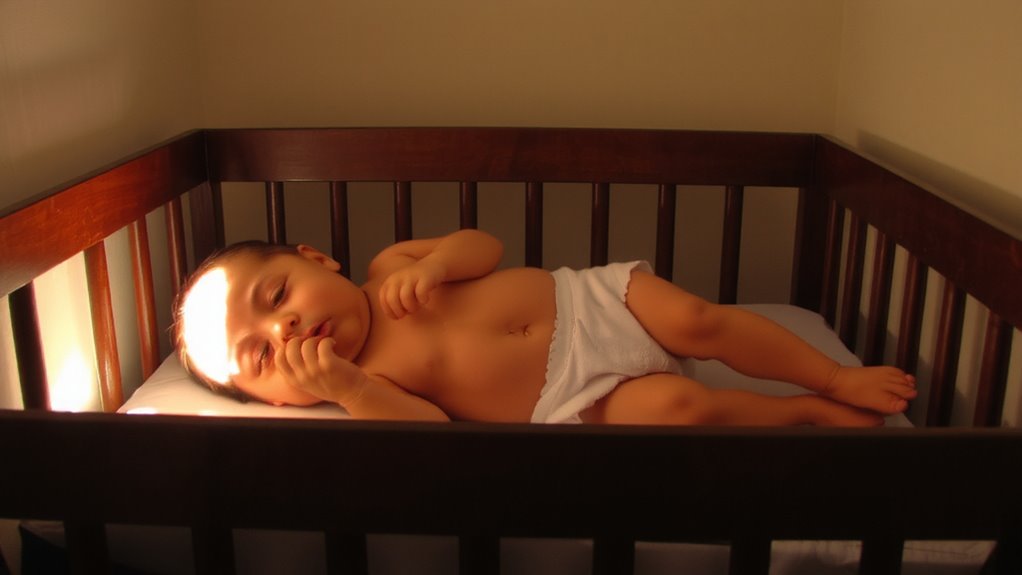
While you might think growth happens steadily throughout the day, most of it actually occurs during deep sleep, when your infant’s body releases bursts of growth hormone. This release ties closely to dream cycles and the maturing circadian rhythms that regulate sleep-wake patterns. As your baby’s brain develops, these rhythms stabilize, improving sleep quality and hormonal output. Disruptions-like irregular bedtimes or sleep disorders-can interfere with this balance, affecting growth over time. Consistent, restful sleep supports both neural development and physical growth. Monitoring sleep patterns helps you identify issues early, whether it’s frequent waking or difficulty settling. While sleep aids exist, choose them carefully; look for products with safety testing, trial periods, and pediatrician input. You’ll want breathable materials, adjustable settings, and easy cleaning. A well-structured routine, aligned with natural circadian rhythms, supports ideal hormone release and healthier development without overreliance on external tools.
When Babies Release Growth Hormone During Sleep?

When does your baby’s body actually release growth hormone-during naps, at night, or both? The answer is both, but timing matters. Your baby’s growth hormone surges mainly during deep sleep, especially in the first few hours after falling asleep. These surges come in hormonal pulses, often linked to sleep stages rather than just day or night. Dream cycles, or REM sleep, play a role too, though the biggest pulses happen during non-REM deep sleep. Since infants cycle through sleep stages faster than adults, they get frequent hormonal pulses across naps and nighttime sleep. This means consistent, quality sleep-day and night-supports steady release. You don’t need special sleep aids, but maintaining a calm sleep environment helps. Watch for sleep disorders like apnea, which can disrupt cycles. Good sleep hygiene supports both dream cycles and hormonal pulses naturally, without intervention.
How Growth Hormone Supports Physical and Brain Development
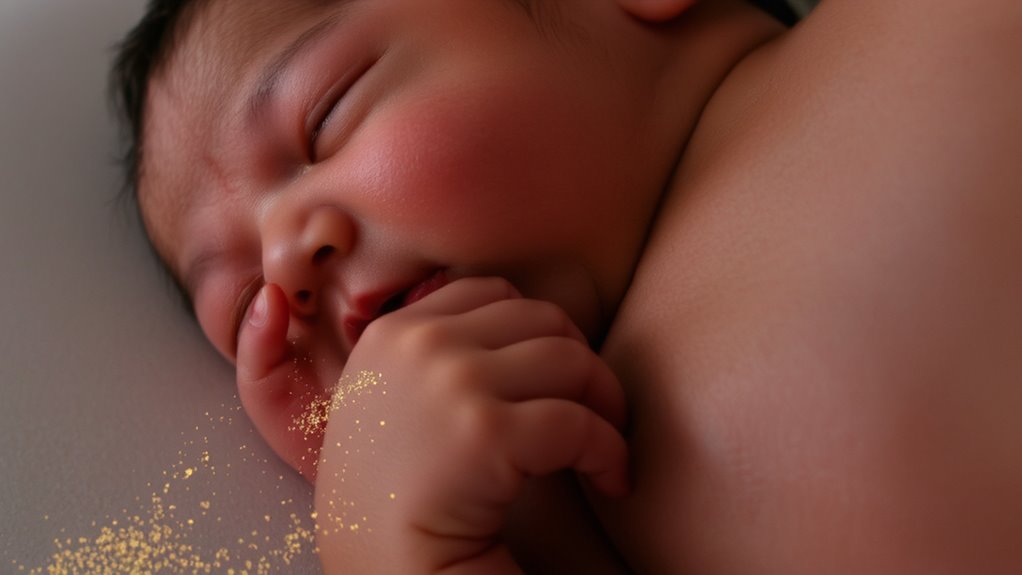
Growth hormone doesn’t just fuel height-it’s actively shaping your baby’s body and brain every time they settle into deep sleep. It supports rapid tissue repair, helping muscles and organs grow stronger after daily wear. At the same time, it boosts neural connectivity, strengthening the pathways your baby’s brain uses to learn and respond to the world. You’ll notice this when they hit milestones like grasping objects or recognizing voices. Strong neural connectivity also supports future cognitive skills, including attention and memory. Since growth hormone peaks during deep, uninterrupted sleep, ensuring a quiet, consistent sleep setting matters. While sleep aids or monitors can help track patterns, they’re useful mainly if sleep disorders-like frequent waking or breathing pauses-are suspected. Always consult a pediatrician before trying interventions, especially if sleep issues persist.
Why Deep Sleep Is Crucial for Infant Growth
Because your baby’s body releases the highest levels of growth hormone during deep sleep, ensuring they reach and maintain this sleep stage is key to healthy development. During deep sleep, dream cycles are less frequent but more restorative, supporting vital processes like neural repair and tissue growth. Unlike lighter stages, deep sleep strengthens the brain’s ability to reorganize and heal, laying the foundation for motor skills and cognitive function. You’ll notice deeper breathing and minimal movement, signs their body is fully engaged in growth tasks. While sleep aids or monitors can track patterns, most healthy infants naturally enter deep sleep when sleep hygiene is consistent-quiet, dark, and interruption-free. Avoid over-reliance on devices unless advised, as natural sleep cycles are typically effective. Understanding how deep sleep functions helps you make informed choices about environment and routines without unnecessary intervention.
Ideal Sleep Patterns for Maximizing Growth Hormone
How can you best support your baby’s natural hormone release during sleep? Focus on bedtime consistency and sleep environment quality to encourage deep, restorative sleep when growth hormone peaks. A predictable routine signals the body it’s time to rest, while a calm, dark, and quiet space supports longer sleep cycles. Below are key factors that help shape ideal sleep patterns:
| Factor | Recommendation |
|---|---|
| Bedtime | Same time nightly |
| Night Wakings | Minimize with routine |
| Room Light | Use dim or none |
| Noise Level | Consistent, low volume |
| Temperature | 68–72°F (20–22°C) |
These elements work together to enhance sleep depth and duration. You don’t need special aids-just reliable habits and an attentive approach. Over time, steady patterns make it easier for your baby to fall and stay asleep, naturally supporting hormone production.
Common Disruptions to Growth Hormone in Babies
While your baby’s body is wired to release growth hormone naturally during deep sleep, certain disruptions can interfere with this essential process. Sleep disorders like apnea or frequent night wakings reduce the time spent in deep sleep, limiting hormone release. You might notice irregular breathing, snoring, or restlessness-signs worth discussing with a pediatrician. Medication effects, including some antibiotics or steroids, may also alter sleep patterns or hormone levels. These treatments can shorten sleep cycles or delay sleep onset, affecting overall growth. Monitoring your baby’s sleep quality and consulting a specialist if issues persist helps address underlying causes. Some families benefit from sleep studies to identify disorders early. Understanding these factors allows you to make informed choices about care, treatment timing, and when to seek help-without rushing to solutions. Small changes, guided by professional insight, often support better sleep and healthier development over time.
7 Tips to Boost Deep Sleep and Support Growth
You can take practical steps to help your baby get the deep sleep needed for healthy growth hormone release. Consistent bedtime routines and a supportive sleep environment play key roles. Below are actionable tips to promote restorative sleep.
| Focus Area | Strategy | Benefit |
|---|---|---|
| Sleep Environment | Keep room dark and quiet | Encourages uninterrupted cycles |
| Sleep Environment | Maintain cool room temperature | Supports natural body regulation |
| Bedtime Routines | Follow a calming sequence | Signals the body it’s time to rest |
| Bedtime Routines | Begin at the same time nightly | Builds predictable sleep patterns |
Establishing structure improves sleep quality without aggressive interventions. Most babies respond well to gentle cues like dimmed lights or soft sounds. You don’t need special sleep aids-simple, consistent habits work best. Trial small changes over a week to see what fits your family. With time, these patterns support deeper sleep and healthy hormone function.
On a final note
You’ll help support your baby’s growth hormone release by prioritizing consistent, uninterrupted sleep-especially long stretches of deep sleep. Since growth hormone peaks during these cycles, stable routines and a restful environment matter most. Watch for signs of sleep disruption, like frequent waking or breathing pauses, and discuss them with your doctor. Avoid sleep aids unless recommended; instead, try proven methods like white noise, swaddling, or scheduled naps to build healthy, effective habits over time.