How to Reduce Sleep Anxiety With Cognitive Reframing Techniques for Chronic Pain Sufferers
You can reduce sleep anxiety by reframing thoughts like “I’ll never sleep” into calmer statements such as “I can rest even with pain.” Replace fear-based thinking with mindful breathing and sensory grounding to quiet your mind. Accept discomfort without resisting it, which lessens nighttime dread. Over time, this mental shift helps break the pain-sleep-anxiety cycle. Try these techniques consistently, and you’ll discover more ways to reclaim restful nights.
Notable Insights
- Reframe catastrophic thoughts like “I’ll never sleep” with calming affirmations such as “Sleep will come” to reduce mental tension.
- Use mindful breathing to anchor attention in the present, decreasing emotional reactivity to pain and sleep anxiety.
- Visualize pain as a separate, manageable sensation (e.g., a buzzing light) to foster detachment and reduce fear.
- Practice sensory grounding techniques nightly to shift focus away from pain and rumination toward present-moment awareness.
- Develop a consistent sleep routine with gradual time-in-bed increases to rebuild positive associations with bedtime.
Why Chronic Pain Fuels Sleep Anxiety (And How to Break the Cycle)

While chronic pain can make falling asleep feel impossible, it’s often the fear of not sleeping-and the pain that might come with it-that keeps you up even longer. Your body’s pain perception shifts when fatigue sets in, often making discomfort feel sharper. This creates a feedback loop where fear avoidance takes hold-you start dreading bedtime, worrying rest will worsen pain or not come at all. Over time, this pattern reinforces sleep anxiety, not just on tough nights but across weeks, affecting sleep quality and daily function. To break the cycle, consider strategies that reduce fear-driven responses, like gradually increasing time in bed or using structured sleep schedules. These methods gently reshape your relationship with sleep. Some find sleep aids helpful short-term, but they’re best used under guidance. Look for products with clear trial periods or medical oversight to assess what supports your rest without dependency.
Reframe Negative Thoughts Caused by Sleep Anxiety and Pain

How often do you lie in bed, mind racing with thoughts like “I’ll never get to sleep” or “This pain will only get worse tonight”? These worries fuel sleep anxiety and make chronic pain feel unbearable. You can reframe these thoughts by first noticing them without judgment. Try mindful breathing-inhale slowly through your nose, hold for four counts, then exhale fully. This calms your nervous system and creates space between you and your discomfort. Use pain detachment by visualizing the sensation as something separate, like a buzzing light across the room. It’s still there, but not consuming you. This mental shift doesn’t erase pain but reduces its emotional grip. Over time, you’ll find it easier to let go of catastrophic thinking. Tools like guided audio programs or sleep journals can support the process. Always consider professional guidance when exploring cognitive strategies.
Calm Your Mind With Proven Self-Talk at Bedtime
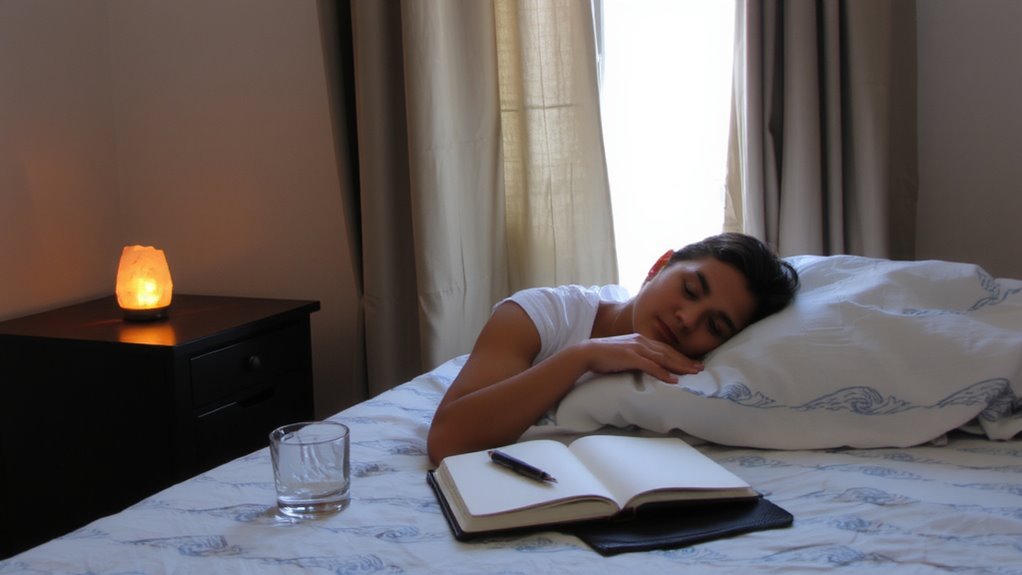
You’ve already started shifting your thoughts around sleep and pain by noticing them without judgment and creating mental space. Now, use self-talk to gently guide your mind toward rest. Phrases like “I am safe” or “This moment is calm” can anchor you. Pair them with deep breathing and guided imagery to reduce nighttime arousal. Below are examples of effective bedtime self-talk statements, their purpose, and how to use them:
| Self-Talk Statement | Purpose | How to Use |
|---|---|---|
| “I can rest even with pain” | Accept discomfort | Repeat slowly with deep breathing |
| “My body knows how to relax” | Promote trust in rest | Use during guided imagery |
| “Worry can wait” | Delay rumination | Say when thoughts race |
| “This breath is calm” | Focus on present | Match with inhale/exhale rhythm |
| “Sleep will come” | Reinforce patience | Whisper softly, eyes closed |
Build a 10-Minute Mental Reset Routine Before Bed
After easing into the quiet of evening, you can begin a simple 10-minute mental reset to prepare your mind and body for rest, especially helpful when pain makes sleep feel out of reach. Start with breath awareness: sit or lie comfortably and focus on each inhale and exhale, letting distractions drift away without judgment. Spend three to four minutes here, allowing your nervous system to settle. Then shift to sensory grounding-name five things you see, four you can touch, three you hear, two you smell, and one you taste. This practice brings your attention to the present, reducing mental clutter. Together, breath awareness and sensory grounding form a consistent, accessible routine. You don’t need special tools or apps, just willingness to try it nightly. If one method feels off, adjust the timing or focus. Over time, this reset may improve sleep onset and ease anxiety-no prescription needed, just patient repetition.
Swap Catastrophizing for Calmer, Acceptance-Based Thinking
When your thoughts spiral toward worst-case scenarios about another sleepless night, it’s easy to feel trapped in a cycle of dread, but shifting to calmer, acceptance-based thinking can help break that pattern. Instead of fighting pain or fearing the night, you can practice mindful breathing to ground yourself in the present moment. This doesn’t erase discomfort, but it reduces the mental tension that worsens it. Pain acceptance isn’t giving up-it’s acknowledging reality without adding emotional resistance. You’ll likely sleep better when you stop arguing with how you feel and start responding with gentle awareness. Over time, this approach lessens anxiety’s grip, making rest more accessible. It works alongside other strategies, not as a replacement. Results vary, but many find it improves sleep quality with consistent trial. There’s no cost or risk, just a daily investment in mental resilience.
Train Your Brain During the Day to Sleep Better at Night
Why do some people seem to fall asleep easily, even with chronic pain, while others lie awake for hours no matter how tired they feel? The answer often lies in daytime neuroplasticity-your brain’s ability to rewire itself based on repeated thoughts and behaviors. By practicing cognitive priming during the day, you gently guide your mind toward calmness at night. Simple habits like mindful breathing, positive self-talk, or visualizing restful sleep create neural pathways that make relaxation feel familiar. These aren’t quick fixes but build over time with consistency. Think of it as training your brain like a muscle: what you reinforce daily shapes how easily you unwind. You don’t need supplements or sleep aids to start. Instead, focus on small, repeated mental exercises that support better sleep. Over weeks, many notice less anxiety and improved sleep onset-no prescription required.
On a final note
You can reduce sleep anxiety by reframing negative thoughts and practicing calm self-talk before bed. A simple 10-minute mental reset helps quiet the mind. Shifting from catastrophizing to acceptance eases tension linked to chronic pain. Daily mental training supports better nighttime results. Consider sleep aids only after trying these strategies, and consult a professional if problems continue. Small, consistent changes improve sleep quality over time.