How to Use Magnesium for Sleep When Taking Proton Pump Inhibitors
If you’re on proton pump inhibitors, they may lower your magnesium over time, affecting sleep quality. Take 100–200 mg of a well-absorbed form like magnesium glycinate 30 to 60 minutes before bed to support rest. These types don’t rely on stomach acid, making them effective even with PPIs. Pair with food and space it two hours from other medications. Consistency helps your body adjust, and tracking changes can reveal improvements-further details follow.
Notable Insights
- Proton pump inhibitors can reduce magnesium absorption, increasing the risk of deficiency and sleep disturbances.
- Choose highly absorbable magnesium forms like glycinate or citrate that don’t rely on stomach acid.
- Take 100–200 mg of magnesium 30 to 60 minutes before bedtime to support sleep onset and quality.
- Space magnesium supplements at least two hours apart from PPIs or other medications to avoid interactions.
- Enhance absorption by taking magnesium with food, using transdermal options, or pairing with vitamin B6.
Why PPIs Deplete Magnesium and Disrupt Sleep
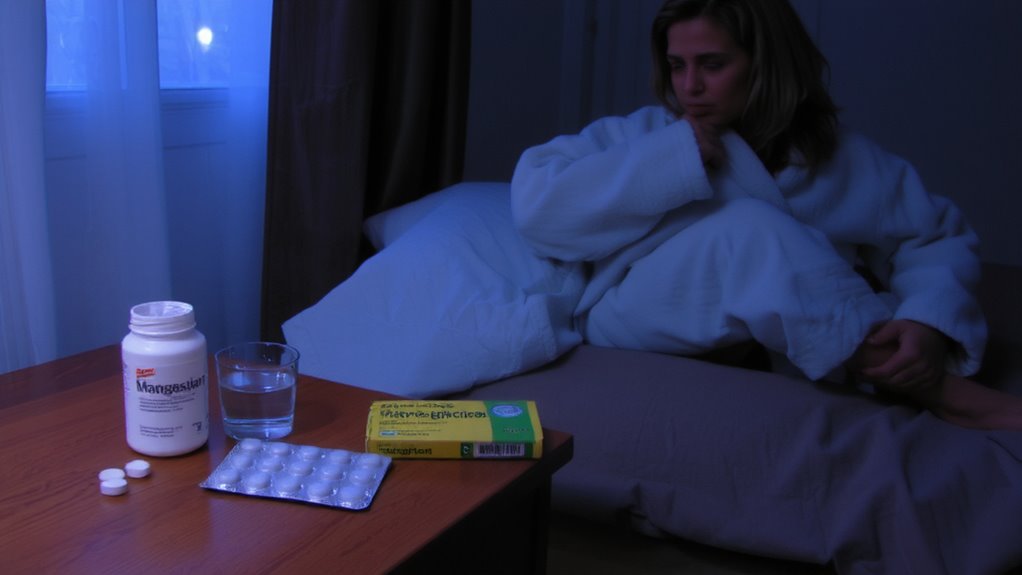
While you might not immediately link your heartburn medication to your sleep quality, long-term use of proton pump inhibitors (PPIs) can lower your magnesium levels, and that shift may be affecting how well you rest. Proton pump inhibition reduces stomach acid, which over time interferes with magnesium absorption. When your body runs low on this essential mineral, you may notice magnesium deficiency symptoms like muscle cramps, nighttime awakenings, or restlessness. These disruptions compromise sleep continuity and reduce overall sleep efficiency. Some people also report difficulty falling asleep, which can worsen if the deficiency persists. Since magnesium supports nerve function and muscle relaxation, its depletion may indirectly fuel sleep disturbances. Recognizing these effects helps you make informed choices about monitoring levels and adjusting sleep strategies safely while on PPIs. Tracking your sleep patterns with a reliable iPhone sleep app can help identify improvements when adjusting magnesium levels.
Best Magnesium Types If You Take PPIs
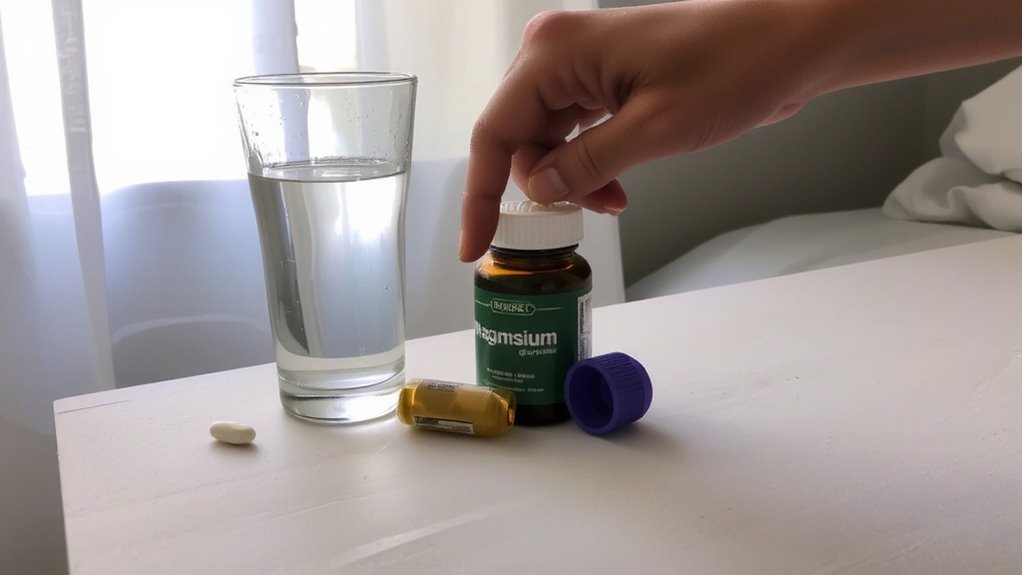
Choosing the right magnesium supplement can make a real difference in how well you sleep, especially if you’re on proton pump inhibitors that affect absorption. Since PPIs reduce stomach acid, forms like magnesium oxide may not work well for you-your body struggles to absorb them. Instead, opt for types that don’t rely on stomach acid, such as magnesium glycinate or citrate, which are more readily absorbed. You might also consider options with transdermal absorption, like magnesium oil or lotions, since they bypass the digestive system entirely. These can be especially helpful if you have ongoing absorption concerns. While dietary sources like leafy greens, nuts, and whole grains help maintain levels, they may not be enough on their own when you’re on long-term PPIs. Always speak with your healthcare provider before starting any supplement to guarantee it’s safe and properly dosed for your needs.
When to Take Magnesium for Better Sleep
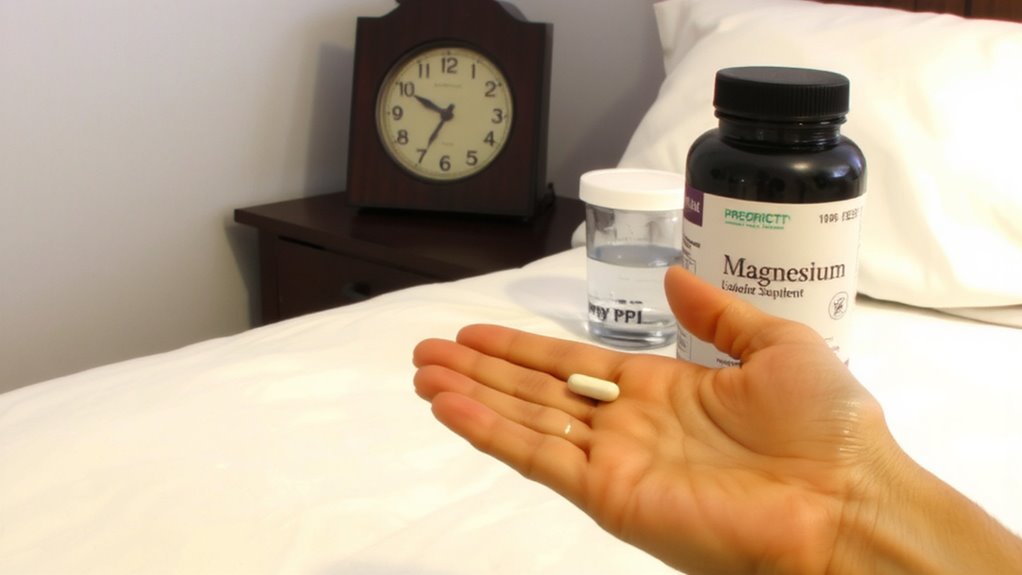
How could timing affect the way magnesium works for your sleep? Taking magnesium at the right time helps your body wind down when you need it most. For best results, take your magnesium supplement about 30 to 60 minutes before bed. This aligns with your nighttime routine, giving your body enough time to absorb it and start feeling its calming effects. Timing consistency matters-taking it at the same time each night trains your body to prepare for sleep. Whether you choose a magnesium glycinate or another form suited for PPI users, pairing it with a consistent bedtime schedule boosts effectiveness. Don’t take it too early or too late; aim for a window that fits smoothly into your pre-sleep habits. Over time, this steady approach supports better sleep. A key factor in choosing the right supplement is selecting a highly absorbable form, such as best magnesium supplements for better sleep, which can make a significant difference for those on proton pump inhibitors.
How to Take Magnesium Safely With PPIS
Since proton pump inhibitors can affect how your body absorbs certain nutrients, it’s important to take magnesium in a way that works around these changes. You should watch for potential drug interactions, especially if you’re on other medications like antibiotics or diuretics-these can interfere with magnesium or increase side effects. To reduce risks, separate your magnesium from other drugs by at least two hours. Dosage timing matters too: taking magnesium at night may support sleep, but spacing it away from your PPI helps improve availability. Start with a modest dose, like 100–200 mg of a well-absorbed form such as magnesium glycinate, and monitor how you feel. Always check with your doctor before starting supplements, particularly to adjust timing or address concerns. This simple step supports both safety and sleep quality while managing long-term PPI use.
How to Improve Magnesium Absorption on PPIs
While your body might struggle to absorb magnesium properly due to long-term PPI use, you can take practical steps to improve uptake. Supporting gut health is key-consider a probiotic or eat fermented foods like yogurt or sauerkraut to help your digestive tract function better. Magnesium absorption also benefits from nutrient synergy; pair it with vitamin B6 or zinc, which help transport and utilize magnesium more efficiently. Take your supplement with food to enhance absorption and reduce GI discomfort. Opt for forms like magnesium glycinate or citrate, which are gentler and more bioavailable. Spacing doses throughout the day may also boost retention. Since PPIs lower stomach acid, relying on these strategies helps offset reduced mineral breakdown. While results vary, consistent use and attention to diet can support better levels over time, possibly improving sleep quality as a result. Track changes over weeks to assess what works best. A high-quality Top Powder Magnesium Picks can further support optimal magnesium intake and bioavailability.
On a final note
You might struggle with sleep while on PPIs, partly due to lower magnesium from reduced absorption. Taking a well-absorbed form like magnesium glycinate or malate, ideally 30–60 minutes before bed, can help. Pair it with food to ease digestion and boost uptake. While supplements support sleep, they’re not a fix-all-monitor your response, check with your doctor, and consider testing levels to guide your choice safely.