How Innerspring Mattress Edge Support Affects Mattress Stability
Weak edges on your innerspring mattress compress over time, especially if border rods are thin or perimeter coils lack reinforcement, making the bed feel unstable when you sit or sleep near the sides. This compression reduces support, creates frame gaps, and limits usable space. Coils may separate from the border, worsening durability. Mattresses with dense foam encasements or reinforced edges resist sagging and stay stable longer. Look for warranties covering edge distortion and home trials to test stability-you’ll find better long-term performance built into the design.
Notable Insights
- Weak edge support leads to compression, reducing stability when sitting or sleeping near the perimeter.
- Frame separation from edge degradation creates gaps, compromising alignment with the bed foundation.
- Low-density foam and weak border rods accelerate edge wear, diminishing long-term structural integrity.
- Reinforced edges with dense foam or sturdy coils enhance resistance to compression and improve overall stability.
- Poor edge support restricts usable surface area and increases the risk of roll-off during sleep.
Why Your Innerspring Mattress Sags on the Edges
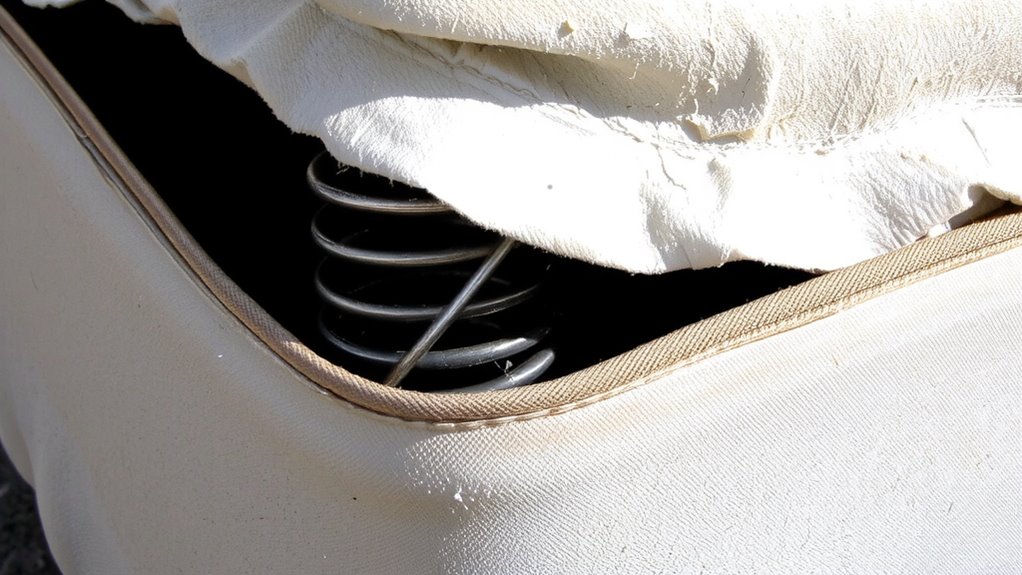
You’ve probably noticed your innerspring mattress starts to sag along the edges over time, and that’s not just in your head-it’s a common issue tied to how the mattress is built. Edge compression happens when the coils near the perimeter weaken from consistent pressure, reducing support where you sit or lie closest to the side. Without reinforced edge support, the frame separation can occur, meaning the internal coils pull away from the outer border, accelerating wear. This structural shift isn’t always visible at first but affects durability and usable sleep surface. Over time, it may impact spinal alignment, especially if you rely on the edge for sitting or sleeping. Mattresses with denser foam encasements or firmer perimeter coils resist this better. When shopping, check warranty details-many cover edge compression only after significant frame separation, so look for models offering trial periods to test edge resilience firsthand.
How Weak Edges Make Your Bed Feel Unstable
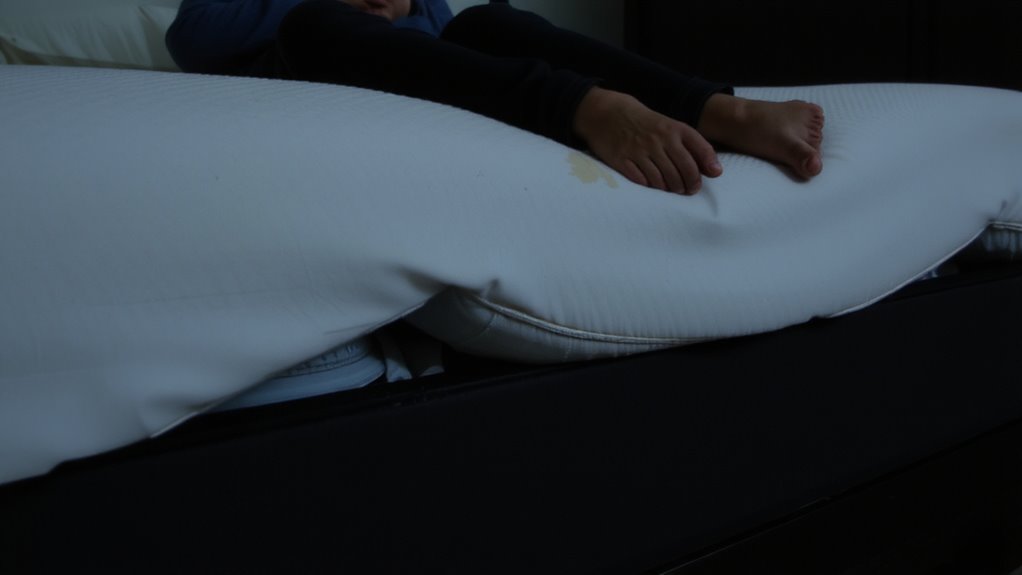
What if the reason your bed feels unsteady comes down to something you can’t even see? Weak edges in your innerspring mattress lead to noticeable edge compression, where the sides sink more than the center. This makes it harder to sit or sleep near the edge without feeling like you’ll roll off. Over time, consistent pressure causes frame separation, creating gaps between the mattress and bed frame that further reduce stability. You might shift during sleep, unknowingly contributing to discomfort or disrupted rest. A mattress with reinforced edges resists compression, supporting your full surface area. When shopping, check for strong perimeter coils or dense foam encasement. Look for trial periods and warranties that cover structural wear, so you can test edge performance risk-free. Strong edges mean a more stable, reliable sleep surface night after night.
What Design Flaws Ruin Mattress Edge Support
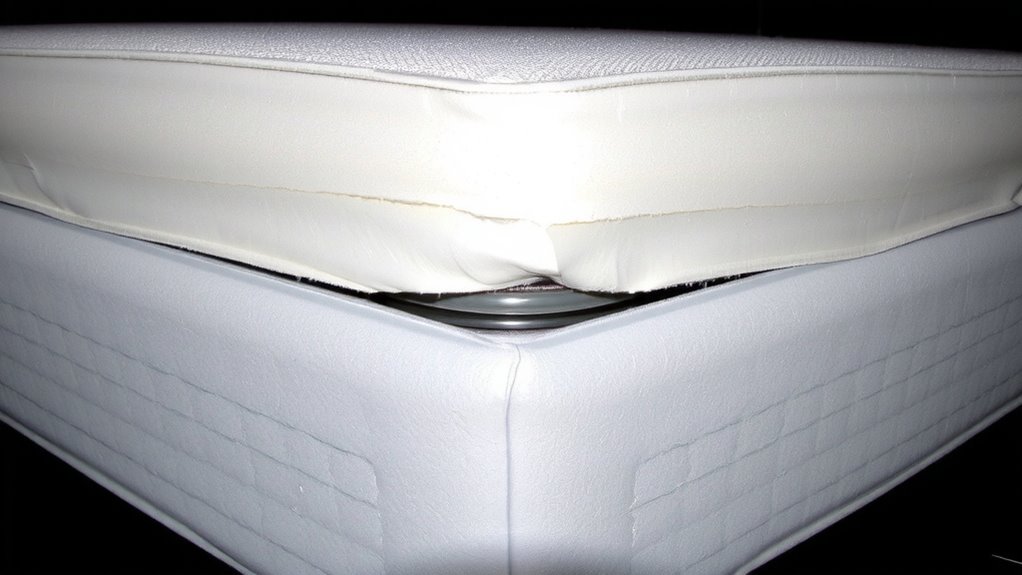
Edge support often fails because of poor internal design choices that compromise long-term durability. You’ll notice issues like material fatigue and coil misalignment, which weaken the mattress over time. These flaws reduce stability, especially when sitting or sleeping near the edge. A well-constructed innerspring should resist sagging and maintain shape, but not all do.
| Design Flaw | Impact on Edge Support |
|---|---|
| Weak border rods | Increases material fatigue, less support |
| Coil misalignment | Causes uneven weight distribution |
| Low-density foam | Compresses quickly, reduces edge firmness |
Choose models with reinforced edges and high-quality coils. Look for warranties covering sag depth, often 1.5 inches or more. Test the mattress in-store or through a trial program. Strong edge design supports better movement and sleep posture, which matters if you share the bed or need help getting in and out.
Signs Your Mattress Has Poor Edge Support
How easily does your mattress compress when you sit near the side? If it sinks deeply or feels unstable, you likely have poor edge support. You might notice visible edge wear, like sagging or indentations along the perimeter, especially where you sit most. This breakdown restricts usable sleep space and can worsen over time. Check for frame gaps-spaces between the mattress and bed frame-caused by compression; they’re a clear sign the structure is failing. These gaps not only look uneven but can let sheets slip and cause the mattress to shift. Poor edges also make getting in and out of bed harder, especially if mobility is a concern. While not directly causing sleep disorders, compromised support may disturb sleep patterns. Look for models with reinforced coils or dense foam around the border. Test mattresses in-store or through home trials, and review warranty terms that cover edge degradation.
Why Strong Edges Help You Sleep and Move Better
Even if you don’t always sleep near the perimeter, strong edges make a real difference in how comfortably and securely you move on your mattress night after night. When edges hold firm, you gain reliable support whether sitting, shifting, or sleeping near the side. This stability expands your usable comfort zones, letting you use more of the surface without sinking or rolling off. Strong edges also enhance motion isolation, meaning your movements are less likely to transfer across the mattress-helpful if you share the bed. Less disturbance can support more consistent sleep cycles, which matters if you’re managing sleep disruptions. With better edge integrity, getting in and out of bed feels smoother and safer, especially if mobility is a concern. You’re not just sleeping on a smaller center area-you’re using the full mattress as intended. This contributes to longer-term comfort and support, improving overall sleep quality without extra aids.
How to Choose an Innerspring Mattress With Durable Edges
You already know firm edges make moving on your mattress easier and help prevent roll-off, but now it’s time to focus on what to look for when selecting an innerspring model that maintains its structure over time. Check the edge materials-denser foams or reinforced coils add durability. Mattresses with high-quality support layers along the perimeter resist sagging and extend lifespan. Look for models with wrapped coils anchored to a solid edge barrier, as this boosts stability and edge retention. Compression over years is normal, but strong support layers slow degradation. Test the mattress by sitting on the edge to feel for firmness and compression. A good warranty-especially one covering edge distortion-gives you trial confidence. Don’t skip checking return policies, since real-world use reveals how well edge materials hold up. These details help you choose wisely for long-term comfort and support.
On a final note
You’ll sleep better when your innerspring mattress has reinforced edges, as they improve stability and reduce sagging. Strong edge support lets you move freely and sit comfortably without feeling like you’ll roll off. Look for models with dense foam borders or reinforced coils around the perimeter for longer-lasting performance. Check the warranty, too-strong edge construction often comes with better coverage. Test it in person or during a trial to confirm it meets your needs.