Simulating Gravity Vector Alterations on Joint Reaction Forces During Various Sleep Orientations
You experience different joint stress depending on your sleep position, as gravity pulls unevenly across hips, spine, and shoulders. Back sleeping spreads pressure evenly, easing spinal strain, while side sleeping may misalign hips without a supportive pillow. Stomach sleeping often increases neck and lower back stress. Researchers use pressure mapping and biomechanical sensors to study these forces, leading to better mattresses and pillows designed with space-tested data. Look for products with trial periods to test alignment support. There’s more to discover about how sleep surfaces respond to your body’s needs overnight.
Notable Insights
- Gravity vector changes during sleep alter joint reaction forces, affecting spinal and limb alignment.
- Back sleeping evenly distributes forces, reducing hip and spine joint stress.
- Side sleeping creates asymmetric loading, increasing shoulder and hip joint reaction forces without support.
- Stomach sleeping increases neck torsion and lumbar joint compression due to gravitational misalignment.
- Pressure mapping and biomechanical sensors help simulate how sleep positions modify joint loading under gravity.
Which Sleep Position Is Best for Joint Health?

Why do your hips and shoulders feel stiff after a night of sleep? Poor joint alignment during rest often contributes to discomfort and reduced sleep quality. Your chosen sleep position affects how evenly pressure distributes across joints. Side sleeping is common, but without proper pillow support, it may misalign hips and shoulders. Back sleeping typically supports neutral joint alignment, especially with a contoured pillow and slight knee elevation, helping maintain spinal balance. Stomach sleeping often strains the neck and pelvis, making it less ideal for joint health. Adjusting mattress firmness or using ergonomic sleep aids can improve alignment and comfort. Look for products with trial periods so you can test effectiveness. Better joint alignment doesn’t guarantee perfect sleep quality, but it reduces strain. Experiment mindfully-small changes in positioning or support often yield noticeable improvements over time. Choosing the right pillow, such as one designed for side sleepers, can significantly enhance joint support and spinal alignment. Best pillows for side sleepers are specifically engineered to fill the gap between the head and shoulder, maintaining proper neck alignment.
How Gravity Affects Joint Stress During Sleep

A significant amount of joint stress during sleep comes from how gravity pulls on your body in different positions, especially when support is uneven. You might not realize it, but poor joint alignment increases strain on your hips, shoulders, and spine. When your body curves unnaturally, spinal loading rises, which over time can lead to discomfort or disrupt rest. Gravity constantly acts on your limbs and torso, so without proper support, certain joints bear more force than they should. Adjusting your sleep setup-like using contoured pillows or supportive mattresses-helps counter these forces. These aids promote better joint alignment and reduce spinal loading, which may improve sleep quality. You’ll want to test options that balance firmness and give, ensuring they’re built to last and come with trial periods. Over time, proper support can make a noticeable, though subtle, difference in how your body feels each morning.
Back vs. Side vs. Stomach: Who Wins for Hip and Spine Relief?
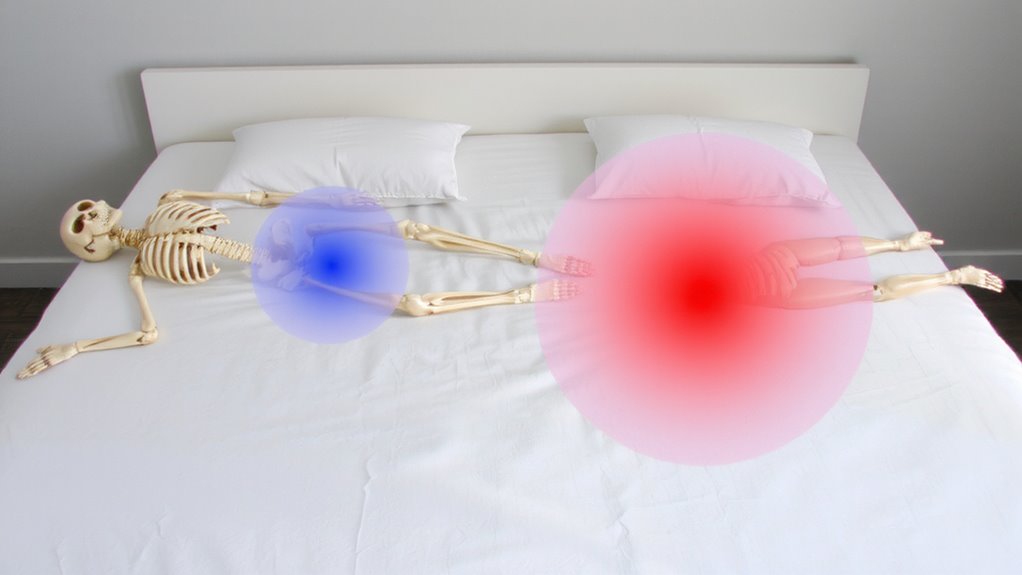
How your sleep position shapes spinal alignment and hip support might surprise you-each posture distributes gravitational forces differently, influencing comfort and long-term joint health. Sleeping on your back helps maintain neutral spinal alignment, letting your hips and spine rest evenly while promoting muscle relaxation. It’s often best for minimizing joint stress, especially if you use a supportive pillow. Side sleeping can also support spinal alignment, particularly when you tuck a pillow between your knees to keep hips level, reducing strain. However, it may compress shoulder joints unless properly cushioned. Stomach sleeping usually disrupts spinal alignment, twisting the neck and straining the lower back, limiting muscle relaxation. While some find it comfortable short-term, it’s generally less effective for joint relief. Consider experimenting with position-specific pillows or adjustable beds-many come with trial periods-to find what supports your body best overnight. Side sleepers may benefit from the pressure-relieving design of Tempurpedic mattresses for side sleepers to enhance joint comfort and spinal support.
How Scientists Measure Overnight Joint Pressure
Nighttime joint stress isn’t just felt-it’s measurable. Scientists use biomechanical sensors and pressure mapping to track how your joints respond while you sleep. These tools record real-time data on force distribution, helping researchers understand strain on hips, shoulders, and spine across different positions.
| Measurement Method | Purpose |
|---|---|
| Biomechanical sensors | Detect joint loading and movement patterns |
| Pressure mapping | Visualize contact points and force intensity |
You can benefit from sleep aids tested with these methods, as they’re designed using actual joint response data. Products backed by clinical trials often include trial periods or warranties, so you can test them confidently. While no setup fits everyone, choosing gear informed by pressure mapping and sensor studies improves your odds of finding lasting comfort. Focus on solutions with transparent testing methods. Some of the most effective options for mitigating joint strain during sleep include best sleeping pads.
How Space Research Improves Everyday Sleep Postures
What if the secret to better sleep started not on Earth, but in space? You might not realize it, but research on astronauts has reshaped how we grasp sleep postures. In microgravity, scientists observed how body alignment affects joint pressure and circulation, leading to better mattress and pillow designs that support neutral spine positioning. These improvements help maintain circadian alignment by reducing nighttime disruptions. Proper spinal support also enhances neural recovery, allowing your body to restore itself more effectively. Sleep aids like contoured pillows or adjustable bases now use space-tested data to balance comfort and function. When choosing a sleep setup, consider how materials and angles influence alignment and recovery. Look for products backed by trials measuring pressure distribution and sleep continuity. Warranties often reflect long-term performance data. Small adjustments, informed by extreme environments, can make a measurable difference in how well you sleep-no rocket science needed, just smarter choices.
On a final note
You can reduce joint stress by adjusting your sleep position based on how gravity affects your body. Side sleeping may ease spine pressure but increase hip load, while back sleeping offers more balanced support. Stomach sleeping often strains the spine. Use supportive pillows and adjustable mattresses to maintain alignment. Try different setups over a few nights, noting comfort and pain changes. Many quality sleep aids offer trial periods, so test them confidently.