How Innerspring Mattress Toppers Add Cushion Without Sacrificing Support
You can add cushion to your innerspring mattress without losing support by choosing a topper made from memory foam, latex, or high-density polyfoam. These materials provide pressure relief while maintaining responsiveness, especially in 2- to 3-inch thicknesses. A quality topper conforms to your body but still lets the coils underneath offer sturdy support. Many come with trial periods and warranties, so you can test comfort and durability-there’s more to think about regarding matching material and thickness to your sleep needs.
Notable Insights
- Toppers add a soft layer while preserving the innerspring coil system’s structural support.
- Materials like latex and high-density foam provide cushioning without collapsing under pressure.
- A 2–3 inch thickness balances comfort and alignment, maintaining responsiveness from the coils.
- Supportive foams conform to the body while resisting sagging for long-term stability.
- Toppers bridge minor sags in the mattress, enhancing comfort without compromising foundational support.
Do You Need a Topper for Your Innerspring Mattress?
Why might you consider a topper for your innerspring mattress? You may notice your mattress feels too firm or has developed worn spots, reducing both comfort and support. A topper adds a layer that enhances softness while preserving the underlying coil structure’s durability. The benefits comfort brings can ease pressure points, especially if you sleep on your side or have joint pain. You might also extend your mattress’s life by shielding it from wear. Most toppers attach securely or lie flat without shifting, maintaining consistent performance. Look for models with trial periods or warranties-these let you test the feel risk-free. While not every innerspring needs a topper, it’s a practical option if you want better sleep quality without replacing the entire mattress. Consider your sleep position, body weight, and how much support you currently feel. For those also in the market for a fresh base, exploring the best single beds can help complete your ideal sleep setup.
Memory Foam, Latex, or Down: Best Materials for Innerspring
Adding a topper to your innerspring mattress can make a real difference in comfort, especially if you’re dealing with firmness or uneven wear. When choosing between memory foam, latex, or down, consider material durability and comfort comparison. Memory foam contours closely, easing pressure points, and typically lasts 5–7 years with moderate sag risk. Natural latex offers responsive support, resists sagging, and often outlasts foam, making it strong in material durability. Down provides soft, plush comfort but requires frequent fluffing and may compress faster, reducing long-term support. In comfort comparison, foam suits side sleepers needing cushioning, latex works well for hot sleepers due to breathability, and down offers a lofty, breathable feel, ideal if you enjoy a softer surface. Check trial periods and warranties-many brands offer 10–100 night trials and 3–5 year coverage, helping you test without risk. Based on expert evaluations, the best mattress toppers combine comfort and durability, making product roundup a helpful resource for informed decisions.
Pick the Right Topper Thickness for Your Sleep Style
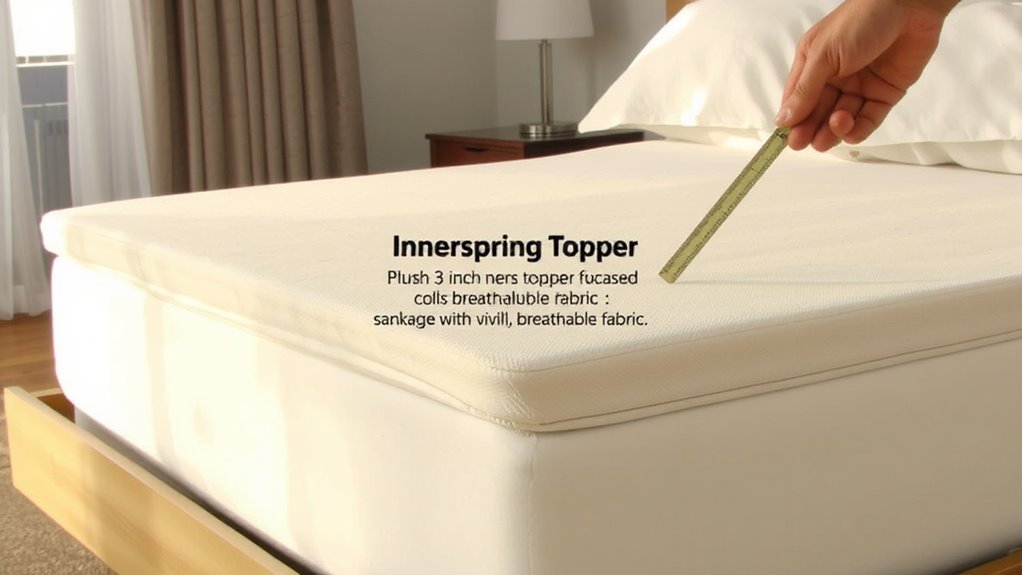
A 2- to 4-inch topper usually works best, depending on your sleep position and how firm your current mattress feels. Topper thickness plays a key role in balancing softness and support. If you’re a side sleeper, a thicker 3- to 4-inch topper can improve sleep comfort by cushioning hips and shoulders without letting you sink too deeply. Back and stomach sleepers often do better with a 2- to 3-inch option to avoid excessive sinkage that may misalign the spine. Your existing mattress firmness matters too-a thinner topper refreshes a slightly worn bed, while a thicker one better masks a very firm or sagging surface. Most quality toppers come with trial periods, so you can test the thickness risk-free. Check warranty details to guarantee long-term coverage. Choosing the right thickness helps maintain support while enhancing sleep comfort.
How to Get Pressure Relief Without Losing Bounce
You’ll want a topper that eases pressure without sacrificing the responsive feel of your innerspring mattress, and the right balance comes down to material and design. Focus on pressure relief and material density to maintain bounce. Lighter foam (3–4 lbs density) offers cushion while keeping resilience, while memory foam blends add softness without fully dampening motion response. Latex, especially in medium firmness, gives durable support and subtle give.
| Material | Pressure Relief | Bounce Retention |
|---|---|---|
| Polyfoam | Moderate | High |
| Memory Foam | High | Low to Medium |
| Latex | Medium to High | High |
Choose a 2–3 inch thickness to enhance comfort without isolating you from the spring core. Look for models with at least a 1-year trial and 5-year warranty to test long-term performance. This guarantees you get cushion where needed but still feel supported and mobile.
Fix a Sagging Innerspring Mattress With a Topper
When your innerspring mattress starts to sag, a well-chosen topper can restore a more even sleeping surface without completely changing the feel you’re used to. It helps correct mattress alignment by adding a supportive layer that bridges the dip, redistributing pressure more evenly across the surface. Models with added edge reinforcement increase durability and prevent the topper from compressing too quickly along the sides. This is especially helpful if you sleep near the edge or share the bed with a partner. Memory foam and latex toppers tend to offer the most consistent support for sag correction, though high-density polyfoam works well too. Look for at least a 3-inch thickness to adequately address deeper sags. Many quality toppers come with trial periods and warranties, letting you test firmness and support risk-free. A good fit improves spinal alignment and can ease discomfort linked to poor sleep posture. For budget-conscious shoppers, some of the best mattress toppers for a better night’s sleep combine performance and value in a single highly-rated option.
Best Innerspring Mattress Topper by Sleeping Position
Though your sleeping position plays a key role in how well a mattress topper supports you, the right pick can make a noticeable difference in comfort and alignment. For side sleepers, look for enhanced cushioning that delivers side sleeper comfort by relieving shoulder and hip pressure. Back sleepers benefit from medium-firm support that promotes spinal alignment and offers back pain relief. Stomach sleepers should choose a thinner, firmer topper to prevent excessive sinking.
| Sleeping Position | Recommended Topper Type |
|---|---|
| Side | Medium to thick, plush |
| Back | Medium-firm, supportive core |
| Stomach | Thin, firm |
| Combination | Balanced cushion and support |
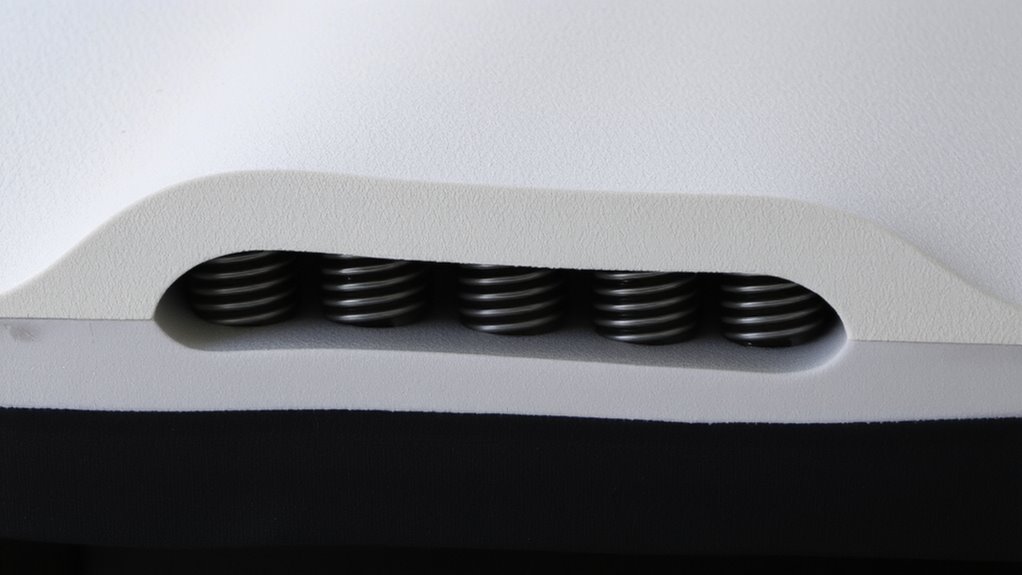
Innerspring toppers with pocketed coils help maintain airflow and structural response, improving long-term support. Many models come with trial periods, so you can test fit and return if needed. Make sure the warranty covers sagging or coil defects.
Maintaining Your Mattress Topper
How can you extend the life of your innerspring mattress topper while keeping it supportive and clean? Regular cleaning routines help remove dust, sweat, and allergens that build up over time. Spot clean with a mild detergent and let it air dry completely-never machine wash, as this can damage the internal coils. Use a protective cover to minimize stains and wear. Rotate the topper every few months to guarantee even support and prevent sagging. When not in use, follow proper storage tips: keep it in a cool, dry place and avoid folding, which can bend the springs. Store it flat or roll it loosely if the manufacturer allows. Most toppers come with a trial period and limited warranty, so review those details before making long-term use decisions. This care helps maintain comfort and structural integrity over time.
On a final note
A topper can improve comfort on an innerspring mattress without sacrificing support if you choose wisely. Match the material-memory foam, latex, or down-to your needs: foam offers pressure relief, latex adds bounce, and down brings softness. Pick 2–3 inches thick for balance. Look for breathable covers and at least a 1-year trial with warranty. This helps guarantee comfort, durability, and a better night’s sleep.