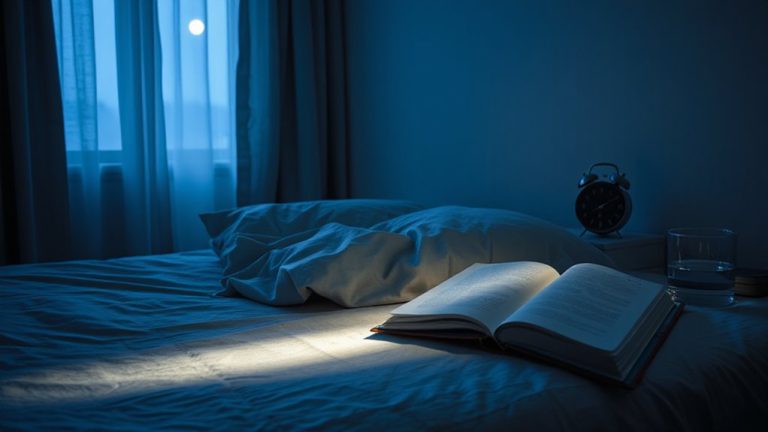
Seasonal Affective Disorder and Sleep: Managing Winter Sleep Pattern Changes
Shorter days and low sunlight worsen sleep by disrupting your circadian rhythm and delaying melatonin release, often linked to Seasonal Affective Disorder. Use a 10,000 lux lightbox within an hour of waking, placing it 16–24 inches away for 20–30 minutes to reset your rhythm. Stick to a consistent bedtime, dim lights at night, and limit caffeine after noon. Eat omega-rich foods and stay hydrated to support energy and sleep. More strategies follow for lasting improvement.
Notable Insights
- Use morning light therapy for 20–30 minutes to regulate circadian rhythm and improve sleep onset.
- Maintain a consistent bedtime to stabilize sleep-wake cycles disrupted by seasonal affective disorder.
- Limit afternoon napping to prevent interference with nighttime sleep and reduce sleep cycle disruption.
- Dim lights and avoid screens before bed to support natural melatonin release and promote relaxation.
- Eat omega-rich foods and stay hydrated while avoiding caffeine after noon to enhance sleep quality.
How SAD Ruins Your Winter Sleep
While shorter days and reduced sunlight during winter might seem like a minor shift, they can substantially disrupt your sleep if you’re dealing with Seasonal Affective Disorder (SAD). You might notice mood swings that make winding down at night harder, or energy crashes in the late afternoon that tempt you into long naps, throwing off your sleep schedule. These shifts affect your circadian rhythm, often delaying sleep onset or causing frequent awakenings. Without consistent, restful sleep, daytime fatigue worsens, creating a cycle that’s tough to break. You may consider light therapy boxes that mimic natural sunlight-many models offer adjustable brightness, timers, and UV filtration. Look for ones with 10,000 lux output and a standing warranty of at least one year. Using them early in the morning can help stabilize mood and energy, indirectly supporting better sleep timing and quality over time.
Why Less Sunlight Wrecks Your Sleep
You’re not imagining it-less sunlight really does disrupt your sleep, and there’s a clear reason why. Reduced daylight throws off your internal clock, leading to circadian disruption and a melatonin imbalance. Your body relies on light cues to know when to wake and when to rest. Without enough sunlight, those signals get confused. A wake-up light can help reinforce these natural light cues by simulating a sunrise and supporting a consistent circadian rhythm.
| Factor | Effect | Result |
|---|---|---|
| Less daylight exposure | Lowers serotonin | Low mood, fatigue |
| Delayed sunrise | Shifts circadian rhythm | Later wake time |
| Dim ambient light | Prolongs melatonin release | Harder to wake up |
| Evening screen use | Worsens circadian disruption | Poor sleep quality |
This shift can leave you groggy or wide awake at odd times. Recognizing these patterns helps you make informed choices about sleep habits and potential aids.
How to Use Light Therapy for Better Sleep
What if a simple daily routine could help reset your sleep cycle during the darker months? Light therapy might be your answer. Using a lightbox for morning exposure helps regulate melatonin and supports circadian rhythm. Aim for 20 to 30 minutes soon after waking, ideally within an hour of sunrise. Place the device about 16 to 24 inches from your face, angled slightly away from direct eye contact. Most units offer 10,000 lux output, which is standard for effectiveness. Adjustable duration settings let you gradually build tolerance, especially if you’re new to treatment. Look for models with a clean white light and minimal UV emission. Consistent use over one to two weeks often improves sleep onset and mood. While results vary, many people notice changes within 10 days. Check return policies and try units with at least a 30-day trial to assess fit.
Fix Your Winter Bedtime Routine
Starting your day with light therapy helps set your internal clock, and now you can build on that progress by fine-tuning your winter bedtime routine. Creating a consistent, relaxing routine signals your body that it’s time to wind down. Focus on comfort and predictability-use warm blankets and dim lighting to enhance the cozy ambiance. Avoid screens at least 30 minutes before bed, as blue light can delay melatonin release. Consider a warm bath or light reading to ease the shift into sleep. Incorporating best aromatherapy products can further promote relaxation and improve sleep quality.
| Activity | Benefit |
|---|---|
| Reading a book | Calms the mind |
| Using warm blankets | Increases comfort, promotes warmth |
| Dimming lights | Supports melatonin production |
| Sipping herbal tea | Aids relaxation |
| Setting a fixed bedtime | Stabilizes sleep-wake cycle |
These small changes improve sleep quality without costly tools or drastic measures.
Eat These Foods to Beat Winter Fatigue
Winter fatigue can drag down your energy and focus, but your diet may hold the key to staying sharp and rested. Eating balanced meals supports steady sleep cycles and alertness. Include Omega rich snacks like walnuts, chia seeds, or fatty fish-you’ll fuel brain function and reduce daytime sluggishness. These foods aid melatonin regulation, helping your body align with shorter winter days. Don’t overlook hydration habits-dehydration worsens fatigue and disrupts sleep quality. Sip water consistently, even when you’re not thirsty, and limit caffeine after noon to protect nighttime rest. Pair these choices with a consistent sleep schedule to strengthen circadian rhythm stability. Small dietary shifts improve sleep performance over time, letting your body recharge more fully. You don’t need drastic changes-just steady habits that support energy and recovery. With time, better hydration habits and Omega rich snacks can make winter days feel more manageable.
When to See a Doctor for Winter Depression
If you’ve noticed your mood dipping each winter, and it’s starting to interfere with sleep, daily focus, or motivation, it might be time to talk to a doctor. Persistent low energy, oversleeping, or trouble getting out of bed could signal seasonal depression. A seasonal screening helps identify patterns linked to light changes and sleep disruption. Don’t wait until symptoms worsen-early professional consultation improves outcomes.
| Symptom | Duration | When to Seek Help |
|---|---|---|
| Low mood | 2+ weeks | If affecting sleep or work |
| Sleep changes | Ongoing | When impacting daily function |
| Loss of interest | Recurring | Begin seasonal screening |
A doctor can guide you on light therapy, sleep aids, or behavioral strategies. Professional consultation guarantees safe, personalized care.
On a final note
You might notice your sleep shifting when days shorten, but tracking these changes helps you act early. Light therapy lamps, used each morning, can reset your rhythm by mimicking sunlight. Combine this with a consistent bedtime routine and meals rich in vitamin D and omega-3s to support energy and sleep quality. If fatigue or low mood lingers past a few weeks, talk to your doctor-effective treatments exist, and many insurance plans cover therapy or prescribed devices with a referral.