Shift Work Sleep Disorder: How Night Light Exposure Disrupts Sleep
Night shifts expose you to light when your body expects darkness, confusing your internal clock and suppressing melatonin, the hormone that signals sleep. Blue light from screens and overhead lights is especially disruptive, tricking your brain into staying alert. This misalignment contributes to shift work sleep disorder. Blocking light during daytime sleep with blackout curtains or masks helps, while wearing sunglasses after your shift reduces nighttime exposure. Using dim, warm lights at home supports better sleep. Strategic light management improves rest over time. You’ll find practical ways to adjust your environment for better results.
Notable Insights
- Nighttime light exposure suppresses melatonin, disrupting circadian rhythms and contributing to shift work sleep disorder.
- Blue light is especially disruptive, signaling the brain to stay awake and delaying sleep onset.
- Working under bright light at night confuses the body’s internal clock, worsening sleep quality.
- Wearing blue light blocking glasses during night shifts can reduce melatonin suppression and improve sleep.
- Using blackout curtains or sleep masks helps maintain darkness for daytime sleep, supporting circadian alignment.
How Night Shifts Disrupt Your Circadian Rhythm
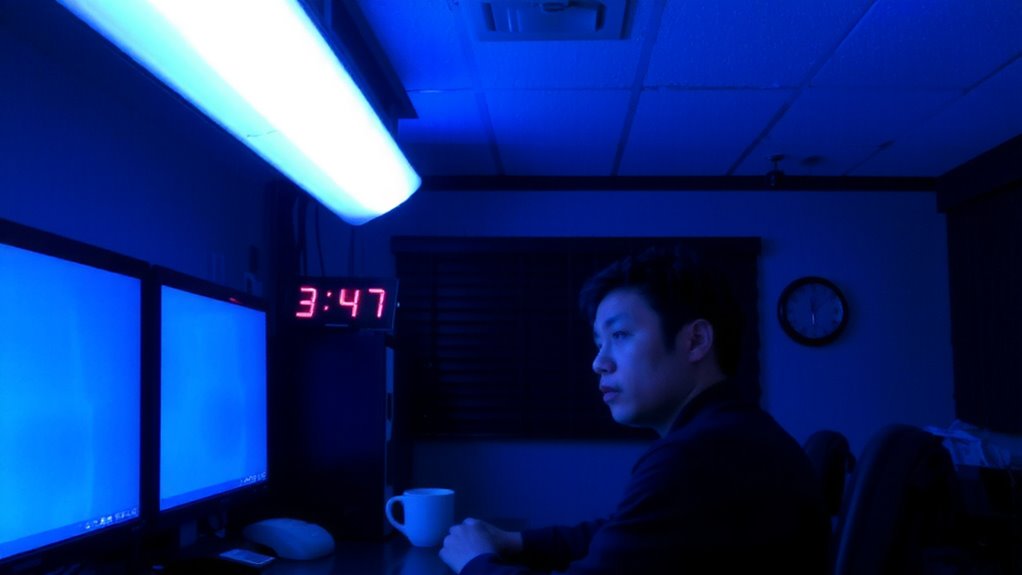
While your body is wired to stay alert during the day and wind down at night, working night shifts forces you to stay awake and active when your internal clock expects sleep. This causes circadian misalignment, where your natural rhythm conflicts with your work schedule, making focus harder and sleep less restful. Over time, you might develop sleep phase delay, pushing your sleep window later even on days off, which worsens fatigue. Your body struggles to adjust, so consistent sleep hygiene becomes essential. Consider darkening curtains, noise control, and possibly melatonin supplements after consulting a doctor. Short naps before shifts can help, but long-term solutions may include timed light exposure therapy or prescribed sleep aids with clear instructions. Evaluating these options with a sleep specialist guarantees choices align with your health needs and lifestyle, improving both sleep quality and daily functioning without disrupting your long-term well-being.
How Light Suppresses Melatonin and Disrupts Sleep
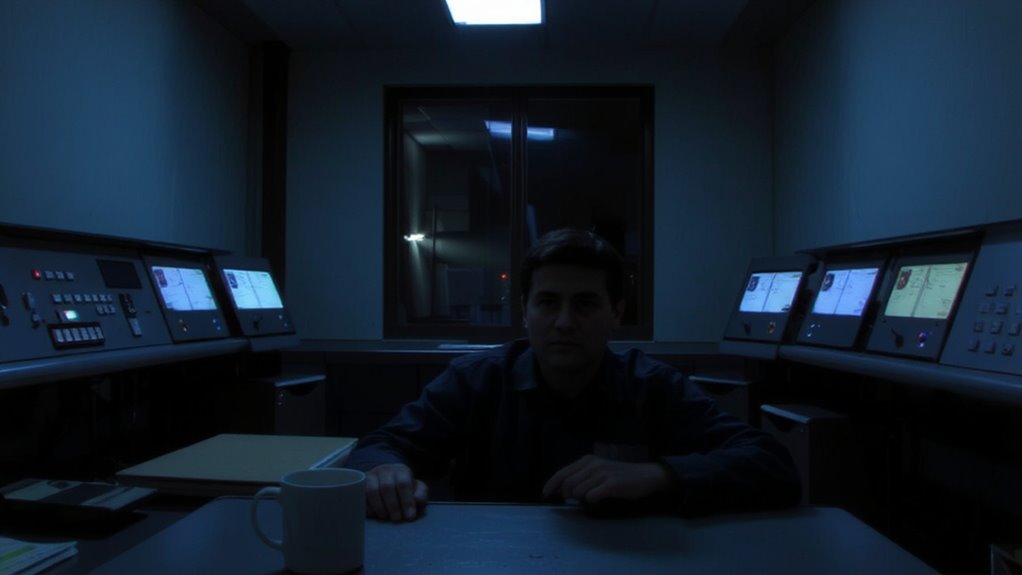
Your body produces melatonin, a hormone that signals it’s time to sleep, mainly in response to darkness. When you’re exposed to light at night, especially during shift work, it triggers melatonin suppression, making it harder to fall asleep when you need to. This interference contributes to circadian misalignment, where your internal clock doesn’t match your work and sleep schedule. Over time, that can worsen sleep quality and lead to shift work sleep disorder. Wearing blue light blocking glasses can help mitigate this effect by filtering out the most disruptive wavelengths of light during nighttime exposure.
| Light Condition | Melatonin Level | Sleep Onset Speed |
|---|---|---|
| Complete Dark | High | Fast |
| Dim Light | Moderate | Average |
| Bright Light | Low | Slow |
| Blue-Enriched | Very Low | Very Slow |
Managing light exposure helps support better sleep patterns and reduces circadian misalignment.
Why Blue Light at Night Harms Shift Workers

Because blue light closely matches the wavelength that your brain interprets as daytime, it’s especially effective at suppressing melatonin, more so than other types of light. Your retinal sensitivity peaks in the blue spectrum, making these wavelengths trigger stronger signals to your brain’s clock. That means when you’re exposed to blue light during night shifts, your body gets confused-it thinks it’s morning, so it delays sleep and disrupts your natural cycle. Over time, this contributes to a persistent hormonal imbalance, affecting mood, alertness, and long-term health. Even dim screens or overhead LEDs emit enough blue light to interfere. For shift workers, recognizing this helps guide smarter choices-like adjusting screen settings or using warmer lighting-before relying on sleep aids. These small changes support better alignment of your internal clock, improving sleep quality without immediate need for intervention. Selecting the right lighting, such as sleep-friendly lighting, can significantly reduce circadian disruption during night shifts.
Blocking Light for Daytime Sleep
Even if you’ve just finished a night shift and feel exhausted, your body may still struggle to fall asleep in daylight without proper light control. Creating an effective light blocking setup is essential for signaling your brain that it’s time to rest. Improving your sleep environment helps stabilize circadian rhythms and supports better sleep quality.
| Feature | Benefit |
|---|---|
| Blackout curtains | Block 99% of incoming light |
| Sleep masks | Portable and effective for travel |
| Room darkening paint | Reduces light reflection |
| Sealed window coverings | Prevents light leaks at edges |
Choose options based on your space and routine. Many blackout products offer trial periods, so test what works. Consistent light blocking improves your sleep environment, helping you fall asleep faster and stay asleep longer.
Using Light Strategically After Your Shift
When you’re leaving a night shift, controlling your exposure to light can make a real difference in how well you adjust to sleeping during the day. Proper light management after your shift helps signal your body that it’s time to wind down. Wearing sunglasses on your commute home reduces blue light exposure, which can interfere with melatonin production. Avoid bright screens and keep indoor lighting dim to support your post shift routines. Use blackout curtains or a sleep mask once in bed to maintain darkness. These steps strengthen your body’s natural sleep cues. While individual responses vary, consistent use improves sleep onset and quality over time. Adjustments don’t require special tools-just intentional timing and environment control. Small changes in light exposure can enhance daytime sleep without medication. Trial the approach for several work cycles to assess improvement. For maximum darkness, consider installing best light-blocking curtains to further optimize your sleep environment.
Can Light Therapy Treat SWSD?
How can you reset your body clock when shift work throws it off? Light therapy might help correct circadian misalignment by exposing you to bright light at strategic times. If you work nights, using bright light during your shift can signal your brain to stay alert, mimicking daytime. Then, avoiding sunlight afterward-wearing sunglasses, for example-helps maintain this adjusted rhythm. Over time, this consistent pattern may reduce hormonal imbalance, especially in melatonin and cortisol, which regulate sleep and stress. Devices like light boxes or wearable lamps offer controlled brightness, typically 2,500 to 10,000 lux. Most recommend 20–60 minutes of exposure. Some come with timers and adjustable settings, and trial periods let you test effectiveness. While not a cure, light therapy, when combined with good sleep hygiene, can improve sleep quality and daytime recovery for some shift workers.
On a final note
You’ll sleep better when you control light exposure around your shifts. Use blackout curtains and a sleep mask to block daylight when resting. After your shift, try blue-light-blocking glasses to reduce alertness. Light therapy lamps may help reset your rhythm over time. Consistency matters-even on days off, stick to a stable sleep schedule. Test small changes first, see what works, and consult a sleep specialist if problems continue.