Evening T’ai Chi for Sleep & Balance: 10-Minute Routine
You can use gentle evening T’ai Chi to improve balance and sleep by pairing slow movements like Cloud Hands and Parting the Horse’s Mane with deep, rhythmic breathing. This practice calms your nervous system, eases mental tension, and sharpens body awareness, helping you fall asleep faster and reduce nighttime anxiety. Practicing 30–60 minutes before bed in a quiet, dimly lit space supports rest readiness. With consistency, you may notice better coordination and fewer sleep disruptions-especially when combined with light, sleep-friendly evening habits. There’s more to explore about tailoring the routine to your nightly flow.
Notable Insights
- Practice gentle T’ai Chi 30–60 minutes before bed to align with your body’s natural wind-down phase.
- Focus on slow, flowing movements like “Cloud Hands” to synchronize breath and movement for relaxation.
- Use moonlight visualization and mindful breathing to calm the nervous system and prepare for sleep.
- Improve balance and reduce fall risk by practicing weight shifts and posture alignment in low light.
- Maintain consistency with a 10-minute routine in a quiet, clutter-free space for best results.
How Evening T’ai Chi Boosts Sleep and Balance

You might find that slipping into a gentle evening T’ai Chi routine helps quiet your mind and steady your body at the end of a long day. Practicing breath synchronization-matching slow, deep inhales and exhales to your movements-supports nervous system balance, which may ease the shift into restful sleep. Over time, this consistency can improve both physical stability and sleep onset, offering a natural complement if you’re considering sleep aids. Adding moonlight visualization, where you picture cool, soft light settling over you, may deepen relaxation and enhance mental focus. These elements work together to promote awareness and coordination, supporting balance during daily activity. Unlike some sleep interventions, T’ai Chi requires no special equipment and carries minimal risk when performed gently. It’s worth trying for several weeks to assess improvements in nighttime rest or steadiness on your feet. Results vary, but many report subtle, lasting benefits.
3 Simple T’ai Chi Moves for Relaxation
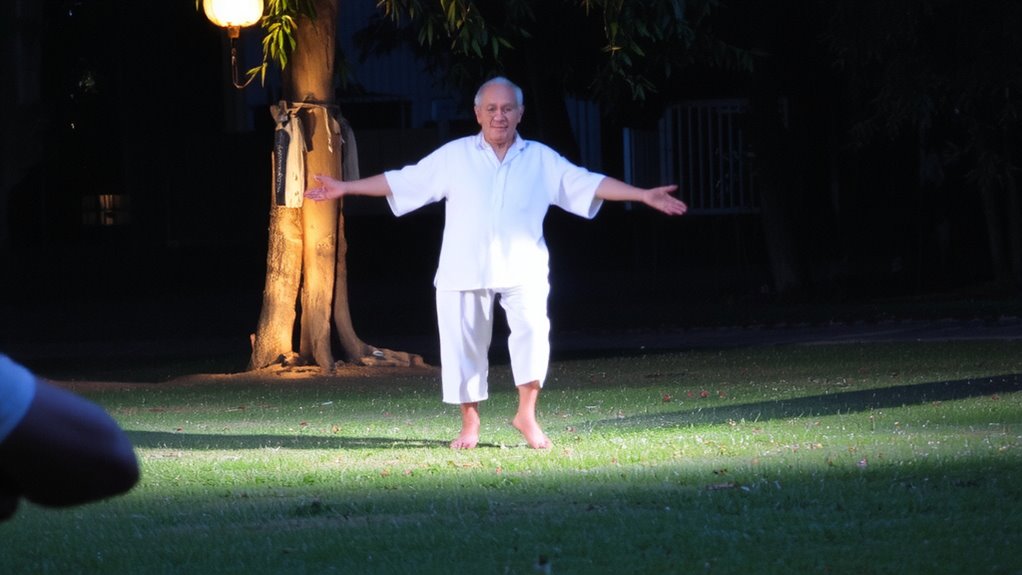
While starting with just a few basic movements, you can ease into T’ai Chi comfortably at home with minimal space and no equipment. Try the “Parting the Horse’s Mane” or “Wave Hands Like Clouds” to encourage flow harmony and reduce mental clutter. These moves rely on slow, deliberate motions that promote posture alignment, helping your body unwind naturally. As you shift weight between feet, focus on even breathing and smooth shifts-this supports balance and signals your nervous system it’s time to rest. Gentle arm circles and shoulder rolls maintain joint mobility while enhancing circulation. Practicing these simple forms nightly may reduce reliance on sleep aids by improving natural sleep readiness. Over time, consistent movement builds awareness of tension patterns, letting you adjust before bedtime. There’s no need for special gear or setup-just comfortable clothes and a few square feet. With regular trial, you’ll notice improved relaxation and better-aligned posture.
Build Your 10-Minute Evening Routine at Home
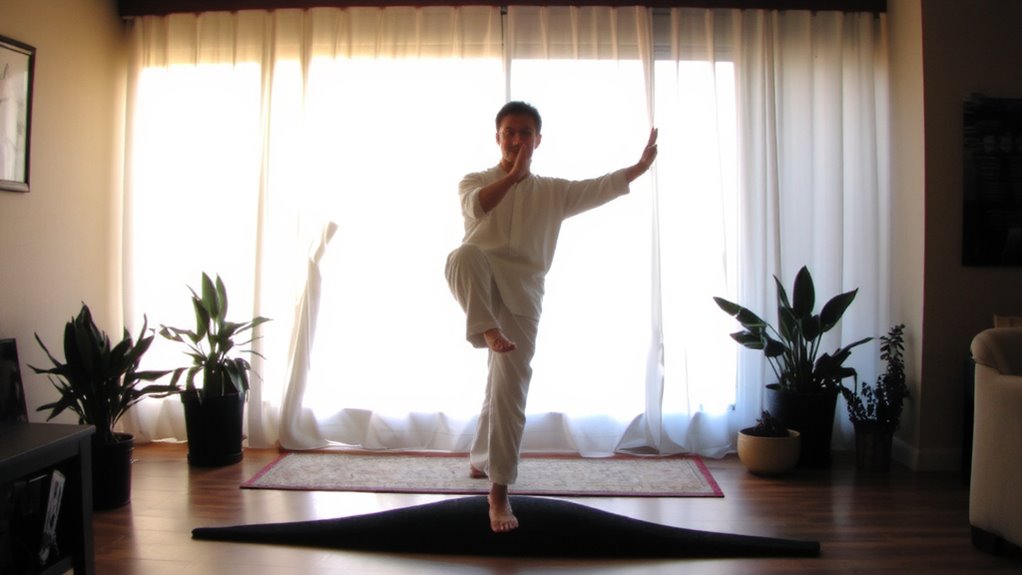
A focused 10-minute routine can make a noticeable difference in how easily you wind down each night. Start with three minutes of gentle T’ai Chi movements like Cloud Hands and Parting the Horse’s Mane to ease tension and improve balance. Follow with two minutes of slow breathing and personal reflection-think about your day without judgment, which may help reduce stress linked to sleep issues. Then, spend three minutes on seated stretches to release tight muscles, especially in the neck and lower back. Finish with two minutes of mindful awareness, noting how your body feels. If you’ve considered sleep aids, this routine might reduce reliance on them over time. Pair it with light evening nutrition-like a small banana or herbal tea-to avoid discomfort. Try this consistently for a week to assess effects on your sleep quality and energy the next day.
Set the Right Time and Space to Practice
Consistency in your evening routine starts with choosing the right time and place to practice. Pick a time about 30–60 minutes before bed so your body begins associating T’ai Chi with winding down. Aim for a quiet environment free from interruptions like phones or loud household noise. Your lighting setup should be soft-dim lamps or candles work well to signal relaxation without strain. You’ll need about 3–5 square feet of clear space, preferably on a non-slip surface. Keep the area clutter-free to avoid distraction or imbalance.
| Feature | Recommendation |
|---|---|
| Best Time | 30–60 min before bedtime |
| Noise Level | Quiet environment |
| Lighting Setup | Soft, warm lighting |
| Floor Surface | Flat, non-slip |
| Space Needed | 3–5 sq ft, uncluttered |
How T’ai Chi Reduces Insomnia and Fall Risk
Tension, especially when carried into bedtime, can disrupt sleep patterns and weaken stability over time. Practicing gentle T’ai Chi in the evening helps release that tension through slow, deliberate movements and focused breathing techniques. These techniques calm your nervous system, making it easier to fall asleep and stay asleep. You’ll also develop mindfulness practices that keep your attention in the present, reducing nighttime anxiety linked to insomnia. Over time, improved body awareness and balance from regular practice lower your risk of falls, especially in low-light conditions. T’ai Chi doesn’t require special equipment or medication, offering a natural approach to better sleep and safety. While it won’t replace medical treatment for severe sleep disorders, it can reduce reliance on sleep aids. Try a short nightly session for several weeks-many notice improvements in sleep quality and coordination within a month. Consistency matters more than duration.
On a final note
You can improve balance and sleep by practicing gentle t’ai chi each evening. These slow, controlled movements relax your nervous system and sharpen coordination. Doing just 10 minutes nightly may reduce insomnia symptoms and lower fall risk over time. Try it consistently for several weeks to assess results. While not a substitute for medical treatment, t’ai chi complements other sleep strategies and may reduce reliance on sleep aids.