How to Talk to Your Doctor About Delayed Sleep Phase Disorder Symptoms
Start by telling your doctor how late sleep onset and morning struggles affect your daily life. Bring a sleep diary showing your actual sleep patterns over 1–2 weeks. Mention consistent delays-like falling asleep after 2 a.m. despite trying earlier bedtimes. Ask if delayed sleep phase disorder could be the cause. Share details on light exposure, melatonin use, and fatigue. They may suggest actigraphy or other tests. You’ll find ways to align your rhythm with daily demands.
Notable Insights
- Explain how your delayed sleep onset and wake times interfere with daily responsibilities and well-being.
- Share a detailed sleep diary tracking bedtime, sleep onset, and wake times over 1–2 weeks.
- Highlight consistent patterns, including difficulty falling asleep early and extreme morning grogginess.
- Mention long-term nature of symptoms, not just occasional sleep problems.
- Ask directly if Delayed Sleep Phase Disorder could be the cause and request further evaluation.
What Is Delayed Sleep Phase Disorder (DSPD)?
A late-night rhythm might be more than just a habit-it could be a sign of Delayed Sleep Phase Disorder (DSPD). Your circadian rhythm, the internal clock regulating sleep and wake times, runs several hours behind the typical schedule. This means you naturally fall asleep much later and wake up later, even if you try to adjust. It’s not laziness-it’s a real shift in your body’s timing. Melatonin therapy may help reset your circadian rhythm when timed correctly, usually taken a few hours before your desired bedtime. Treatment often combines light exposure in the morning with behavioral changes. While melatonin is available over the counter, its effectiveness depends on proper dosage and timing. Speaking with your doctor guarantees you use it safely and appropriately. Understanding DSPD helps you make informed choices about sleep strategies and possible therapies.
Could You Have DSPD? Common Symptoms to Watch For
Ever wonder why you can’t seem to fall asleep until way past midnight, no matter how hard you try? If your sleep patterns consistently push bedtime later, you might be dealing with a shifted circadian rhythm. You’re not lazy or undisciplined-your body’s internal clock simply runs on a different schedule. Common signs include trouble falling asleep before 2 or 3 a.m., even when you’re tired, and extreme difficulty waking up in the morning. You may feel most alert at night and foggy during the day. These symptoms aren’t just inconvenient; they can disrupt work, school, or relationships. DSPD isn’t occasional insomnia-it’s a long-term mismatch between your natural sleep tendencies and typical daily demands. If this sounds familiar, it’s worth considering whether your circadian rhythm could be the cause.
How to Track Your Sleep for a DSPD Evaluation
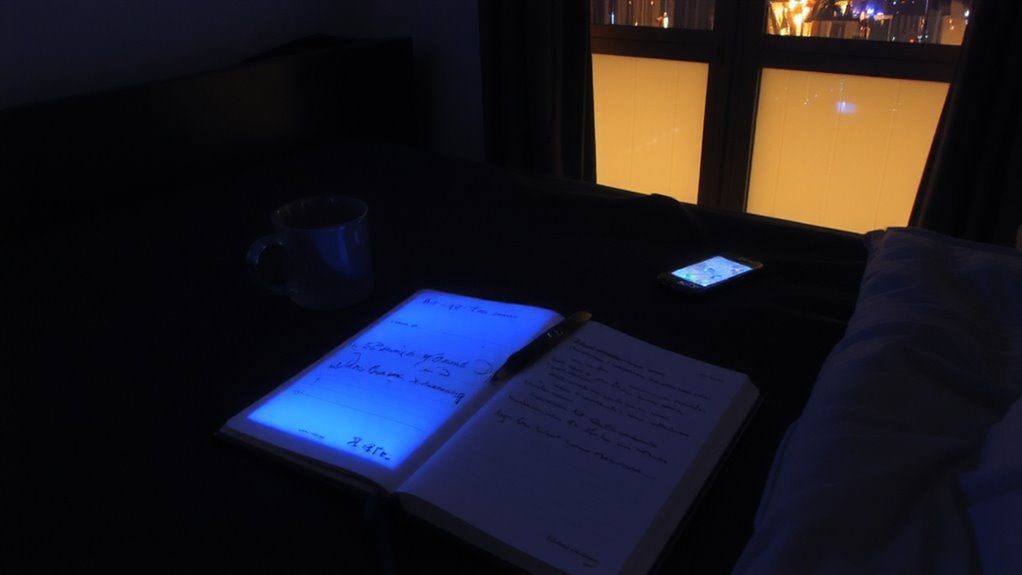
You’ve noticed the pattern-nights when sleep won’t come until the early morning hours and mornings that feel like uphill battles-and now it’s time to gather proof of how your rhythm truly operates. A sleep diary is your best tool for tracking this over 1–2 weeks. Write down your nightly bedtime, actual sleep onset, and morning wake time. Note any naps, caffeine use, or sleep aids. Bedtime consistency matters-even on weekends-to reveal your body’s natural tendencies.
| Day | Bedtime | Sleep Onset |
|---|---|---|
| Mon | 11:30 PM | 2:00 AM |
| Tue | 12:15 AM | 2:45 AM |
| Wed | 1:00 AM | 3:20 AM |
| Thu | 11:45 PM | 1:50 AM |
Track honestly and consistently. This data helps identify delays and supports a clear DSPD evaluation.
How to Bring Up DSPD With Your Doctor
Why does falling asleep at a “normal” hour feel nearly impossible, even when you’re exhausted? If your sleep patterns are consistently hours behind the rest of the world, it might be time to talk to your doctor. Start the conversation by explaining how your delayed sleep affects your daily life. You can mention the lifestyle impact-like struggling to wake up for work or missing morning responsibilities. Bring your sleep log to show clear trends in your sleep patterns over time. Say you’ve noticed this isn’t just a habit, but a long-term issue. Be direct but calm: ask if Delayed Sleep Phase Disorder could be a possibility. Doctors are more likely to entertain DSPD when you present organized records and specific concerns about timing and function. You don’t need to push for a diagnosis-just open the door to evaluation.
Symptoms to Share at Your Appointment
What does your nightly routine actually look like, and how has it changed over time? You’ve probably noticed that your nighttime habits have shifted, making it harder to fall asleep at a conventional hour. Share specific details with your doctor, like when you actually fall asleep and wake up, even on weekends. Bring your sleep diary to show patterns over several weeks-it’s one of the most helpful tools for spotting delayed sleep phase disorder. Mention how fatigue affects your daily life, such as trouble concentrating or low energy. Describe any routines before bed, like screen use or caffeine, since these can influence your sleep cycle. Be honest about how long you’ve struggled and whether you’ve tried changing your habits. Your doctor will use this info to understand your case.
Questions to Ask About DSPD Testing
How do doctors confirm whether you have delayed sleep phase disorder? They usually rely on sleep history, actigraphy, and sometimes tests like polysomnography or melatonin level measurements. Ask your doctor how these tools apply to your case. Here’s what to keep in mind:
| Test Type | What It Tells You |
|---|---|
| Actigraphy | Tracks sleep-wake patterns over days |
| Polysomnography results | Rules out other sleep disorders |
| Melatonin levels | Shows timing of your body’s internal clock |
| Sleep diary analysis | Confirms consistency of delayed sleep |
Polysomnography results help eliminate conditions like sleep apnea. Melatonin levels indicate when your body starts preparing for sleep. These tests together provide a clearer picture of your circadian rhythm. You’ll want to know how long testing takes, whether insurance covers it, and if home testing options are available. Ask if results typically require a follow-up visit. Understanding each step helps you stay informed without feeling overwhelmed.
What to Do While Waiting for a DSPD Diagnosis
While you’re waiting for a diagnosis, sticking to a consistent sleep routine can help stabilize your body’s internal clock, even if your natural rhythm feels out of sync. Focus on good sleep hygiene by creating a calm bedtime routine, avoiding screens an hour before bed, and keeping your bedroom cool, dark, and quiet. These habits support better sleep quality regardless of your cycle. Morning light therapy can also help shift your rhythm earlier-use a light box within 30 minutes of waking for 20–30 minutes, positioning it about 16–24 inches from your face. Natural sunlight works, too, if you can get outside early. Avoid bright light in the evening, as it may delay your sleep further. Though changes take time, tracking your sleep patterns and responses to routines can provide useful info for your doctor. Consistency and small adjustments now may ease symptoms while you await a formal evaluation. Using a Top Bedroom Humidifiers can improve air moisture levels, potentially enhancing sleep comfort for those sensitive to dry air.
On a final note
You know your sleep patterns best, so tracking them helps spot delays in your natural cycle. If symptoms like trouble falling asleep or waking up on time persist, discussing them with your doctor makes sense. Bring notes, ask about testing, and consider how lifestyle or light exposure affects your rhythm. Treatment options exist, and a proper diagnosis guides effective, personalized care without guessing.