How Innerspring Mattress Construction Affects Motion for Light Sleepers
Your innerspring mattress’s construction affects how much motion you feel when your partner moves. Connected coils transfer more movement, while pocketed coils reduce it by compressing independently. Thicker coils (lower gauge) add stability, and higher coil counts with quality foam layers help absorb motion. Foam over 1.5 pounds per cubic foot and at least 2 inches thick improves isolation. Reinforced edges also limit disturbance. A supportive frame keeps everything steady. You’ll want to take into account these details to find the right fit for undisturbed sleep.
Notable Insights
- Pocketed coils minimize motion transfer by isolating movement, ideal for light sleepers sharing a bed.
- Foam layers 2–3 inches thick with density over 1.5 lb/ft³ absorb motion before it reaches the sleeper.
- Higher coil counts with closely spaced, individually wrapped coils improve motion dampening and stability.
- Lower coil gauge (thicker wires) reduces bounce and increases durability, limiting disruptive movement.
- Reinforced edges and stable bed frames decrease mattress shift and motion transmission during movement.
What Causes Motion Transfer in Innerspring Mattresses?
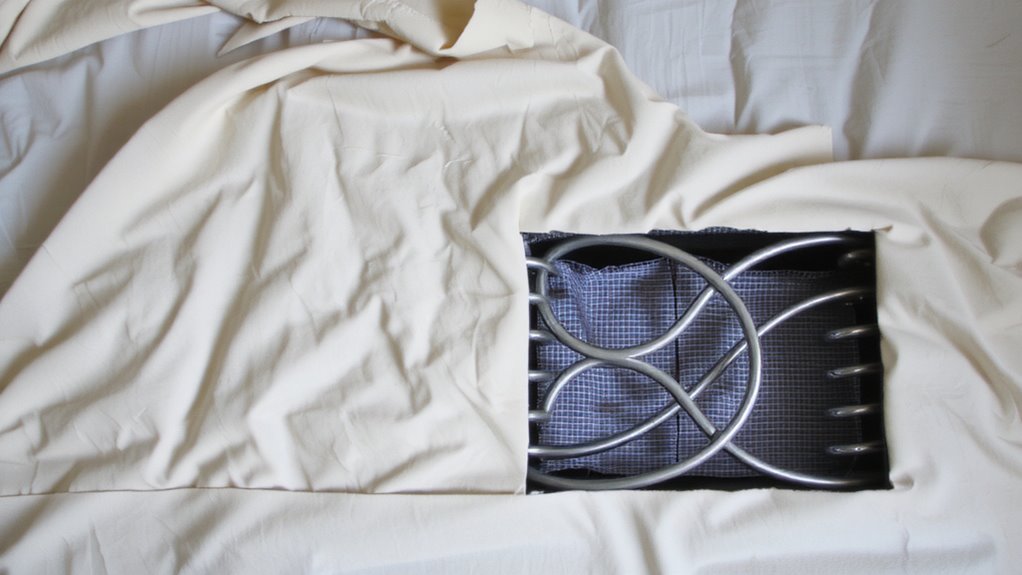
While you might expect a bouncy feel from an innerspring mattress, that responsiveness often comes with noticeable motion transfer, especially if you share your bed. This happens because coils are interconnected, so when one shifts, the movement travels across the surface. A lower coil gauge means thicker wires and usually better durability, but it doesn’t always reduce motion. Thinner coils may flex more and increase disturbance. Your bed frame type also affects stability-platform frames support coils evenly, while older box springs may allow more bounce and motion. If you’re a light sleeper or have a partner with different sleep patterns, these factors matter. Consider how motion impacts your sleep quality, especially if dealing with insomnia or frequent awakenings. Test models with strong perimeters and solid frames to minimize disruptions. Look for sleep trials to assess motion transfer in your home.
Do Different Coil Types Reduce Motion Transfer?
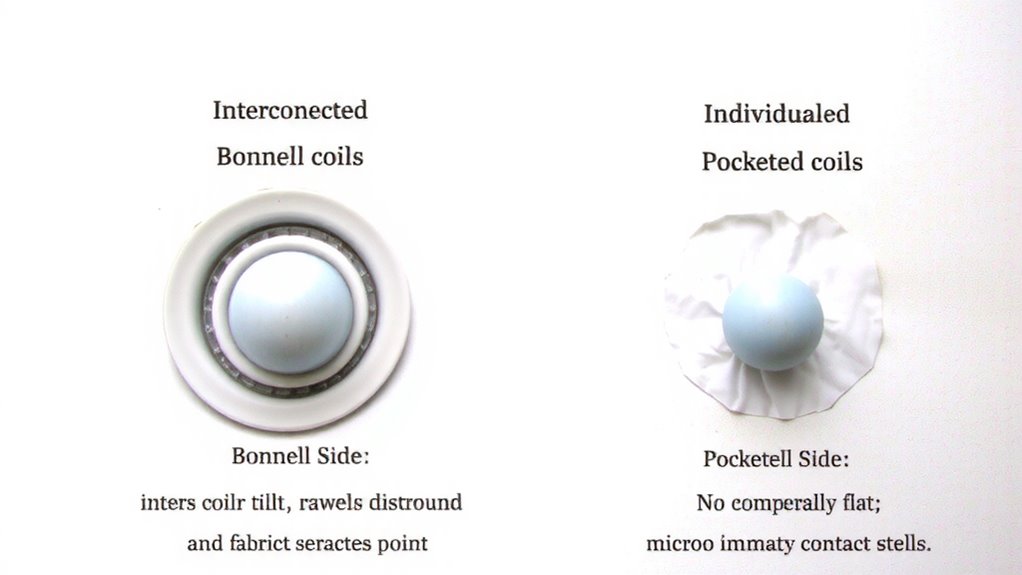
What kind of coil system actually helps reduce motion transfer in an innerspring mattress? Pocketed coils do, since each spring is wrapped individually, letting them compress independently. This design limits how much movement travels across the bed-ideal if you’re a light sleeper or share your mattress. Traditional open coils tend to link together, transferring more motion. Coil gauge also matters; lower numbers mean thicker, firmer coils that may reduce bounce but don’t always cut motion as well without pocketing.
| Experience | With Pocketed Coils |
|---|---|
| Partner rolls over | You barely feel it |
| Midnight feeding | Less chance of waking |
| Tossing at night | Reduced disturbance |
Choose a model with pocketed coils and medium coil gauge (around 14–15) for balanced support and motion isolation. Trial periods let you test responsiveness and comfort risk-free.
How Does Coil Count Affect Motion Transfer?
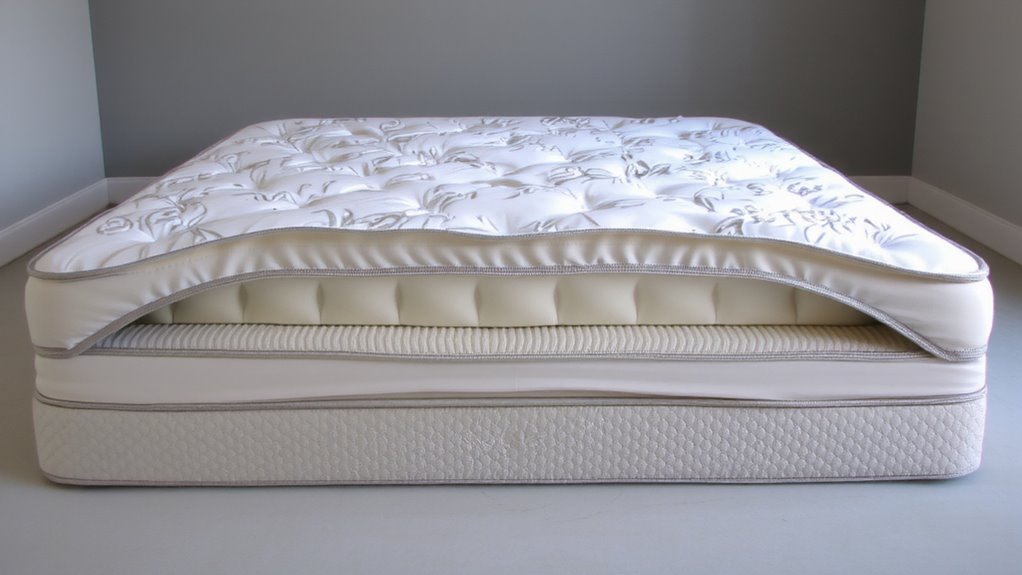
A higher coil count can help reduce motion transfer, but only when paired with the right coil design. You’ll want to weigh both coil density and spring gauge, as they directly impact how well movement is isolated. A mattress with closely spaced coils-higher coil diali-ty-typically supports better motion dampening because there are more points of contact to absorb disturbances. However, if the spring gauge is too high (meaning thinner wires), the coils may be less effective, even with a high count. Lower gauge springs (thicker wires) add durability and stability, which helps limit bounce. Look for innerspring models that balance these features: a moderate to high coil count, strong coil density, and a lower spring gauge. Paired with quality construction and a solid warranty, this setup gives you a better chance of undisturbed sleep when sharing the bed. One option worth considering is the best value bed-in-a-box, which often incorporates balanced coil systems designed to minimize motion transfer.
Can Foam Layers Reduce Motion Transfer in Innerspring Beds?
If you’re sharing a bed and easily disturbed by movement, adding foam layers to an innerspring mattress might help. These layers absorb motion before it travels across the surface, reducing how much you feel when your partner shifts or gets up. The foam density plays a key role-higher density foams respond slower to movement, offering better isolation. A density of 1.5 pounds per cubic foot or more is generally effective. Layer thickness also matters; thicker layers, around 2 to 3 inches, provide more cushioning and absorption. Thinner layers may not do enough, especially on active coils. Look for models with a memory foam or latex comfort layer bonded directly to the coils. Many manufacturers offer trial periods, so test it at home. Always check the warranty for foam durability.
Does Edge Support Increase Motion Transfer?
Why do some innerspring mattresses feel unsteady near the edges, and could that affect how much motion you feel during the night? Poor edge firmness often causes that sagging, wobbly feel when you sit or sleep near the sides. But when manufacturers reinforce the perimeter with stronger perimeter coils, the edge stays firmer and more supportive. You might wonder-does this stiffer edge increase motion transfer? Not usually. In fact, solid perimeter coils often stabilize the entire mattress, helping contain movement rather than spread it. While edge support doesn’t eliminate motion transfer entirely, it can reduce the wobble that sometimes amplifies disturbances. For light sleepers sharing a bed, consistent edge firmness means less tilt and roll when your partner moves. This added stability might improve sleep quality by minimizing vibrations near your side. Look for models with reinforced perimeter coils and check trial periods to test edge performance in your sleeping position.
How to Reduce Motion Transfer Without Replacing Your Mattress
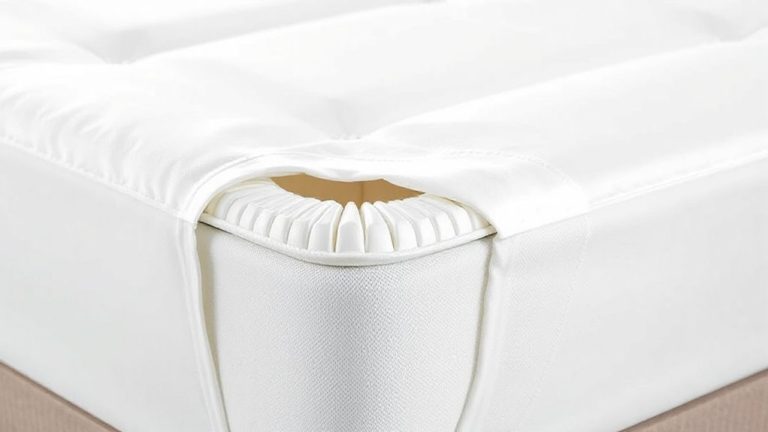
You’ve likely noticed that even with good edge support, some movement still travels across your mattress when your partner shifts or gets up during the night. You don’t need to replace your entire mattress to replace your entire mattress to reduce this disturbance. Adding a memory foam or hybrid mattress topper can help absorb motion before it reaches you. These toppers cushion and isolate movement, making a noticeable difference for light sleepers. Also, check your bed frame stability-wobbly joints or loose slats increase motion transfer by letting the mattress shift more freely. Tightening connections or switching to a sturdier frame reduces this effect. Combined, a quality topper and stable foundation improve sleep without buying new. While they won’t eliminate all motion, both are affordable, tested solutions with clear benefits. Many brands even offer trial periods, so you can test changes risk-free. For optimal results, consider a firm memory foam topper designed to enhance motion isolation without sacrificing support.
What Should Light Sleepers Look for in an Innerspring Mattress?
While traditional innerspring mattresses are known for bounciness and responsiveness, light sleepers should focus on models designed to minimize motion transfer and improve isolation. Look for pocketed coils-they move independently and reduce disturbance. Your sleep position affects comfort, so match mattress firmness to your body and preferred posture. Side sleepers usually need softer support to cushion shoulders, while back and stomach sleepers often benefit from medium to firm levels. Consider models with added foam or latex layers; they enhance motion absorption without sacrificing breathability. Check the warranty and trial period-many brands offer 10-year coverage and 100-night sleep trials. For 2025, top-performing models feature advanced coil isolation technology to further reduce partner disturbance.
On a final note
You’ll feel less movement on innerspring mattresses with pocketed coils, higher coil counts, and added foam layers, which help isolate motion. Edge support usually doesn’t increase transfer but can improve stability. If you’re a light sleeper, look for hybrid designs that combine coils with memory foam. Test models with long trial periods and strong warranties to guarantee comfort and performance over time. Check return policies before deciding.