How to Layer a Mattress Protector on an Innerspring Without Reducing Bounce
Choose a thin, stretchy mattress protector made from knit or spandex-blend fabric that moves with your innerspring coils instead of resisting them. A breathable, lightweight design-like TENCEL™ or organic cotton-keeps airflow strong and prevents heat buildup. Make sure it has a snug, elasticized fit with deep pockets to avoid bunching. Avoid thick, rigid materials or rubber-backed covers that dampen bounce. Check warranty or trial details to test comfort risk-free. There’s more to think about for long-term performance and fit.
Notable Insights
- Choose a knit or spandex blend protector to move with innerspring coils without restricting bounce.
- Opt for a thin, stretchy design to maintain mattress responsiveness and prevent motion dampening.
- Use breathable, lightweight fabrics like TENCEL™ or bamboo to enhance airflow and comfort.
- Ensure a snug, secure fit with deep pockets and elastic edges to prevent shifting and bunching.
- Avoid heavy materials like vinyl or thick foam that compress springs and reduce natural rebound.
Pick a Mattress Protector That Keeps Your Innerspring Bounce
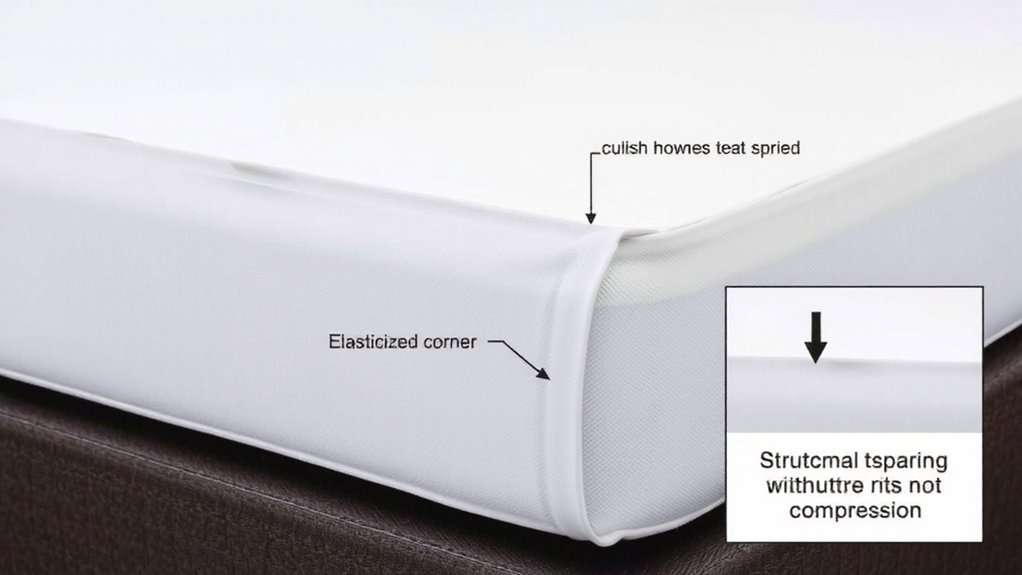
A good night’s sleep often starts with how well your mattress breathes and moves beneath you, so choosing the right mattress protector matters-especially when you own an innerspring. You want something that won’t dampen the bounce or block airflow. Look for a protector with a knit or spandex blend-it moves with the coils instead of resisting them. This helps maintain motion transfer control, so you’re less likely to feel your partner shifting. Strong edge support in your mattress also stays effective when the protector stretches smoothly over the corners without binding. Avoid thick, padded options-they add softness but can mute spring response and reduce stability near the edges. Instead, pick a slim, breathable design that stays securely in place through elasticized corners. Most quality brands offer at least a 5-year warranty, and some let you test them risk-free for 30 nights. That way, you can check comfort and performance without commitment.
Choose a Thin, Stretchy Protector for Better Responsiveness
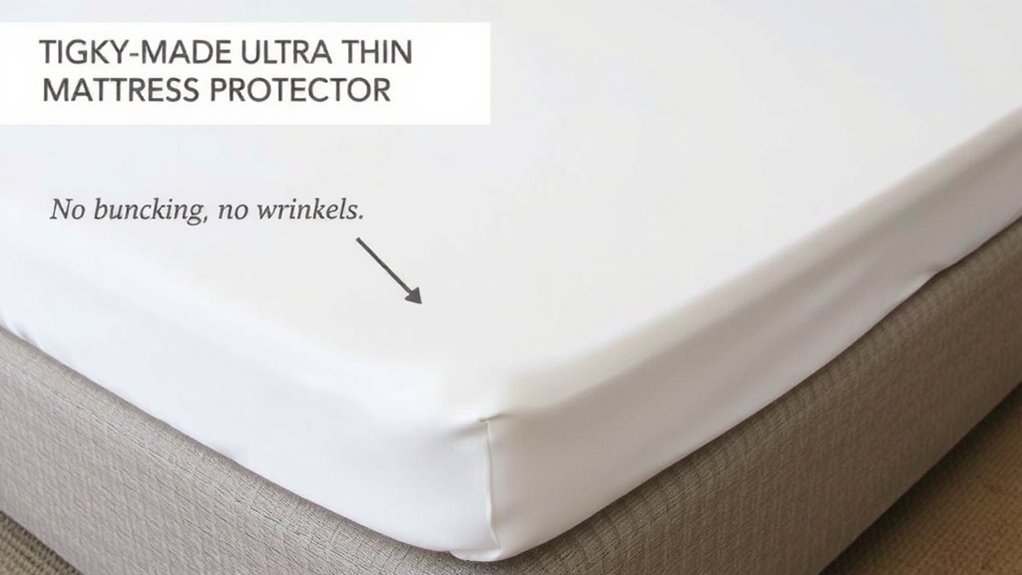
Look for a thin, stretchy protector that moves with your innerspring mattress instead of working against it. A snug fit elasticity guarantees the protector stays in place without bunching, preserving the spring response you rely on. Material flexibility plays a key role-opt for fabrics like spandex blends or jersey knit that conform smoothly. Thick or rigid covers can dampen bounce and affect sleep comfort, especially if you shift often or have mobility concerns. A responsive protector supports natural motion, which may help reduce pressure points.
| Feature | Benefit | Example Material |
|---|---|---|
| Thin profile | Maintains mattress responsiveness | 0.5mm TPU film |
| Fit elasticity | Stays secure without gapping | 2% spandex blend |
| Material flexibility | Moves with the mattress, not against it | Stretch jersey knit |
Use Breathable Fabrics That Won’t Flatten the Feel
Comfort matters most when your mattress protector affects airflow and surface feel. You want breathable fabrics that support airflow efficiency so your body stays cool through the night. Materials like TENCEL™, organic cotton, or bamboo blends let heat escape, reducing night sweats and supporting better sleep hygiene. These fabrics also offer strong fabric elasticity, so they move with you without compressing the mattress’s bounce. Avoid thick vinyl or rubber-backed protectors-they trap heat and dull responsiveness. Instead, opt for lightweight, weaved textiles that enhance durability without adding stiffness. Check if the brand offers a trial period so you can test comfort risk-free. A good warranty often reflects material quality and structural integrity. Your choice influences comfort and support over time, especially if you’re managing discomfort or sleep disruptions. Stick to breathable, elastic layers that preserve the innerspring’s natural lift and resilience.
Get a Tight Fit Without Straining the Corners
Every inch of tension matters when securing a mattress protector on an innerspring bed, so aim for a snug fit that hugs the corners without stretching them thin. You want a secure corner fit that stays in place without pulling or bunching. Too much elastic tension can distort the protector’s shape and press down on the mattress, reducing airflow and limiting spring response. Look for protectors with evenly distributed, moderate elastic tension around the entire foundation-this keeps the fabric taut without compromising bounce. A well-constructed elastic band should slip on smoothly and hold tight through nightly movement. Poor corner fit often leads to shifting, which means waking up to wrinkles or slipping layers. Try models with deep pockets designed for innersprings, as they accommodate thicker edges without strain. Check warranty terms for durability, and consider a trial period to test how well it holds up over weeks of use. For temperature-sensitive sleepers, consider a best cooling waterproof model that combines breathability with reliable protection.
Skip Mattress Protector Materials That Kill Bounce
While you might not think about fabric weight or stiffness at first glance, choosing a mattress protector that preserves your innerspring’s natural bounce is key to maintaining comfort and support. You’ll want to skip heavy materials like thick memory foam, which can dampen responsiveness and make your mattress feel sluggish. Likewise, avoid stiff waterproof coating layers, especially those made from solid plastic or rubberized backing-they restrict airflow and compress the coils’ movement. Instead, look for protectors with thin, breathable waterproof barriers that block liquids without sacrificing feel. Lightweight, knit fabrics with a flexible membrane offer the protection you need while letting your innerspring flex and rebound naturally. These materials move with the mattress, not against it. By avoiding bulky or rigid components, you preserve the support and responsiveness essential for proper spinal alignment and undisturbed sleep-important considerations if you’re managing discomfort or sleep disorders.
Test the Protector Before Finalizing Your Choice
You’ve picked a lightweight, flexible mattress protector that won’t dull your innerspring’s bounce, but before sealing the deal, give it a trial run. Spend a few nights testing how it affects your sleep quality and the bed’s responsiveness. Pay attention to the comfort level-does it feel smooth, noisy, or stiff? Check for indicators of long term durability like seam strength and fabric resilience after washing. Many brands offer sleep trials or warranties, which let you verify performance over time. Use this period to assess both feel and function. Consider exploring the best alternatives to top-rated beds if your current setup isn’t delivering the support you need.
On a final note
You’ll keep your innerspring’s bounce by choosing a thin, stretch-knit protector made of breathable, lightweight fabric like TENCEL or cotton-spandex. A snug fit matters, but avoid over-stretching corners, which can press down on coils. Steer clear of thick, plastic-backed pads that dampen responsiveness. Look for models with full elastic bands and trial periods, so you can test comfort and rebound. Check warranty terms, too, for long-term confidence.